Learn How to Harvest Rainwater for Your Garden and Cut Water Bills
Capture free water, cut bills by 40%, and keep your garden thriving during droughts. Proven methods with exact installation steps and fixes for every common problem.
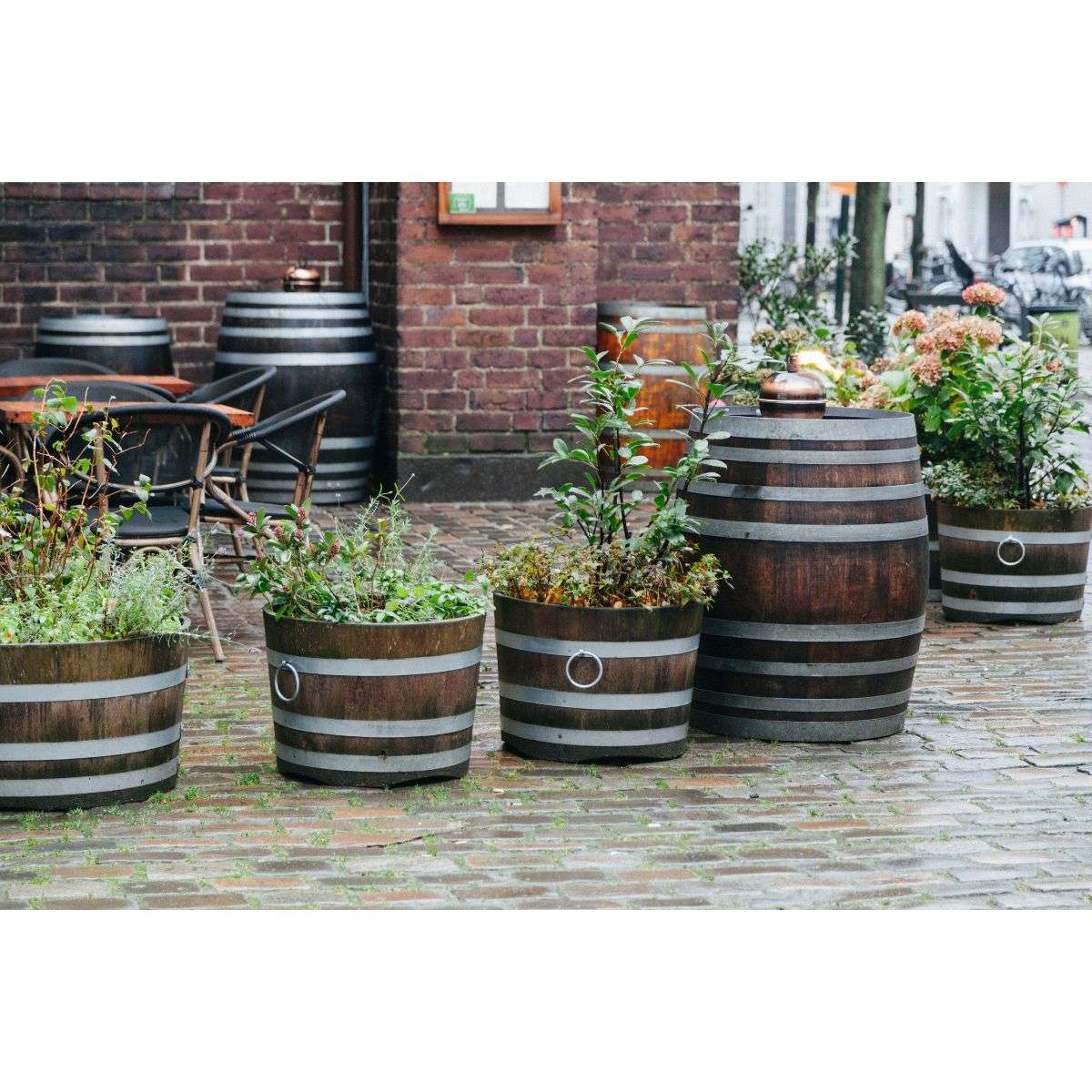
1. Rain Barrel Systems: Start Here (Easiest Setup)
Sizing: How Many Barrels You Actually Need
Reality check: One 55-gallon barrel fills in 5 minutes during moderate rain. You’re wasting 90% of free water.
Calculation:
- 100 sq ft roof = 60 gallons per 1″ of rain
- 1,000 sq ft roof = 600 gallons per storm
- You need: 2-4 barrels minimum (110-220 gallons)
Quick formula: (Roof square feet ÷ 100) × 0.6 = gallons per inch of rain
Installation: Step-by-Step (30 Minutes)
What you need:
- 55-gallon food-grade barrel with lid ($40-80)
- Downspout diverter kit ($15)
- Mosquito screen (window screen works)
- Overflow hose
- Cinder blocks or pavers (4-6)
- Spigot/faucet ($5-10)
- Drill with a 1-inch hole saw
Steps:
- Choose location: 10+ feet from foundation, level ground, near garden
- Build base:
- Lay 4-6 cinder blocks level
- Check with the level tool
- Secure with construction adhesive
- Prepare barrel:
- Drill an overflow hole 2 inches from the top
- Install overflow fitting + hose (direct 10 feet from house)
- Drill a spigot hole 4 inches from the bottom
- Install the spigot with rubber washers inside/outside
- Connect downspout:
- Cut downspout 6 inches above barrel top
- Attach the flexible downspout extension into barrel opening
- Secure mosquito screen over barrel top with bungee cord
- Test: Run hose, check for leaks, verify overflow works
Time to completion: 30-45 minutes for the first barrel
Common Problems + Fixes
| Problem | Cause | Solution |
| Barrel overflows immediately | Inlet too small | Enlarge the opening to 3-4 inches in diameter |
| Mosquitoes breeding | No screen | Add a fine mesh screen (window screen), secure edges |
| Algae growth (green slime) | Sunlight entering | Paint the barrel a dark color, or add 1 tbspof bleach monthly |
| Leaking spigot | Poor seal | Remove, add plumber’s tape + silicone, reinstall |
| Foundation damage | Overflow near the house | Extend the overflow hose 10+ feet away immediately |
| Slow water flow | Debris in the barrel | Flush annually: drain, scrub with bleach solution (1:10 ratio) |
Winter care (freezing climates):
- Drain completely before the first freeze
- Remove the spigot or leave it open
- Tip barrel upside down OR store indoors
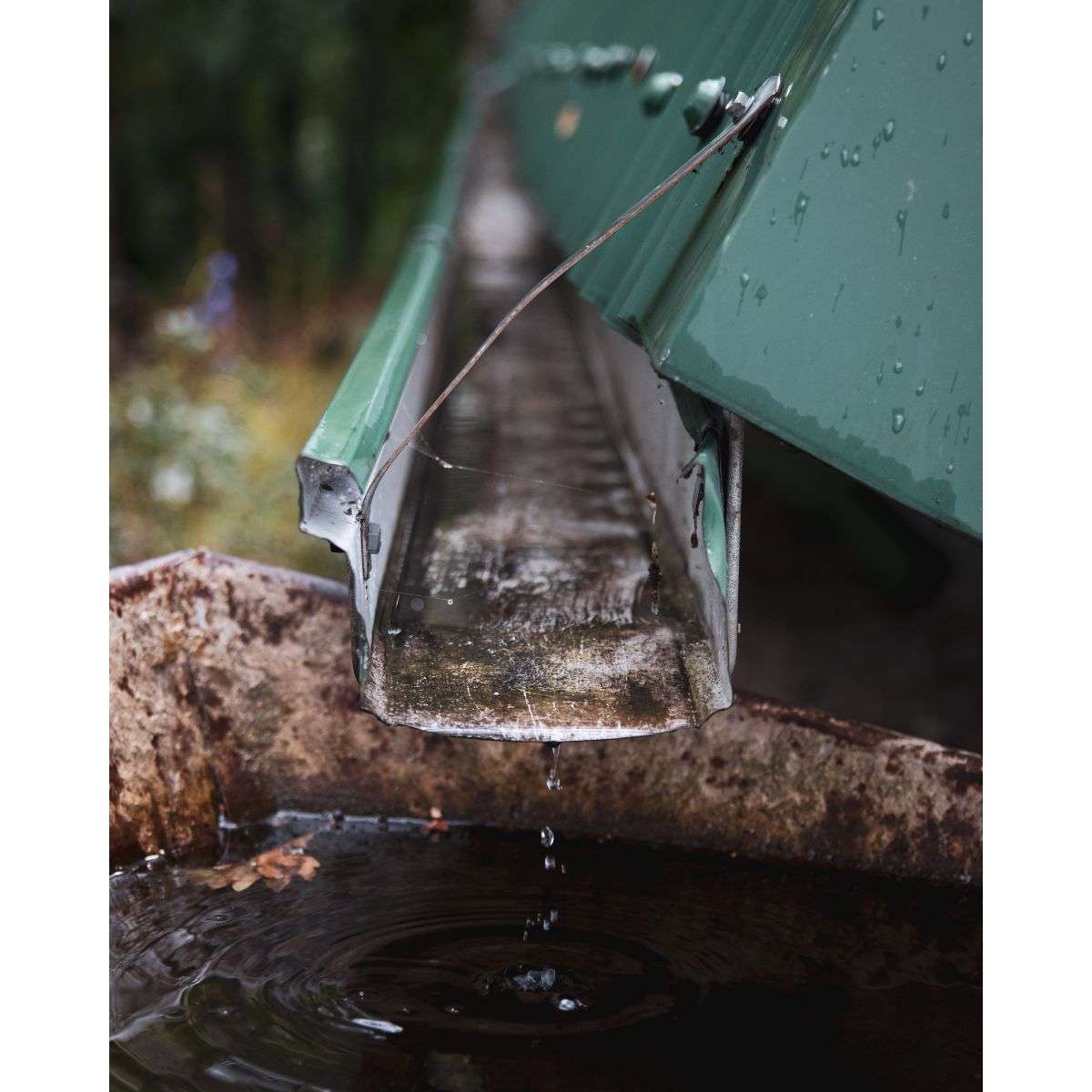
2. Gutter Systems: Maximize Your Roof Catchment
Inspection Checklist (Do This First)
Clogged or damaged gutters reduce collection by 50%.
Check these 6 things:
- Debris: Remove leaves, shingle grit, nests
- Slope: Pour water, watch flow—should move toward downspouts without pooling
- Leaks: Look for water stains on the fascia or drips during rain
- Sagging: Gutters should be straight, not bowed
- Loose hangers: Tighten every 24-36 inches
- Downspout clogs: Run the hose, verify water exits freely
Correct slope: 1/4 inch drop per 10 feet toward the downspout
Optimization: Increase Collection by 30%
Install gutter guards:
- Micro-mesh type only ($2-3/linear foot)
- Prevents leaf clogs
- Don’t use cheap plastic—they create overflows
Seal all joints:
- Use gutter sealant at seams
- Prevents 15-20% water loss
Add downspouts:
- Maximum 35 feet of gutter per downspout
- More downspouts = better collection
Maintenance Schedule
| When | Task | Time Required |
| Spring (April) | Clear winter debris, check ice damage | 30 min |
| Mid-summer (July) | Quick debris check | 10 min |
| Fall (October) | Deep clean before leaf drop | 45 min |
| After a major storm | Clear debris immediately | 15 min |
Pro tip: Clean gutters BEFORE leaves fall in autumn. Wet leaves compact and clog severely.
3. Downspout Diverters: Control the Flow
Why Use Diverters (vs. Permanent Changes)
Benefits:
- Collect when you want, drain normally when full
- No permanent downspout modification
- Override switch for winter or vacations
- Costs $15-30 vs. $100+ for full systems
Best for: Existing homes where you can’t or won’t modify downspouts permanently
Installation: Exact Steps (20 Minutes)
What you need:
- Downspout diverter with flip valve
- Hacksaw
- Measuring tape
- Flexible hose (1.5″ diameter)
- 2 hose clamps
- Drill with 1/8″ bit (for mounting screws)
Process:
- Measure: Place diverter against downspout where it meets barrel (typically 12″ above barrel top)
- Mark cut lines: Top and bottom of diverter (usually 4-6 inches apart)
- Cut downspout: Clean, level cuts with hacksaw
- Insert diverter: Slide between downspout sections
- Secure: Screw the diverter to the downspout and the wall
- Attach hose: Connect diverter outlet to barrel, tighten hose clamps
- Test flip valve: Should move freely between collect/bypass positions
Troubleshooting Guide
Diverter backs up during storms:
- Cause: Inlet too small for water volume
- Fix: Upgrade to a larger diverter (1.5″ minimum) OR add a second collection point
Water leaking at connections:
- Cause: Poor seal
- Fix: Remove, apply silicone sealant, reinstall with hose clamps tighter
Sediment clogging diverter:
- Cause: Asphalt shingle grit is normal in the first year
- Fix: Remove the bottom cap, flush monthly in the first year, and quarterly after
Flip valve sticking:
- Cause: Debris or calcium buildup
- Fix: Remove valve, soak in vinegar for 30 minutes, scrub, reinstall
4. Large Storage Tanks: Scale to 300+ Gallons
Sizing for Real Garden Needs
Water usage by garden type:
| Garden Size/Type | Weekly Water Need (Peak Summer) |
| 100 sq ft of vegetables | 100-150 gallons |
| 200 sq ft mixed garden | 150-250 gallons |
| 500 sq ft vegetables | 500-750 gallons |
| Container garden (20 pots) | 50-80 gallons |
Tank sizing rule: Store 2-3 weeks of water between rains
Example: 200 sq ft garden needs 200 gallons/week → buy 400-500 gallon tank
Installation: Foundation Critical
Why this matters: 300 gallons = 2,500 pounds. Unstable base = cracked tank.
Proper base construction (do NOT skip):
- Excavate:
- 6 inches deep
- 6 inches wider than the tank diameter on all sides
- Layer gravel:
- Add 4 inches of crushed gravel
- Tamp with a hand tamper until firm
- Add sand:
- 2 inches of leveling sand
- Rake completely level
- Check with a 4-foot level
- Top surface:
- Concrete pavers (cheapest) OR
- Poured concrete pad (best for 500+ gallon tanks)
- Final check:
- Use long level in multiple directions
- Off-level by 1/4 inch = redo it
Tank not level = stress on seams = leaks within months
Connection Setup
Inlet (top):
- 2-inch minimum opening
- Attach the downspout or flexible pipe
- Add a first-flush diverter ($30-50) to remove initial dirty water
Overflow (side near top):
- Must be LARGER than inlet
- Install 3 inches from the tank top
- Direct water 10+ feet from structures
Outlet (bottom):
- Install a ball valve for easy control
- Add a hose adapter or connect to the drip irrigation
Maintenance Problems + Solutions
Green algae inside the tank:
- Prevention: Keep opaque, add 2 tbsp bleach per 100 gallons monthly
- Treatment: Drain, scrub with brush + bleach solution (1:10), rinse 3 times
Crack in plastic tank:
- Small crack (<1 inch): Apply marine epoxy patch kit
- Large crack: Replace tank (not repairable)
- Prevention: UV-protect with paint or a shade structure
Sediment buildup (reduces capacity):
- Symptom: Tank feels heavier than the water volume suggests
- Fix: Open the bottom drain quarterly, flush 10 gallons
- Annual: Drain completely, hose out sediment
Winter freeze damage:
- Prevention (Zones 6 and colder):
- Drain completely before freezing
- OR keep 10% full with aquarium heater
- Never let it freeze solid while full
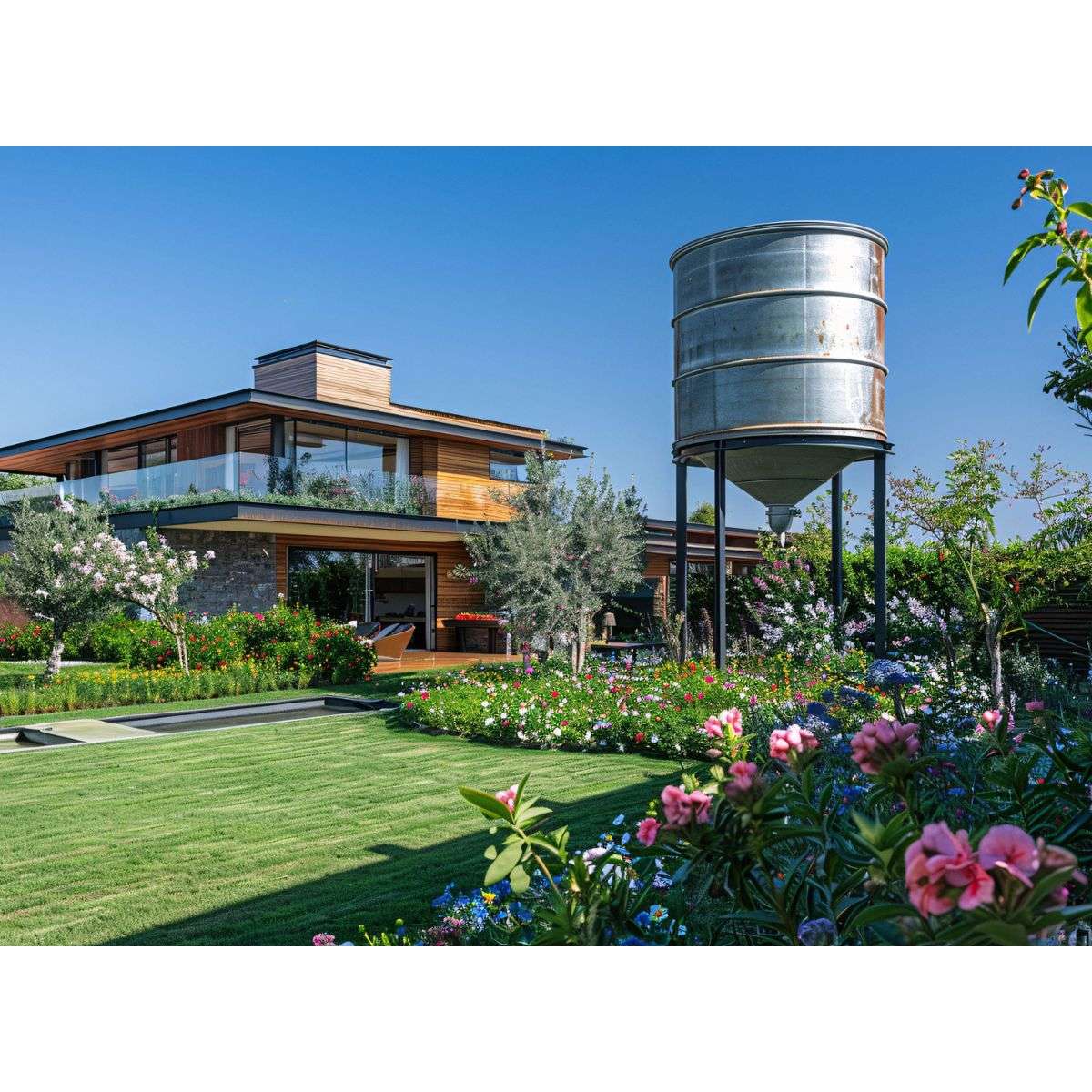
5. IBC Totes: 275 Gallons for $75
What Are IBC Totes + Why Use Them
IBC = Intermediate Bulk Container
- 275-330 gallon capacity
- Metal cage surrounding plastic bladder
- Used: $50-100 | New: $200-300
- Regular rain tanks of the same size: $400-600
Savings: $300-500 per tote
Critical: Food-Grade Only
Safe previous contents:
- Fruit juices, syrups, glycerin
- Food-grade oils
- Soaps (well-cleaned)
NEVER buy totes that hold:
- Pesticides, herbicides, chemicals
- Petroleum products
- Industrial solvents
- Anything marked hazardous
Verification: Ask the seller for written documentation of the previous contents. No paperwork = don’t buy.
Cleaning Protocol (Non-Negotiable)
Before using any IBC tote:
- Initial rinse: Hose for 15 minutes until water runs clear
- Bleach treatment:
- Fill with water + 2 cups bleach
- Let’s sit for 24 hours
- Drain completely
- Triple rinse: Fill and drain with clean water 3 times
- Smell test: Fill with water, let sit 7 days, smell it—should have ZERO odor
- Visual check: Water should be completely clear after sitting
If any odor or discoloration remains after cleaning, don’t use
Gravity-Fed Installation
Every 1 foot elevation = 0.43 PSI pressure
- 2 feet high = enough for drip irrigation
- 3 feet high = gentle hose flow
- 4+ feet = good watering pressure
Platform construction (for 2,500-pound load):
Materials:
- (4) 4×4 pressure-treated posts, 6 feet long
- (4) 2×6 joists, 8 feet long
- (8) 2×6 deck boards, 4 feet long
- Concrete mix (4 bags)
- 3-inch deck screws
- Hurricane ties
Build steps:
- Dig post holes: 24 inches deep, 12 inches in diameter
- Set posts: Pour 6 inches of concrete, set posts, fill around with concrete
- Level posts: Tops must be exactly level—check with a laser level
- Attach joists: Bolt 2×6s to posts with hurricane ties
- Deck platform: Screw 2×6 boards across joists, no gaps
- Final check: Jump on the platform—should feel solid
Height recommendation: 30-40 inches for best gravity flow
Valve Replacement (Original Valves Fail)
Problem: Factory plastic valves crack and leak within 1-2 years.
Solution: Replace immediately with a brass ball valve:
- Remove plastic valve (may need a wrench)
- Clean threads
- Wrap new brass valve threads with plumber’s tape (5-6 wraps)
- Apply pipe thread sealant
- Hand-tighten the brass valve, then 1/4 turn with the wrench
- Test for leaks
Cost: $15-25 for a brass valve vs. replacing water multiple times from leaks
UV Protection (Extends Life 5+ Years)
Problem: Direct sun degrades thin plastic in 3-5 years.
Solutions:
Option 1 – Paint:
- Use outdoor latex paint
- Dark colors (block light best)
- 2 coats
- Repaint every 3 years
Option 2 – Shade structure:
- Build a simple 2×4 frame
- Cover with corrugated roofing panels
- Costs $75-100, protects indefinitely
Option 3 – Tarp wrap:
- UV-resistant tarp
- Secure with bungee cords
- Replace every 2-3 years
See more — How Often Should You Water Garden Plants?
See more — 10 Smart Ways to Save Water in the Garden
Read more — Vegetable Watering Schedule Most Gardeners Get Wrong
Read more —15 Proven Tips to Protect Your Plants in Summer Heat
6. Rain Chains: Decorative Water Guide
When Rain Chains Work
Good conditions:
- Gentle rainfall (<1 inch/hour)
- Short roof sections (<20 feet of gutter)
- Minimal wind during rain
- The collection basin is directly underneath
Don’t use when:
- Heavy downpours common
- Windy climate
- Long roof sections (too much volume)
Best for: Sheds, porches, gazebos, decorative installations in mild climates
Installation Requirements
What you need:
- Rain chain ($25-150 depending on material)
- V-hook or gutter attachment clip
- Wide shallow basin (18-24 inch diameter minimum)
- River rocks (20-30 pounds)
Setup:
- Remove the downspout or gutter end cap at the desired location
- Install the V-hook into the gutter hole
- Hang the chain from the hook—it should reach the ground or the basin
- Position the basin directly centered under the chain
- Add river rocks to the basin bottom (dissipates splash energy)
- Create an overflow path from the basin away from structures
Problems + Fixes
Water splashing everywhere:
- Cause: Basin too small or too far from the chain end
- Fix: Use a 24-inch minimum diameter basin, position so the chain ends 2 inches above the rocks
Water not following the chain in the wind:
- Cause: Cup-style chain or wind too strong
- Fix: Switch to link-style chain, OR add wind block, OR use traditional downspout
Ice buildup in winter:
- Cause: Water freezes on the metal chain
- Fix: Remove the chain before freezing weather, reinstall in spring
Copper developing spots:
- Cause: Normal oxidation (green patina)
- Fix: Not a problem (actually desirable) OR clean with copper polish if you prefer shiny
7. Secondary Roof Collection (Sheds, Garages)
Why This Doubles Your Capacity
Example yields:
- 10×10 shed (100 sq ft) = 60 gallons per inch rain
- 20×20 garage (400 sq ft) = 240 gallons per inch rain
- Total from secondary structures: Often adds 50-100% more water
Advantage: Usually closer to the garden than the main house
Gutter Installation on Small Structures
Materials for 20-foot shed ($40-60 total):
- 20 feet vinyl gutter
- 7-8 gutter hangers
- 2 end caps
- 1 downspout kit
- Gutter sealant
Installation (1 hour):
- Mark slope: Chalk line from high point to downspout end (1/4 inch drop per 10 feet)
- Install hangers: Every 30 inches along the chalk line
- Hang gutter: Snap into hangers
- Attach end caps: Apply sealant, press on firmly
- Install downspout: At the low end, secure to the shed wall
- Test: Run hose in gutter, check flow and leaks
Container sizing: 30-50-gallon barrels work perfectly for shed roofs
Maintenance (More Critical Than Main Gutters)
Problem: Small gutters clog faster (less water volume to self-clean).
Solution: Check monthly during the growing season
- Clear debris from the gutter
- Flush downspout with a hose
- Check that hangers haven’t loosened
Winter care: Small structures often lack insulation—ice dams form easily. Clear snow from the roof edge before it melts and refreezes in the gutter.
8. Ground-Level Catchment Basins
What These Are + When to Use
Rain basins = shallow depressions catching roof runoff, driveway runoff, or slope drainage
Use when:
- No room for barrels
- Want a passive system (no moving parts)
- Need to manage the problem drainage area
Don’t use when:
- Clay soil that doesn’t drain
- The area already stays wet
- Within 10 feet of any structure
Drainage Test (Do This First)
Before building a basin:
- Dig a test hole 12 inches deep where the basin will go
- Fill with water
- How long does it take to drain completely
Results:
- 12-24 hours: Perfect for a rain basin
- 24-48 hours: Marginal—improve soil first
- 48+ hours or standing water: Wrong location, don’t build here
Construction Steps (2-3 Hours)
Materials:
- Shovel
- Rake
- Wheelbarrow
- River rock (optional, 100-200 pounds)
Process:
- Mark area: 4-8 foot diameter circle where water naturally flows
- Remove sod: Dig up grass, save for elsewhere
- Excavate: Dig 6-10 inches deep, bowl-shaped (deeper in center)
- Create berm: Pile removed soil around edges (except overflow point)
- Add rock (optional): A 2-3 inch layer prevents erosion
- Plant edges: Native plants with deep roots stabilize the basin
- Mark overflow: Create a deliberate low point in the berm, directing water safely away
Mosquito Prevention (Critical)
Problem: Standing water 5+ days = mosquito breeding.
Solutions:
Option 1 – Design basin to drain in 48 hours:
- Improve soil with compost
- Add sand to clay soil (20% by volume)
- Break compaction with a broadfork
Option 2 – Mosquito dunks:
- Bti bacteria (brand: Mosquito Dunks)
- Safe for plants, pets, wildlife
- Apply every 30 days
- Costs $12 for a season supply
Option 3 – Mosquito fish:
- Where legal (check local regulations)
- Gambusia species
- Eat mosquito larvae
- Need 18+ inch water depth year-round
If water stands longer than 3 days regularly: Abandon the basin or relocate—you’ve chosen the wrong spot.
9. Permeable Soil Beds (In-Ground Infiltration)
The Compaction Problem
Hard soil = wasted rain. Water runs off instead of soaking in.
Quick diagnosis:
- Pour a glass of water on the soil
- Soaks in seconds = good
- Puddles = compacted
Causes: Foot traffic, tilling when wet, clay content, and no organic matter for years
Fixing Compaction (Permanent Solution)
Method 1 – Annual organic matter:
What to add:
- Compost (best)
- Aged manure
- Shredded leaves
- Peat moss
How much: 2-4 inches spread over the bed surface annually
When: Fall (works in over winter) or early spring (4 weeks before planting)
Results: 2-3 years of annual additions = dramatically improved water absorption
Method 2 – Break hardpan layer:
What it is: A compacted layer 8-12 inches deep, blocking drainage
How to fix:
- Use a broadfork (not tiller—tillers worsen compaction)
- Push tines 12 inches deep
- Rock back and forth to fracture hardpan
- Move 6 inches, repeat across the bed
- Do once—should last 3-5 years
Cost: Broadfork $50-100, lasts a lifetime
Mulching for Infiltration
How mulch helps:
- Slows water impact (prevents surface sealing)
- Allows gradual soil absorption vs. runoff
- Mulched beds absorb 2-3× more rain than bare soil
Best mulches for water infiltration:
- Shredded bark (small pieces)
- Compost (1-2 inches)
- Shredded leaves
- Straw (2-3 inches)
Avoid: Large bark chunks (water runs under them)
Troubleshooting Drainage Problems
Water pooling on beds after rain:
- Cause: Hardpan or clay layer
- Fix: Broadfork to break, add compost
Water running off beds:
- Cause: Bare soil, crust formation, or steep slope
- Fix: Add a 3-inch mulch layer, create small berms around bed edges
Beds staying soggy 48+ hours:
- Cause: Poor drainage below, water table high
- Fix: Switch to raised beds (only solution for truly poor drainage)
See more — 5 Tips to Prepare Soil for a Vegetable Garden
see more — Top 10 Natural Ways to Improve Garden Soil
read more — How to Make Compost at Home Using Kitchen Waste
read more — How to Make Vermicompost at Home (Complete 11-Step Guide)
10. Rain Gardens: Functional Landscaping
What Rain Gardens Do
Purpose: Planted depression that catches overflow from barrels, roof runoff, or driveway drainage—then infiltrates it slowly.
Benefits:
- Handles excess water from storms
- Filters pollutants before they reach groundwater
- Creates a wildlife habitat
- Looks intentional (not accidental wet spot)
Plant Selection by Region
Requirements: Plants must handle periodic flooding AND drought.
Northeast (Zones 5-7):
- Swamp milkweed, Joe Pye weed, cardinal flower, New York ironweed, switchgrass, river birch (shrub)
Southeast (Zones 7-9):
- Louisiana iris, canna, pickerelweed, river oats, muhly grass, inkberry holly
Midwest (Zones 4-6):
- Black-eyed Susan, prairie blazing star, little bluestem, bottlebrush sedge, red twig dogwood
West (Zones 7-10):
- Douglas iris, creek monkeyflower, California fuchsia, red twig dogwood, sedges (Carex species)
Universal rule: Choose natives with 12-18 inch deep root systems (shallow roots wash out)
Design + Installation
Sizing: Rain garden should be 10-30% of the drainage area feeding it
Example: 300 sq ft of roof drainage → create 30-90 sq ft rain garden
Location: Where water already flows naturally—don’t fight existing drainage
Construction (4-6 hours):
- Mark area: 10-20 foot diameter, typical
- Check drainage: Dig a test hole, fill with water, must drain in 12-48 hours
- Excavate: Dig 6-12 inches deep, saucer-shaped
- Test again: Fill with hose, time drainage—should empty in 12-48 hours
- Improve soil if needed: Mix in 30% compost if drainage is slow
- Create berm: Pile soil on downslope side (holds water in garden)
- Add overflow path: Cut notch in berm, creating an emergency outlet during extreme rain
- Plant densely: 3-5 plants per square foot (close spacing stabilizes soil)
- Mulch: 2-3 inches shredded bark
First Year Care
Weeks 1-8: Water weekly (plants establishing roots)
Months 3-12: Water only during extended drought (2+ weeks no rain)
After year 1: Maintenance-free except occasional weeding and mulch refresh
Common Problems + Fixes
Water not draining (standing 72+ hours):
- Cause: Clay soil or hardpan below
- Fix: Dig deeper, add 6 inches of gravel base, replace topsoil with 50% compost/50% native soil mix
Erosion washing out plants:
- Cause: Too steep slope or inadequate planting density
- Fix: Add river rock to the inlet area, increase plant density to 5-7 per sq ft
Mosquitoes breeding:
- Cause: Drains too slowly
- Fix: Improve drainage (add compost, break hardpan) OR add mosquito dunks monthly
Weeds taking over:
- Prevention: Thick mulch layer (3 inches)
- Fix: Hand-pull monthly for the first 2 years, then perennials shade out weeds
Preventing System Failures: Critical Checklist
Mistake 1: Undersized Storage
Problem: One 55-gallon barrel fills in 5 minutes, wastes 90% of the free water.
Solution: Calculate the roof yield, size storage for 50% of a typical storm.
Formula: (Roof sq ft ÷ 100) × 0.6 × typical rain inches = gallons per storm
Example: 1,000 sq ft roof, 1-inch typical rain = 600 gallons. You need 300+ gallon storage.
Mistake 2: No Overflow Plan
Problem: Full barrel overflows next to the foundation = basement leaks, foundation damage.
Solution (every system needs):
- Overflow outlet 2-3 inches from the top
- Hose/pipe directing water 10+ feet from structures
- Test by filling with the hose before the first rain
Mistake 3: Skipping Maintenance
What fails when neglected:
| Component | Failure | Prevention |
| Gutters | Clog (50% collection loss) | Clean twice yearly |
| Screens | Clog (blocks flow) | Check monthly |
| Connections | Leak (wastewater) | Inspect quarterly |
| Containers | Algae (odor, clogs) | Add bleach monthly |
Minimum schedule:
Monthly (growing season):
- Clear debris from screens
- Check for leaks
- Look for algae
Spring & Fall:
- Deep clean gutters
- Flush sediment from tanks
- Tighten all connections
- Verify overflow paths clear
Annually:
- Empty and scrub all containers
- Replace worn hoses/fittings
- Test the entire system
- Check for cracks
Time required: 30 minutes monthly maintenance prevents hours of repairs
see more — Automatic Drip and Mist Irrigation Kit
Quick Start Action Plan
This Week: Assessment
Day 1-2: Measure and calculate
- Roof square footage (length × width)
- Potential yield per storm
- Current water waste (where does rain go now?)
Day 3-4: Inspect existing systems
- Check gutter condition
- Note downspout locations
- Identify problem drainage areas
Day 5-7: Plan first installation
- Choose the starting method (rain barrel is easiest)
- Buy materials
- Schedule installation day
Week 2-3: Install First System
Start simple: 1-2 rain barrels on the best downspouts
- Add mosquito screens
- Install overflow paths
- Test during the first rain
Track results: Mark the barrel water level before/after rain (you’ll be amazed)
Month 2-3: Expand
Add capacity:
- More barrels or upgrade to tanks
- Install diverters for control
- Add shed/garage collection
Start passive systems:
- Ground basin or rain garden
- Improve soil infiltration
Ongoing: Maintain & Optimize
Monthly checks: 15-30 minutes prevent failures
Seasonal cleaning: Keep systems working efficiently
Track savings: Most climates save 800-1,000+ gallons yearly with a basic setup
Frequently Asked Questions
How much rain can I actually collect? Every 100 sq ft of roof yields 60 gallons per inch of rain. A 1,500 sq ft roof collects 900 gallons from a 1-inch storm.
Is rainwater safe for vegetables? Yes, for irrigation. Roof-collected water contains some debris and bacteria—fine for soil watering. Don’t drink it without filtration and treatment.
How do I prevent mosquitoes? Fine mesh screens on all openings, mosquito dunks in standing water, and ensure basins drain within 48 hours.
What about winter freezing? Drain containers completely before the first hard freeze. Or keep 10% full with an aquarium heater. Never let it freeze solid while full.
Do I need a permit? Most areas: no permit for residential rainwater harvesting under 5,000 gallons. Check local regulations—some Western states have restrictions.
How much money does this save? Typical household: 800-1,500 gallons collected yearly. At $0.005-0.01 per gallon = $4-15 savings. Real value: free water during droughts when restrictions apply.