How to Make Compost With Chicken Poop: 7 Practical and Safe Methods
Turn chicken manure into safe, powerful fertilizer without burning plants, creating terrible smells, or spreading disease. Real solutions for backyard chicken keepers.
1. Compost Chicken Poop Safely Without Burning Plants
Why Fresh Chicken Manure Kills Plants
Fresh chicken poop contains extremely high nitrogen levels—3-4 times more concentrated than cow or horse manure. This “hot” manure burns plant roots on contact, causing yellowed leaves, wilting, and death.
The ammonia problem: Fresh manure releases ammonia gas as it breaks down. This burns foliage and roots while creating that eye-watering smell.
Pathogens present: E. coli, Salmonella, and parasites live in fresh chicken droppings. Using uncomposted manure on food gardens risks contaminating your harvest.
How Composting Fixes Everything
Composting transforms chicken manure through:
- Heat: 130-150°F kills pathogens and weed seeds
- Decomposition: Breaks down ammonia into plant-safe nitrogen forms
- Microbial action: Beneficial bacteria stabilize nutrients
- Time: Allows volatile compounds to dissipate
Result: Stable, safe, nutrient-rich compost that feeds plants without burning them.
When It’s Safe to Use
Fully finished compost:
- 3-6 months minimum composting time
- Reached 130-150°F for at least 3 days
- Cooled completely to ambient temperature
- Earthy smell (no ammonia odor)
- Dark, crumbly texture
Food safety rule: Wait 120 days between applying chicken manure compost and harvesting crops that touch soil (lettuce, carrots, potatoes). For crops growing above ground (tomatoes, peppers), 90 days is sufficient.
2. Balance Chicken Poop to Stop Bad Smells and Flies
Why Chicken Manure Reeks
The nitrogen overload: Chicken manure is 60-70% nitrogen, 30-40% carbon. This imbalance creates anaerobic (oxygen-free) conditions, producing ammonia and hydrogen sulfide—the sources of terrible odors.
Wet, compacted manure: Without air circulation, beneficial aerobic bacteria die. Anaerobic bacteria take over, creating putrid smells.
The Carbon-Nitrogen Balance Solution
Target ratio: 25-30 parts carbon to 1 part nitrogen (C: N ratio 25-30:1)
Since chicken manure is roughly 7:1, you need to add LOTS of carbon.
Simple formula: Mix 3-4 parts carbon material to 1 part chicken manure by volume.
Best Carbon Materials
Excellent choices:
- Straw: 80:1 C: N ratio, readily available, breaks down well
- Shredded leaves: 50-60:1 ratio, free in fall
- Wood shavings: 400-500:1 ratio (use less, takes longer to decompose)
- Shredded cardboard/paper: 170:1 ratio, absorbs moisture
- Sawdust: 400-500:1 ratio (pine/cedar safe once composted)
Layer method:
- 4-6 inches carbon material
- 1-2 inches of chicken manure
- Repeat layers
- Top with a carbon layer (reduces flies)
Result: Balanced pile heats properly, smells earthy instead of awful, attracts fewer flies.
3. Use Bedding and Coop Waste Correctly
Bedding Types and How They Affect Compost
Straw:
- ✓ Ideal C: N ratio, fast breakdown
- ✓ Good structure (creates air pockets)
- ✗ Can contain weed seeds (composting heat kills them)
Wood shavings (pine, aspen):
- ✓ Excellent odor control in coop
- ✓ High carbon balances manure nitrogen
- ✗ Slow to decompose (adds 2-4 months to composting time)
Sawdust:
- ✓ Very high carbon (good for wet manure)
- ✗ Can compact and become anaerobic
- ✗ Slowest to break down
Avoid: Cedar shavings (antifungal properties persist, may harm plants). Treated wood products (toxic chemicals).
Common Coop Clean-Out Mistakes
Mistake 1: Dumping directly in the garden. Fresh coop waste is too hot. Wait until composted.
Mistake 2: Adding diseased bedding.g Compost kills most pathogens at proper temperatures, but extremely sick chickens may require disposal instead of composting.
Mistake 3: Ignoring moisture content.t Wet, compacted coop waste goes anaerobic quickly. Add dry carbon and fluff.
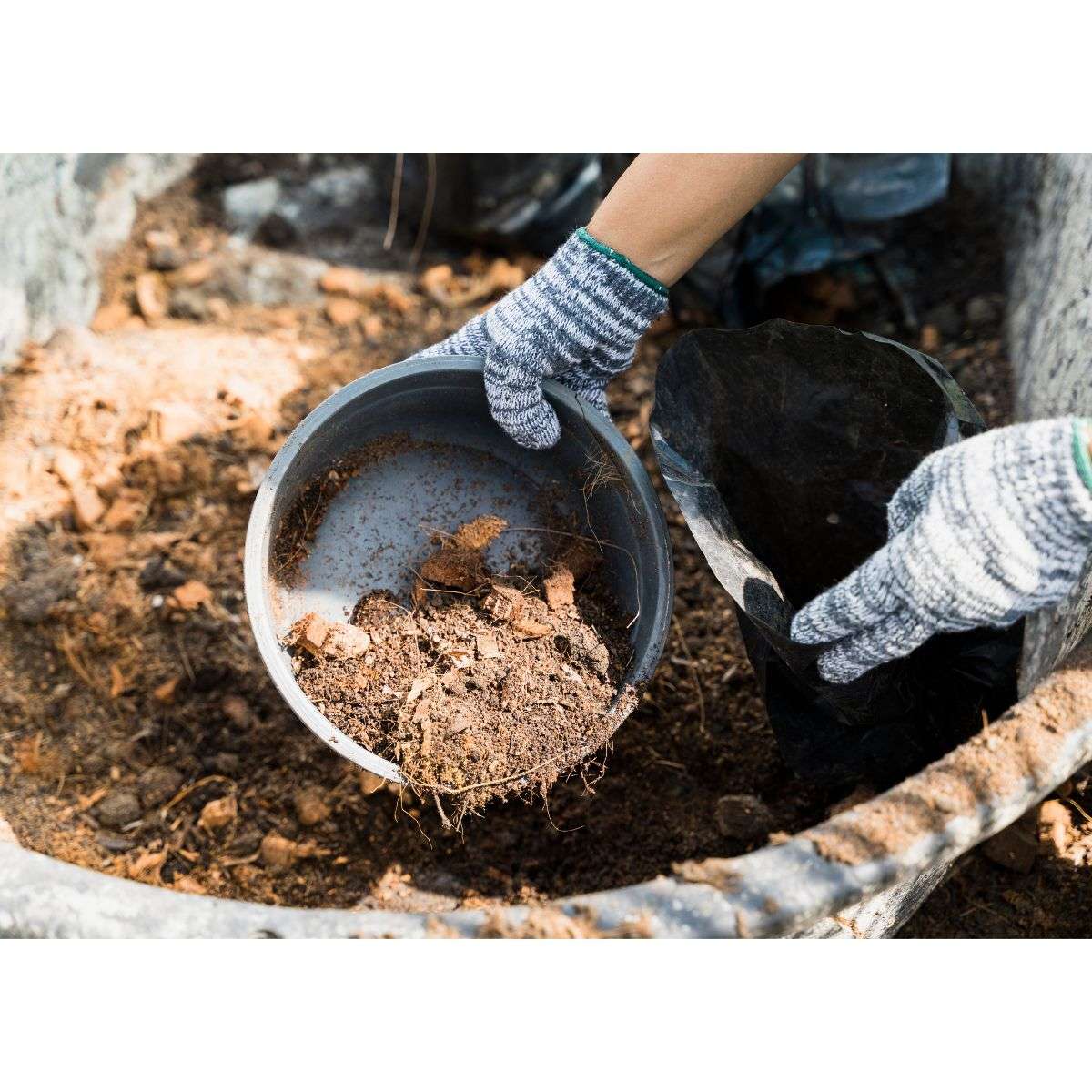
Using Bedding to Improve Compost
Coop litter = pre-started compost: Manure already mixed with bedding has a better C: N ratio than pure droppings.
Deep litter method: Let bedding accumulate in the coop for months. Bottom layers begin composting naturally. This creates partially composted material needing less time in your pile.
Best practice: Clean coops when bedding is damp but not soaked. This moisture level is perfect for composting—not too wet, not too dry.
4. Choose the Right Composting Method
Hot Composting: The Gold Standard
How it works: Large piles (3×3×3 feet minimum) generate internal heat from microbial activity. Temperatures reach 130-150°F, killing pathogens and weed seeds.
Timeline: 3-6 months with regular turning
Best for:
- Multiple chickens (enough material for proper pile size)
- Food garden safety (pathogen elimination essential)
- Faster compost production
- Killing weed seeds from bedding
Requirements:
- Minimum 3 cubic feet volume
- Proper C: N balance (25-30:1)
- Adequate moisture (wrung-out sponge)
- Regular turning (every 1-2 weeks)
Cold Composting: The Easy Alternative
How it works: Pile sits undisturbed, decomposing slowly over 6-12 months. Never gets hot enough to kill all pathogens.
Best for:
- Small flocks (limited material)
- Ornamental gardens only (not food crops)
- Less labor-intensive approach
- When you have plenty of time
Safety concern: Cold compost doesn’t eliminate pathogens reliably. Use only on flowers, lawns, and non-food plants.
Small Backyard Reality Check
2-4 chickens: Produce 1-2 cubic feet of manure monthly. Barely enough for hot composting unless you add other materials (kitchen scraps, yard waste).
Solution for small operations:
- Collect manure for 2-3 months to build a proper pile size
- Mix with grass clippings, leaves, and garden debris
- Use tumbler bins (easier turning, faster results)
5-10+ chickens: Enough material for continuous hot composting with proper management.
See more How to Make Vermicompost at Home (Complete 11-Step Guide)
See more How to Make Your Own Compost at Home
Read more Best Organic Fertilizers for Vegetables (Natural & Safe)
Read more Compost vs Fertilizer: What’s the Difference?
5. Control Heat, Moisture, and Turning
Temperature Management
Target zones:
- 130-150°F: Pathogen kill zone (maintain 3+ days minimum)
- Above 160°F: Too hot (kills beneficial microbes, slows decomposition)
- Below 120°F: Not hot enough to eliminate pathogens
Monitoring: Use a compost thermometer ($15-25). Check the center of the pile every 3-4 days.
Heat problems:
Too cool: Pile too small, insufficient nitrogen, too dry, or the weather is too cold.
- Fix: Add more material, add fresh manure, increase moisture, and insulate the pile.
Too hot: Pile too large, excessive nitrogen, insufficient carbon.
- Fix: Add carbon materials, spread the pile slightly, and increase turning.
Moisture Balance
Perfect moisture: Squeeze a handful of compost—it should feel like a wrung-out sponge (damp but not dripping).
Too dry:
- Signs: Dusty, won’t heat up, slow decomposition
- Fix: Water pile while turning (don’t flood—gradual moisture addition)
Too wet:
- Signs: Dripping when squeezed, ammonia smell, matted/compacted
- Fix: Add dry carbon (straw, shredded paper), turn frequently for aeration
Rain management: Cover the pile with a tarp during heavy rain. Remove tarp during dry spells for air circulation.
Turning Schedule
Why turning matters: Adds oxygen (prevents anaerobic conditions), redistributes moisture and heat, speeds decomposition.
Hot composting schedule:
- Turn when the temperature drops below 120°F (usually every 5-7 days initially)
- After 3-4 weeks, turn every 2-3 weeks
- Stop turning final month (allows compost to stabilize)
How to turn: Move outer material to the center, center material to the edges. This exposes all material to high heat zones.
Tool: Pitchfork works best. Compost aerator tools help with large piles.
6. Know When Compost Is Fully Ready
Signs of Finished Compost
Visual checks:
- Dark brown to black color (no visible manure chunks)
- Crumbly texture (not clumpy or slimy)
- Original materials unrecognizable
- Volume reduced by 40-60% from the starting size
Smell test:
- Earthy, forest-floor scent
- No ammonia odor
- No manure smell
Temperature:
- Cooled to ambient temperature
- Stays cool for 2+ weeks (indicates activity finished)
Time indicators:
- Hot composting: 3-6 months minimum
- Cold composting: 6-12 months minimum
Why Using Unfinished Compost Causes Crop Failure
Problems from immature compost:
Nitrogen robbery: Decomposing material consumes nitrogen from the soil, starving plants. Leaves turn yellow, and growth stunts.
Ammonia burn: Residual ammonia burns roots and foliage.
Pathogen contamination: Harmful bacteria survive, potentially contaminating food crops.
Phytotoxic compounds: Partially decomposed material releases compounds toxic to germinating seeds and young plants.
The Cress Germination Test
Most reliable readiness test:
- Mix 1 part compost with 1 part potting soil
- Plant 10 cress seeds in this mix
- Plant 10 cress seeds in pure potting soil (control)
- Wait 5 days
Results:
- Compost ready: Both sets germinate and grow equally
- Compost immature: Compost-mix seeds fail to germinate or grow poorly
If seeds die or grow stunted, compost needs more time.
7. Apply Chicken Manure Compost Without Harming Crops
Where It Works Best
Excellent uses:
- Heavy feeders: Tomatoes, peppers, squash, corn, brassicas
- Established perennials: Roses, fruit trees, berry bushes
- Lawn top-dressing: 1/4-1/2 inch layer
- Garden bed preparation: Work into the soil 2-4 weeks before planting
Where NOT to Use It
Avoid on:
- Root vegetables at planting (carrots, radishes, beets)—causes forking and deformation.
- Freshly seeded areas (too rich for germination)
- Acid-loving plants (blueberries, azaleas)—chicken compost raises pH
- Seedlings (burns tender roots)
Timing for root crops: Add chicken compost to beds in fall for spring root vegetable planting. This gives nutrients time to mellow.
Application Rates
How much to use:
Vegetables (heavy feeders):
- 1-2 inches worked into the top 6 inches of soil before planting
- Side-dress growing plants: 1/2 inch around base (6 inches from stems)
Established perennials:
- 1-2 inch layer as mulch around plants
- Keep 3-4 inches away from trunks/stems
Lawn:
- 1/4-1/2 inch top-dressing spread evenly
- Water in thoroughly
New gardens:
- 2-3 inches tilled into the soil in the fall
- Let it rest over winter before spring planting
Signs of Over-Application
Too many causes:
- Excessive leaf growth, poor fruiting
- Salt buildup (white crust on soil surface)
- Burned leaf edges
- Algae growth on the soil surface
If this happens: Flush soil with water, dilute with compost or aged manure, and skip fertilizing that season.
Better approach: Start with less. You can always add more next season.
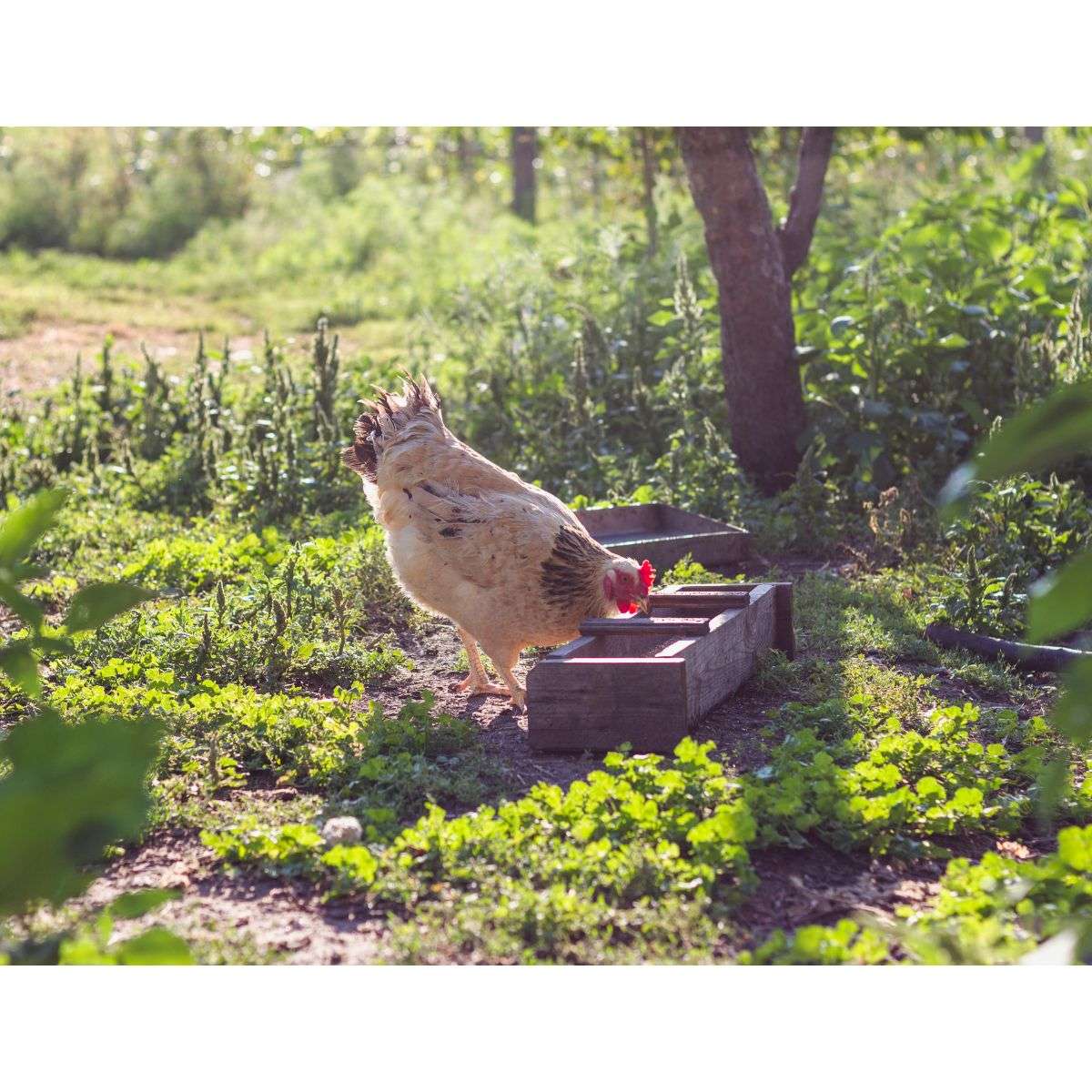
Practical Composting Setup for Chicken Keepers
Simple Two-Bin System
Bin 1 (Active): Currently filling with fresh manure and bedding
Bin 2 (Curing): Composting or aging finished compost
Rotation: When Bin 1 fills, start Bin 2. Bin 1 cures while you fill Bin 2.
Materials You Need
- Two bins or bays (3×3×3 feet each)
- Pitchfork for turning
- Compost thermometer
- Carbon sources (straw, leaves, shredded paper)
- Tarp (rain protection)
Total cost: $50-150, depending on bin type (pallets are cheapest, commercial bins are easiest).
Weekly Routine
5-10 minutes:
- Collect coop cleanings
- Layer with carbon material (3:1 ratio)
- Check moisture (spray if dry)
- Monitor temperature
Every 1-2 weeks (15-20 minutes): 5. Turn active pile 6. Add water if needed
That’s it. Simple, manageable, effective.
See more What Is Compost? Why It’s Important for Healthy Gardening
See more Top 10 Natural Ways to Improve Garden Soil
Read more 5 Tips to Prepare Soil for a Vegetable Garden
Read more How Often Should You Water Garden Plants? (Complete Guide)
Hot vs Cold Chicken Manure Composting
1. Hot Composting: The Thermophilic Furnace
Hot composting is an intensive, aerobic strategy designed to harness the “fever” of microbial metabolism. It is a high-octane process that requires precise management of the C: N (Carbon-to-Nitrogen) ratio.
- The Process: By blending high-nitrogen chicken manure with “brown” carbon sources (straw, sawdust, or shredded cardboard) in a 30:1 ratio, you trigger a massive bloom of thermophilic bacteria.
- The Thermal Threshold: A well-managed hot pile will reach internal temperatures of 55°C to 70°C. This is the “kill zone.” This heat is vital because it neutralizes enteric pathogens like Salmonella and E. coli while simultaneously denaturing weed seeds.
- The Velocity: Because the bacteria are working at peak metabolic rates, the manure is transformed into stable, odor-free humus in as little as 21 to 45 days.
- The Requirement: This is a labor-heavy method. The pile must be “turned” frequently to introduce oxygen, and moisture levels must be maintained to mimic the consistency of a wrung-out sponge.
2. Cold Composting: The Passive Cure
Cold composting, often referred to as “Static Pile” or “Passive Aging,” is the path of least resistance. It relies on slower-moving mesophilic bacteria and fungi to dismantle the manure’s organic complexity.
- The Process: Manure is simply stacked and left to the elements. There is no active turning or precise ratio balancing.
- The Timeline: Because the pile lacks the concentrated energy to “ignite” thermally, stabilization occurs through time-based degradation. This typically requires 6 to 12 months before the manure is “cured” enough for garden use.
- The Drawbacks: The primary risk is the lack of sanitation. Cold piles rarely reach the temperatures needed to destroy pathogens or persistent weeds. Furthermore, without a carbon cover, nitrogen can “volatilize” into the atmosphere as ammonia gas, resulting in a loss of nutrient value.
- The Benefit: It is ideal for large-scale homesteaders with ample space who prefer to let nature take its course without daily intervention.
Summary of Biological Trade-offs
| Feature | Hot Composting | Cold Composting |
| Metabolic Driver | Thermophilic Bacteria | Mesophilic Fungi & Bacteria |
| Sanitation | High (Thermal Sterilization) | Low (Competitive exclusion only) |
| Nutrient Quality | Concentrated and Bioavailable | Highly stable but lower Nitrogen |
| Skill Level | Technical/Active | Entry-level/Passive |
The Master’s Verdict
If you are growing high-contact leafy greens or root vegetables, Hot Composting is the gold standard for safety and speed. If you are prepping a future orchard site or a perennial bed a year in advance, Cold Composting is a viable, low-energy alternative.
Regardless of the method, the goal is stabilization. Applying chicken manure before it has been fully “civilized” by microbes is a gamble that usually ends in scorched roots and stunted yields.
FAQ
What can I mix with chicken poop for compost?
Best additions:
- Straw or hay (4 parts straw to 1 part manure)
- Shredded leaves (3-4 parts to 1 part manure)
- Grass clippings (2 parts to 1 part manure—avoid thick layers)
- Shredded cardboard/paper (3 parts to 1 part manure)
- Garden waste (vegetable plants, weeds without seeds)
Avoid: Meat, dairy, diseased plants, pet waste, treated wood products.
How long does chicken poop take to compost?
Hot composting: 3-6 months with regular turning and proper management.
Cold composting: 6-12 months minimum.
Factors affecting speed: Pile size, C: N ratio, moisture, turning frequency, temperature, and particle size.
Food safety: Wait for 6 months before using on vegetables to ensure pathogen elimination.
Can I use chicken poop directly on my garden?
No—never use fresh chicken manure on gardens.
Why not:
- Burns plants from high ammonia
- Contains harmful pathogens
- Too concentrated (kills beneficial soil life)
- Creates nutrient imbalances
Exception: Scatter lightly on empty beds in late fall, let winter weather break it down. Till in the spring before planting. Not recommended for food gardens due to pathogen concerns.
Always compost first for safety and effectiveness.
Which plants don’t like chicken manure?
Avoid or use sparingly on:
Acid-loving plants: Blueberries, azaleas, rhododendrons, camellias (chicken manure raises pH)
Salt-sensitive plants: Many herbs (lavender, rosemary), strawberries, beans
Root vegetables at planting: Carrots, parsnips, radishes (causes forking—apply season before instead)
Seedlings: Too strong for tender plants
Newly transplanted plants: Wait 2-3 weeks for roots to establish
For these plants: Use aged leaf mold, mushroom compost, or well-aged cow manure instead.
How to compost chicken manure fast
Fastest method (3-4 months):
- Build a proper-sized pile: Minimum 3×3×3 feet (27 cubic feet)
- Perfect ratio: 3-4 parts carbon to 1 part manure by volume
- Chop materials: Smaller pieces = faster breakdown
- Maintain moisture: Wrung-out sponge consistency
- Turn frequently: Every 3-5 days when hot, weekly when cooler
- Monitor temperature: Keep 130-150°F for pathogen kill
- Insulate in winter: Straw bales around pile, tarp over top
Can’t speed up too much: Rushing reduces pathogen elimination. Minimum 90 days necessary for safety.
How to compost chicken manure in 18 days
Reality check: 18 days is NOT sufficient for safe compost.
Why this claim exists: The Berkeley Hot Composting method produces finished compost in 18 days with perfect conditions and daily turning.
The problem: Even if the texture looks done, pathogens require sustained heat (130-150°F) for a minimum of 3 days, plus curing time. Most 18-day compost hasn’t eliminated harmful bacteria.
For food gardens: Don’t rush. Standard 3-6 month timeline ensures safety.
If you must use quickly: Only on ornamentals, never on vegetables. Risk isn’t worth it.
Best compost bin for chicken manure
Top choices:
Wire bins (pallets/wire mesh):
- ✓ Excellent airflow
- ✓ Cheap ($20-40)
- ✓ Easy turning access
- ✗ Doesn’t retain heat well
Tumbler bins:
- ✓ Easy turning (no pitchfork needed)
- ✓ Good for small amounts
- ✓ Pest-proof
- ✗ Expensive ($100-300)
- ✗ Limited capacity
Three-bin system (wood pallets):
- ✓ Large capacity
- ✓ Allows continuous composting
- ✓ Very cheap (often free pallets)
- ✗ Requires space
Commercial plastic bins:
- ✓ Neat appearance
- ✓ Rodent-resistant
- ✗ Often too small for proper heat generation
- ✗ Poor ventilation
Best overall: Wire or pallet bins for most chicken keepers (cheap, functional, the right size). Tumblers work for small flocks (2-4 birds).
How long does it take to compost chicken manure
Minimum safe timeline:
For vegetable gardens: 6 months minimum from start to application.
For ornamental beds: 3-4 months (lower pathogen concern).
Breakdown:
- Month 1-2: Active hot phase (turning weekly)
- Month 3-4: Cooling and continued decomposition
- Month 5-6: Curing (stabilization period)
Food safety rules:
- 120 days between application and harvest for ground crops
- 90 days for crops growing above ground
Don’t rush this process. Patience = safe, effective compost.
Your Chicken Manure Composting Action Plan
Starting this week:
- Set up a simple bin (3×3×3 feet minimum)
- Collect carbon materials (straw, leaves, cardboard)
- Start layering: 4 parts carbon, 1 part manure
First month: 4. Monitor moisture (wrung-out sponge feel) 5. Check temperature (should hit 130-150°F) 6. Turn pile when temp drops below 120°F 7. Add water if dry, carbon if too wet
Months 2-3: 8. Continue turning every 1-2 weeks 9. Maintain moisture 10. Watch for temperature stabilization
Months 4-6: 11. Less frequent turning (every 3-4 weeks) 12. Let pile cure and stabilize 13. Test readiness (smell, texture, temperature)
Application: 14. Use on heavy feeders first (tomatoes, squash) 15. Start with moderate amounts (1-2 inches) 16. Observe plant response 17. Adjust future applications based on results
Success indicators:
- No ammonia smell during composting
- Pile heats properly (130-150°F)
- The finished product is dark and crumbly
- Plants thrive without burning
Chicken manure is gardener’s gold—when composted properly. Skip the shortcuts, follow the process, and you’ll have the richest fertilizer possible feeding your garden for free.
Your chickens create it daily. You just need to transform it safely. Simple as that.