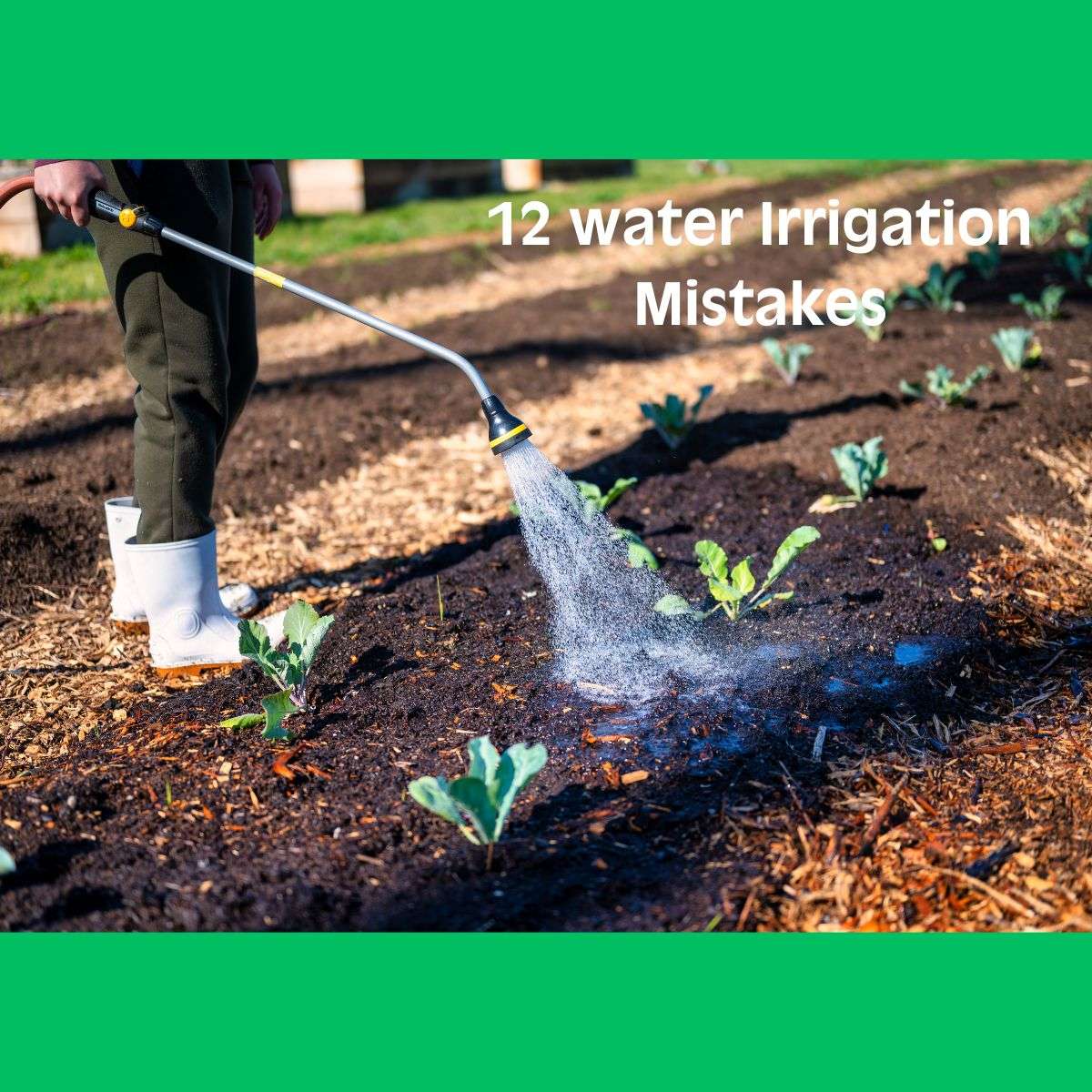
Common Irrigation Mistakes Gardeners Make and How to Avoid Them
1. Overwatering: The Silent Root Killer
Problem: Daily Light Watering Creates Shallow Roots
Most gardeners water for 5-10 minutes daily, thinking consistency is key. This is the opposite of what plants need.
What actually happens:
- Roots stay in the top 2-3 inches of soil (where water sits)
- Never develop deep roots to access moisture below
- Plants can’t survive if you miss even one day of watering
- Heat stress increases because shallow roots can’t reach cool, deep soil moisture
The math that kills plants: 10 minutes daily = 70 minutes weekly spread thin across the surface. Roots follow water. Keep the water shallow, roots stay shallow.
Real-world result: Your tomatoes wilt in the afternoon heat despite daily watering because roots are only 4 inches deep instead of the 12-18 inches they should be.
Solution: Water Deeply 2-3 Times Weekly
Change your approach:
Instead of: 10 minutes daily
Do this: 30-45 minutes 2-3 times weekly
How to water deeply:
- Water until the soil is wet 8-12 inches down
- Test with a screwdriver or soil probe
- Should penetrate easily when the soil is properly moistened
- If it won’t go in, the soil is too dry
- If muddy, you’ve overwatered
- Let the soil dry slightly between watering
- Top 2-3 inches should feel dry before watering again
- Stick finger in soil—if damp at 2 inches, wait
- This forces roots to grow downward, seeking moisture
- Adjust by plant type:
| Plant Type | Watering Depth | Frequency |
| Vegetables | 8-12 inches | 2-3x weekly |
| Shrubs | 12-18 inches | 1-2x weekly |
| Trees | 18-24 inches | Weekly or less |
| Containers | Until it drains from the bottom | When the top 1 inch is dry |
Timeline for seeing results: 3-4 weeks. Roots don’t grow overnight, but you’ll notice plants handling heat better and needing less frequent watering.
Problem: Signs of Overwatering Mistaken for Thirst
Yellowing leaves + wilting = must need water, right?
Wrong. This is a classic overwatering symptom that tricks people into watering more—making the problem worse.
Why does this happen:
- Waterlogged soil has no air pockets
- Roots need oxygen to function
- Without oxygen, roots suffocate and die
- Dead roots can’t absorb water
- The plant wilts despite wet soil
How to tell the difference:
| Symptom | Overwatering | Underwatering |
| Soil moisture | Wet, muddy | Dry, dusty |
| Leaf texture | Soft, mushy | Crispy, brittle |
| Leaf color | Yellow starting at the bottom | Brown, curled edges |
| Wilting | Doesn’t improve after watering | Perks up after water |
| Root smell | Rotten, sewage-like | No odor |
Solution: Check the soil before watering
Stop guessing. Start testing.
Method 1 – Finger test (free):
- Push finger 2-3 inches into the soil
- Damp = don’t water
- Dry = water deeply
Method 2 – Moisture meter ($10-15):
- Insert the probe into the root zone
- Reads moisture on a 1-10 scale
- Water when reading drops to 3-4
Method 3 – Visual soil check:
- Dig a small hole 4-6 inches deep
- Look at soil color and moisture
- Dark, clumps together = wet enough
- Light colored, crumbly = needs water
If you’ve been overwatering:
- Stop watering immediately until the top 3 inches dry completely
- Improve drainage by adding compost or creating channels in the soil
- Check roots for rot (black, mushy = rotted, white/tan = healthy)
- Remove damaged roots if possible, and repot container plants in fresh soil
- Resume proper watering schedule (deep and infrequent)
Recovery time: 2-4 weeks if caught early, 6-8 weeks if severe root damage occurred.
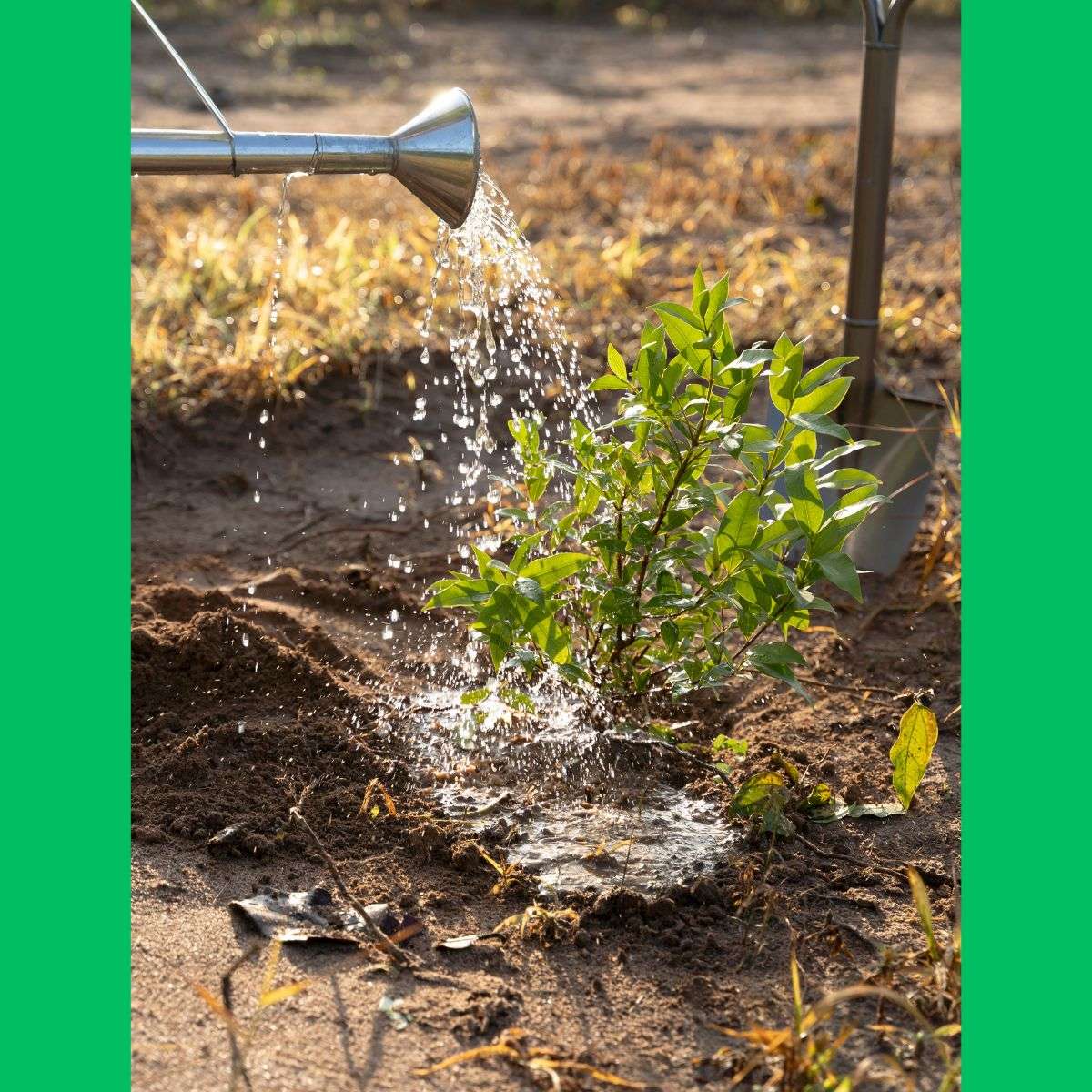
2. Watering at the Wrong Time of Day
Problem: Midday Watering Wastes 30-50% to Evaporation
Watering during the heat of the day (11 AM – 4 PM) is like pouring water on hot pavement.
What happens:
- Water evaporates before reaching the roots
- You need 2× the water to achieve the same soil moisture
- Wet leaves + intense sun = potential leaf scorch
- Plants experience heat stress despite watering
The numbers: Midday evaporation can reach 50% in hot climates. You’re literally watering the air.
Solution: Water Early Morning (6-9 AM)
Why morning is ideal:
✓ Minimal evaporation (cool temperatures)
✓ Leaves dry quickly (reduces disease)
✓ Plants enter heat with full water reserves
✓ 30-50% less water needed than midday watering
Exact timing by climate:
- Hot climates (85°F+ days): 6-7 AM
- Moderate climates: 7-9 AM
- Cool climates: 8-10 AM
Can’t water in the morning? Second-best option: Evening (5-7 PM)
Evening watering works when:
- You water the soil directly (not the leaves)
- Temperatures will stay above 60°F overnight
- Humidity is low (reduces fungal disease risk)
Avoid: Watering after 8 PM in humid climates—creates disease-friendly conditions.
Problem: Late Night Watering Invites Disease
Wet leaves overnight = fungal paradise.
Fungi need moisture and 6-8 hours to establish. Watering late evening provides exactly this.
Common diseases from late watering:
- Powdery mildew (white coating on leaves)
- Downy mildew (yellow spots, white underside)
- Botrytis blight (gray fuzzy mold)
- Bacterial leaf spot (dark spots with yellow halos)
I learned this the hard way: Watered tomatoes at 9 PM for two weeks. Every plant developed powdery mildew. Had to apply fungicide and lost 40% of production.
Solution: Adjust Timing or Switch Systems
Immediate fix:
- Move watering to 6-8 AM (set timer if automatic system)
- If evening only option: Water before 7 PM
- Switch to drip irrigation (keeps water at the soil level, off leaves)
For automatic systems:
Reprogram timer:
- Summer: Start at 6 AM
- Spring/Fall: Start at 7 AM
- Winter: 8-9 AM (if watering at all)
Smart controllers (worth the investment):
- Adjust based on weather data
- Skip watering after rain
- Cost: $100-200
- Water savings: 25-40%
- Payback period: 1-2 years
3. Watering Leaves Instead of Roots
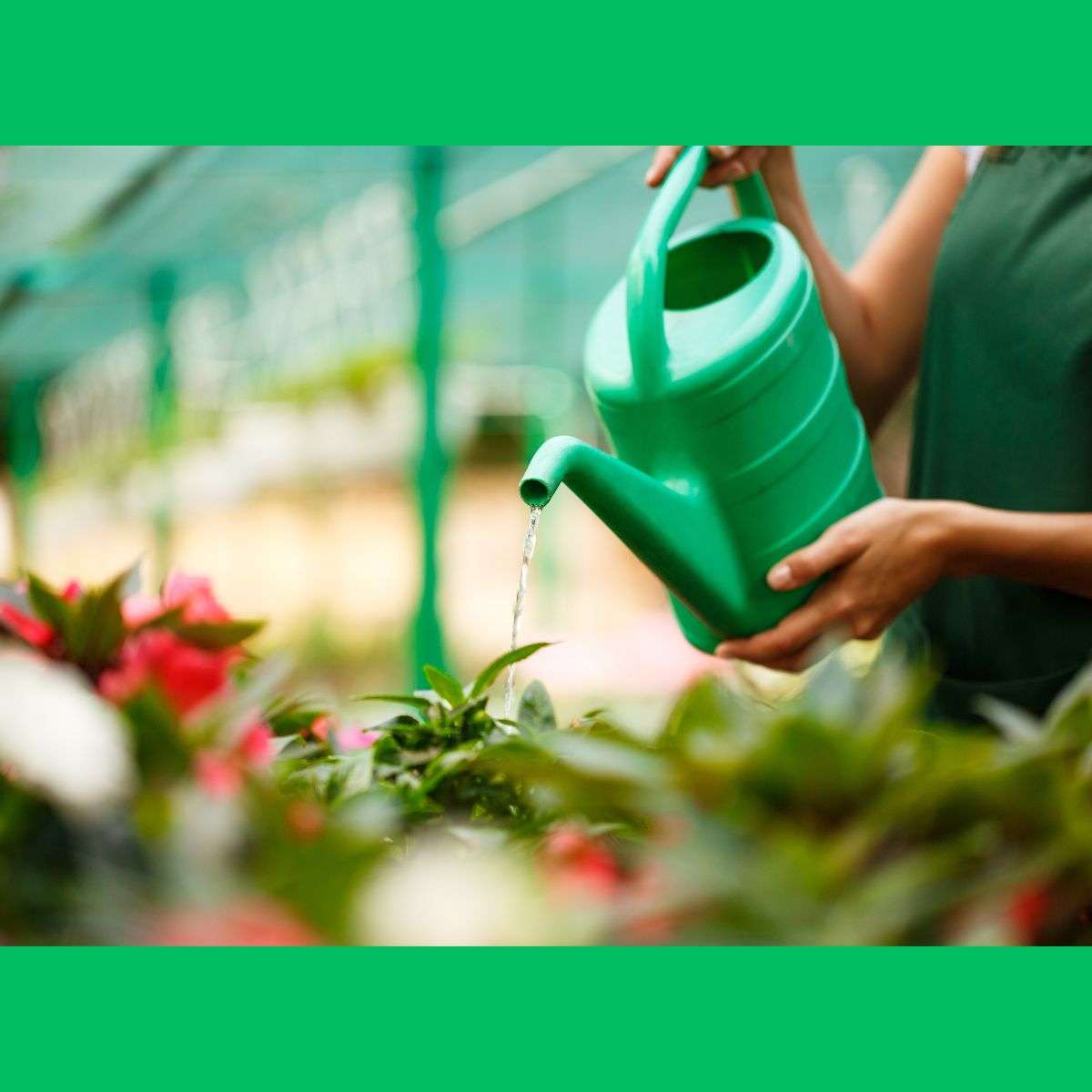
Problem: Overhead Watering Promotes Disease
Plants absorb water through roots, not leaves. Spraying foliage accomplishes nothing except creating wet conditions where diseases thrive.
What overhead watering causes:
- Fungal spores on leaves get the water they need to germinate
- Bacteria spread from leaf to leaf via water droplets
- 30-40% water waste (evaporation + runoff from leaves)
- No actual benefit to the plant
Nutrient uptake reality: Zero nutrients are absorbed through leaves when you spray them with water. All absorption happens at root zone.
Solution: Redirect Water to Soil Level
Option 1 – Drip irrigation (best for most gardens):
Setup:
- Main line along garden bed
- Emitters every 12-18 inches
- Water drips directly on the soil around the plant base
- Leaves stay completely dry
Cost: $50-100 for a 100 sq ft garden bed
Installation time: 2-3 hours for an average garden
Benefits:
- 90% less disease
- 30-50% less water used
- Can water anytime without disease risk
Option 2 – Soaker hoses:
How to use:
- Lay along plant rows
- Cover with 1-2 inches of mulch (increases efficiency)
- Water seeps directly into the soil
Cost: $15-25 per 50 feet
Best for: Vegetable rows, raised beds, foundation plantings
Option 3 – Adjust sprinkler angles:
If keeping sprinklers:
- Angle heads down at 30-45 degrees (not straight up)
- Target root zone, not plant canopy
- Use larger droplets (reduces leaf wetting)
- Water early in the morning so leaves dry quickly
Conversion priority: Switch high-value plants first (tomatoes, squash, roses). These are the most disease-prone.
4. Using the Wrong Irrigation System
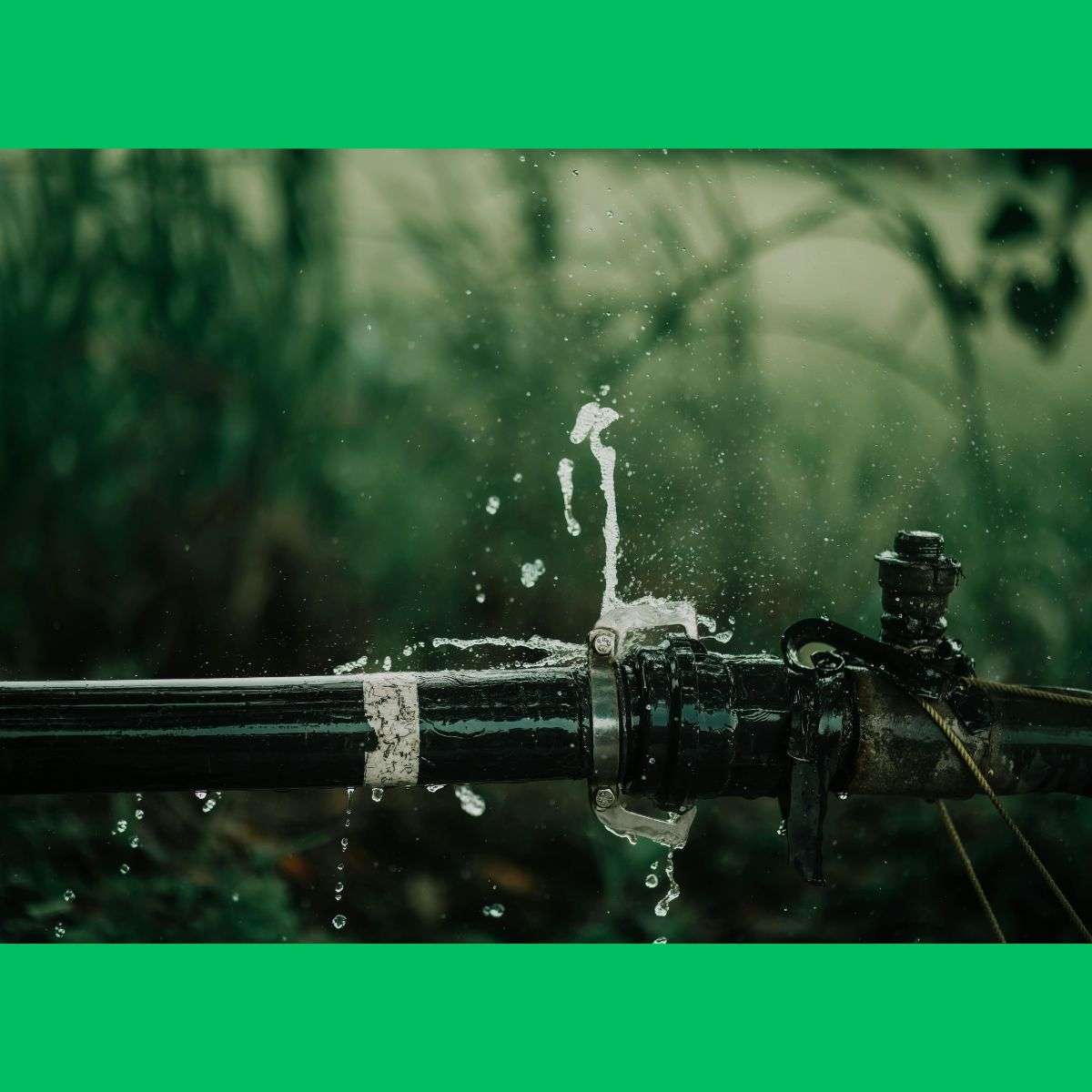
Problem: Sprinklers in Small Vegetable Gardens Create Chaos
Sprinklers designed for lawns fail in vegetable gardens because:
Overspray issues:
- Water sidewalks, paths, and non-plant areas
- 20-30% waste from poor targeting
- Wet foliage promotes disease
Coverage problems:
- Tall plants block water from reaching short plants
- Uneven distribution (some areas get 2x water, others half)
- Wind blows water off-target
Soil damage:
- Heavy spray compacts the soil surface
- Creates a crust preventing water infiltration
- Puddles form, water runs off instead of soaking in
Solution: Match System to Plant Type
| Garden Type | Best System | Why |
| Vegetables | Drip irrigation | Precise water placement, disease prevention |
| Flower beds | Drip or micro-spray | Adjustable for different plant heights |
| Lawn | Sprinklers | Even coverage is needed across a large area |
| Containers | Hand watering or drip | Individual plant control |
| Trees/shrubs | Drip or soaker | Deep watering, water conservation |
Switching from sprinklers to drip in the vegetable garden:
Week 1 – Planning:
- Measure bed dimensions
- Count plants and spacing
- Calculate materials needed
Week 2 – Installation:
- Run the main drip line down the center of the bed
- Add emitters or drip tubing for each plant
- Connect to the timer and filter
- Test system, adjust emitter placement
Week 3 onwards – Enjoy benefits:
- Water use drops 40-50%
- Disease problems decrease dramatically
- Plants grow better (consistent moisture)
- Less weeding (dry surface between plants)
Cost comparison:
- Sprinkler system for 200 sq ft garden: $150-300
- Drip system for the same area: $75-150
- Water savings: 40-50% annually
Problem: Drip Systems Without Pressure Regulation
Municipal water pressure (40-60 PSI) is too high for drip systems designed for 15-25 PSI.
Results:
- Emitters blow off fittings
- Lines split or burst
- Some plants get 3x more water than others
- System lifespan reduced by 50%
Solution: Install Pressure Regulator
Required components:
Pressure regulator:
- Reduces line pressure to 15-25 PSI
- Installs at system start (after filter, before drip lines)
- Cost: $8-15
- Lasts 3-5 years
Installation:
- Turn off the water
- Install after filter, before timer or drip mainline
- The arrow on the regulator points toward the drip system
- Hand-tighten, then 1/4 turn with wrench
- Test system—water should flow gently from emitters
Check pressure is correct:
- Water should drip from emitters, not spray
- All emitters should flow at a similar rate
- No leaks at connections
If still uneven: Add individual emitter flow regulators ($0.50 each) at problem locations.
5. Ignoring Water Pressure and Flow Problems
Problem: High Pressure Destroys System Components
Pressure above 60 PSI causes damage:
- Drip emitters pop off
- PVC joints fail and leak
- Tubing splits
- Sprinkler heads break
Real costs: One blown joint creates 50+ gallons of waste per hour. Undetected leak for 3 days = 3,600 gallons wasted = $20-40 water bill increase.
Solution: Test and Regulate Pressure
Test your pressure (5 minutes):
What you need: Pressure gauge ($10-15 at hardware store)
Steps:
- Attach the gauge to the outdoor faucet
- Turn the water on fully
- Read pressure (should be 40-60 PSI)
- If above 60 PSI, install a pressure regulator at the main line
System-wide pressure regulator installation:
For the whole property:
- Install at the main water line
- Reduces pressure for the entire irrigation system
- Cost: $50-100 (professional install) or $25 + your time (DIY)
For individual zones:
- Install a regulator at each zone valve
- Allows different pressures for different areas
- Cost: $10-15 per zone
Problem: Low Pressure Creates Dry Zones
Pressure below 30 PSI causes:
- Sprinklers don’t pop up fully
- Drip emitters are slow to trickle
- The far end of the system gets no water
- Plants show stress despite the system running
Common causes:
- Too many zones are running simultaneously
- Pipe diameter too small for the distance
- Partially closed valves
- Shared water line with the house
Solution: Identify and Fix Pressure Loss
Diagnosis:
- Turn on one zone at a time
- Does pressure improve? The problem is that too many zones are running
- Still low? Continue troubleshooting
- Check that all valves are fully open
- Main shutoff, zone valves, backflow preventer
- Quarter-turn = 50% pressure loss
- Measure actual flow rate:
- How long to fill a 5-gallon bucket
- 30 seconds = 10 GPM (good)
- 60+ seconds = 5 GPM (low—problem exists)
Fixes by cause:
Too many zones running:
- Reprogram timer running zones sequentially (not simultaneously)
- Add a delay between zone start times
Pipe too small:
- 1/2″ pipe maximum 5 GPM
- 3/4″ pipe maximum 10 GPM
- 1″ pipe maximum 18 GPM
- Replace undersized pipe sections
Long-distance pressure loss:
- Use a larger diameter pipe for the main line
- Install booster pump (extreme cases)
- Reduce the number of emitters per zone
6. Skipping Filters Clogs Your System
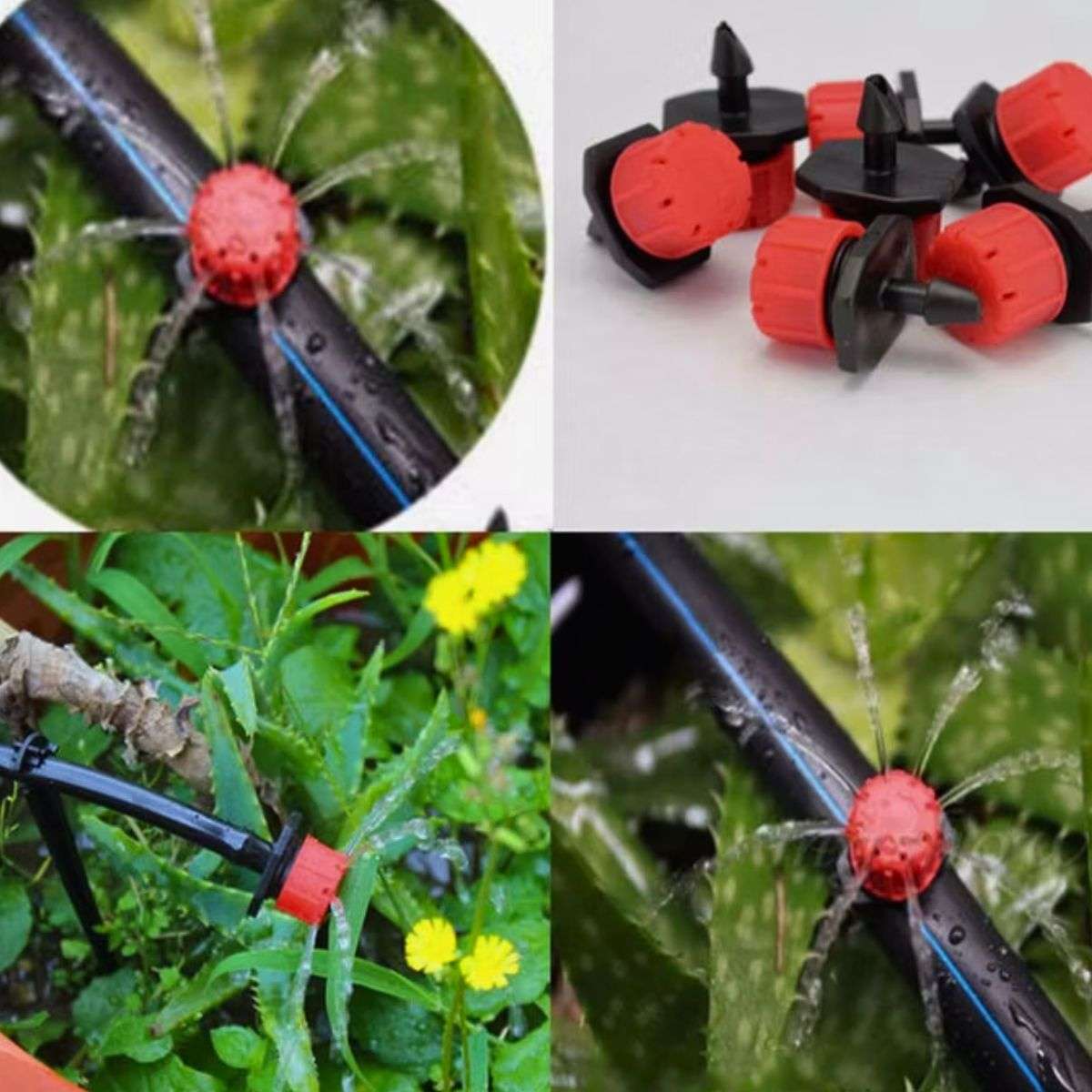
Problem: Sediment and Minerals Block Emitters
Unfiltered water carries:
- Silt and sand particles
- Rust from pipes
- Mineral deposits (calcium, magnesium)
- Algae and organic matter
What happens over time:
- Drip emitters clog one by one
- Water distribution becomes uneven
- Some plants get zero water, while others flood
- You don’t notice until plants show severe stress
In hard water areas, Calcium carbonate builds up inside emitters, reducing flow by 50% within one season.
Solution: Install and Maintain Filters
Filter requirements by water source:
| Water Source | Filter Needed | Cost |
| City water | 150-200 mesh screen filter | $15-30 |
| Well water | 150 mesh + sediment filter | $30-60 |
| Rainwater collection | 100 mesh + sediment filter | $40-80 |
| Pond/creek | Multi-stage filtration | $75-150 |
Installation location:
- After the main shutoff valve
- Before the pressure regulator
- Before timer
- Before any drip lines
Maintenance schedule:
Monthly during growing season:
- Remove the filter screen
- Rinse under running water
- Scrub with an old toothbrush
- Check for holes or damage
- Reinstall
Every 6 months:
- Soak the screen in a vinegar solution (1:1 ratio) for 30 minutes
- Removes mineral buildup
- Extends filter life
Annual:
- Replace the filter screen if damaged
- Flush entire system (open end caps, run water 2-3 minutes)
Signs filter needs immediate cleaning:
- Reduced water pressure at emitters
- Some zones are not working
- Emitters are dripping more slowly than normal
Cost of skipping filters: $50-150 replacing clogged emitters + $100+ in dead plants vs. $20 filter preventing all problems.
7. Poor Zoning Ruins Plant Health
Problem: Mixing High-Water and Low-Water Plants
Putting cacti next to ferns = guaranteeing one will die.
What happens:
- Water enough for ferns = cacti rot
- Water enough for cacti = ferns wilt and die
- No watering schedule satisfies both
Common bad combinations:
- Tomatoes + lavender (tomatoes need 2x the water)
- Roses + succulents (roses need regular deep watering)
- Hydrangeas + drought-tolerant natives
Solution: Group by Water Needs
Create irrigation zones:
Zone 1 – High water (daily to every other day):
- Leafy vegetables, hydrangeas, impatiens
- Shallow-rooted annuals
- Container plants
Zone 2 – Moderate water (2-3x weekly):
- Most vegetables, perennials, and roses
- Established shrubs
- Lawn areas
Zone 3 – Low water (weekly or less):
- Succulents, lavender, ornamental grasses
- Native plants adapted to your climate
- Drought-tolerant shrubs
Redesign existing beds:
Option 1 – Move plants (best long-term):
- Transplant incompatible plants to appropriate zones
- Best done in fall or early spring
- One weekend project for an average garden
Option 2 – Create sub-zones with different emitters:
- High-water plants: 2 GPH emitters
- Low-water plants: 0.5-1 GPH emitters
- Same zone, different water amounts
Option 3 – Hand water high-water plants separately:
- Keep an automatic system for the drought-tolerant majority
- Supplement high-water plants manually 1-2x weekly
Problem: Ignoring Sun/Shade Differences
Identical plants in sun vs shade need different water:
- Full sun = 2x faster evaporation
- Shade = soil stays moist 2x longer
- One watering schedule = some areas too wet, others too dry
Result: Shaded plants develop root rot while sunny area plants wilt.
Solution: Separate Sun and Shade Zones
Run separate irrigation zones for:
- Full sun areas (6+ hours direct sun)
- Partial shade (3-6 hours of sun)
- Full shade (under 3 hours of sun)
Watering adjustments:
| Light Level | Frequency vs Full Sun | Run Time |
| Full sun | Baseline | 30-45 min |
| Partial shade | 50% less often | 20-30 min |
| Full shade | 60-70% less often | 15-20 min |
If you can’t create separate zones:
- Use adjustable emitters (flow control at each plant)
- Install inline valves shutting off sections
- Hand-water sun areas more frequently
8. Not Adjusting for Weather
Problem: Fixed Daily Schedule Wastes Water
Watering the same amount every day regardless of:
- Yesterday’s rain
- Today’s humidity
- Seasonal temperature changes
Example waste: The automatic system runs for 30 minutes daily. Rains 1 inch (equivalent to a week’s watering). The system still runs the next day, adding another 1 inch to already saturated soil.
Annual waste: 30-50% of water applied is unnecessary in climates with regular rainfall.
Solution: Use Smart Controllers or Manual Adjustments
Option 1 – Smart irrigation controller ($100-250):
What it does:
- Connects to local weather data
- Skips watering after rain
- Adjusts run time based on temperature and humidity
- Reduces water use by 25-40%
Best brands:
- Rachio ($150-200)
- Rain Bird ST8 ($180-220)
- Orbit B-hyve ($80-120)
Payback: Typically 1-2 years through water savings
Option 2 – Rain sensor ($25-50):
Simple weather response:
- Interrupts automatic watering after rain
- Prevents watering during rain
- Easy DIY install (connects to existing timer)
Option 3 – Manual seasonal adjustments:
Spring (March-May):
- Reduce run time 25% from summer levels
- Cooler temps + rain = less water needed
- Check the soil before each scheduled watering
Summer (June-August):
- Maximum watering schedule
- May need an increased run time of 10-20% during heat waves
- Monitor plants for stress
Fall (September-November):
- Reduce run time by 30-40% from summer
- Less frequent watering as temps cool
- Stop watering 2-3 weeks before the first frost
Winter:
- Turn the system off in freezing climates
- Reduce to 1x weekly in mild climates
- Water only on warm days if watering at all
Problem: Ignoring Free Rainwater
Watching rain fall while your irrigation system is scheduled for tomorrow = wasting money.
Average roof collects:
- 100 sq ft roof = 60 gallons per 1″ of rain
- 1,500 sq ft roof = 900 gallons per 1″ of rain
Solution: Harvest and Use Rainwater
Basic rain barrel setup:
- Install a 55-gallon barrel under the downspout
- Use collected water for containers and high-value plants
- Saves 800-1,000 gallons per year
Advanced system:
- 200-300-gallon tank connected to a drip system
- Automated irrigation from stored rainwater
- Fills back up with municipal water when empty
Simple rain delay:
- Check the weather forecast
- Rain predicted? Skip automatic watering
- Resume normal schedule after 2-3 days, no rain
See more – 10 Smart Ways to Harvest Rainwater for Your Garden
Read more – 10 Smart Ways to Save Water in the Garden.
9. Poor Layout Planning Costs Money
Problem: Inefficient Pipe Routing
Running pipes the long way around:
- Uses 30-50% more pipe than needed
- Costs $30-100 extra in materials
- Increases pressure loss
- More connection points = more potential leaks
Example: Running pipe around perimeter of lawn to reach far corner = 120 feet. Direct route through the lawn = 60 feet. Wasted: 60 feet of pipe, 4 fittings, $40-60.
Solution: Plan Before Installing
Layout planning (spend 30 minutes, save hundreds):
- Draw the property to scale on paper
- Mark the water source
- Mark all planting areas
- Note obstacles (sidewalks, trees)
- Plan the most direct routes
- Straight lines where possible
- Minimize turns (each 90° turn = 5% pressure loss)
- Group nearby plants on same zone
- Calculate materials needed
- Measure actual distances
- Add 10% extra for mistakes
- Buy all at once (avoid multiple trips)
Pipe sizing for distance:
| Distance from Source | Minimum Pipe Size |
| 0-50 feet | 1/2 inch |
| 50-100 feet | 3/4 inch |
| 100-200 feet | 1 inch |
| 200+ feet | 1 inch + booster pump |
Problem: Uneven Sprinkler Spacing
Sprinklers spaced randomly:
- Overlapping zones waste water (some areas get 2x coverage)
- Gaps leave dry patches
- The lawn develops brown spots and green stripes
Solution: Proper Head-to-Head Coverage
Spacing formula:
- Full-circle heads: Space at 50% of the radius
- Half-circle heads: Space at 50% of the radius
- Quarter-circle: Position in corners
Example:
- Sprinkler sprays a 15-foot radius
- Next head should be 7-8 feet away (50% of 15)
- Ensures overlap for even coverage
Testing coverage:
- Place empty tuna cans throughout the lawn
- Run system 15 minutes
- Measure water in each can
- Should all be within 25% of each other
- Adjust heads or add/move sprinklers to even coverage
10. Skipping Maintenance Until Failure
Problem: Hidden Leaks Waste Thousands of Gallons
Underground leaks you can’t see:
- Broken pipe joint leaking 2 gallons/minute
- 24 hours = 2,880 gallons wasted
- One week undetected = 20,000+ gallons
Your water bill jumps $100-200, and you have no idea why.
Solution: Monthly Walk-Through Inspection
Check these every month (15 minutes):
- Turn on each zone individually
- Watch for geysers, puddles, or unusually wet areas
- Note any sprinklers not working
- Inspect visible pipes and connections
- Look for wet spots, drips, and spray
- Tighten loose fittings
- Check drip emitters
- All should flow at a similar rate
- None should spray (indicates damage)
- Test timer/controller
- Verify zones start/stop on schedule
- Check the battery if battery-powered
- Look at plants
- Wilting despite watering = possible leak or clog
- Overly wet area = leak nearby
Finding hidden underground leaks:
Water meter test:
- Turn off all water in the house
- Check the water meter
- Wait 30 minutes without using water
- Check the meter again
- If it moved = you have a leak
Narrow down the location:
- Turn off the irrigation system
- Repeat test
- If the meter stops moving = leak is in the irrigation system
Problem: Seasonal Damage From Neglect
Winter freeze damage (cold climates):
- Water left in pipes expands when frozen
- Pipes split
- Spring startup reveals $200-500 in broken components
Summer degradation:
- UV exposure cracks plastic components
- Heat expands/contracts connections, causing leaks
- Debris clogs emitters
Solution: Seasonal Maintenance Schedule
Spring startup (before first use):
- Turn on the water slowly
- Inspect each zone for winter damage
- Replace broken heads, pipes, and fittings
- Clean filters
- Adjust the timer for the season
Mid-summer check:
- Clean clogged emitters
- Check for new leaks
- Verify all zones are working
- Adjust watering time if needed
Fall winterization (cold climates):
- Blow out all water from pipes (compressed air)
- OR a drain system using manual drain valves
- Insulate above-ground components
- Turn off the water supply to the system
- Set the timer to “off” or “rain mode.”
Mild climate fall:
- Reduce watering frequency
- Check for leaks (more visible when the system runs less)
- Clean filters before winter rains
Cost of maintenance: $20-40 in supplies annually
Cost of skipping maintenance: $200-500 in repairs + wasted water
11. Shallow Frequent Watering Weakens Plants
Problem: Surface Roots Create Heat-Stressed Plants
Daily 5-10 minute watering trains roots to stay shallow:
What happens:
- Roots concentrate in the top 2-3 inches of soil
- This zone heats up fastest in summer (90-100°F soil temperature)
- Hot soil causes root stress
- Plants wilt despite a moist surface
- You water more, making the problem worse
Deep-rooted plant comparison:
- Surface roots: Wilt at 85°F air temperature
- Deep roots (12+ inches): Handle 95-100°F without stress
Solution: Deep Watering Schedule
Transition from shallow to deep watering:
Week 1: Water current amount but reduce frequency by 50%
- If watering daily, switch to every other day
- Same total weekly water, different distribution
Week 2-3: Increase watering time, reduce frequency more
- Water every 3 days for 2x as long
Week 4+: Established deep watering pattern
- Water 2-3x weekly
- 30-45 minutes per session
- Soil is moist, 8-12 inches deep
Measuring depth:
Soil probe test:
- Push a 12-inch screwdriver into the soil
- After watering, should penetrate easily to the full depth
- If resistance = water hasn’t reached that deep
- Increase watering time
Visual check:
- Dig a small hole 8 inches deep after watering
- Soil at the bottom should be damp
- If dry = increase watering time by 10 minutes
Problem: Surface Moisture Encourages Weeds
Keeping the soil surface constantly moist:
- Weed seeds in the top inch germinate
- Shallow watering creates perfect weed conditions
- You spend hours pulling weeds that wouldn’t exist with deep watering
Weed explosion timeline:
- Week 1 of daily watering: Seeds germinate
- Week 2: Visible seedlings
- Week 3: Established weeds competing for nutrients
- Week 4+: Hours of weeding needed weekly
Solution: Deep Water + Mulch
Two-part strategy:
Part 1 – Deep infrequent watering:
- Water deeply 2-3x weekly
- The soil surface dries between watering
- Weed seeds dry out before germinating
Part 2 – Mulch application:
- 2-3 inches of organic mulch over the root zone
- Blocks light from reaching weed seeds
- Reduces surface evaporation
- Lowers soil temperature
Mulch options:
| Material | Cost | Lifespan | Benefits |
| Shredded bark | $30/yard | 2-3 years | Good moisture retention |
| Wood chips | Free-$20/yard | 3-4 years | Long-lasting, good weed control |
| Straw | $6-8/bale | 1 season | Cheap, easy to apply |
| Compost | $20-40/yard | 1 year | Adds nutrients while mulching |
Application:
- Weed thoroughly before mulching
- Water soil
- Apply 2-3 inches of mulch
- Keep mulch 2-3 inches from plant stems (prevents rot)
Results:
- 70-90% reduction in weeds
- 50% reduction in watering needs
- Cooler soil in summer = happier roots
12. Ignoring Soil Health Increases Water Needs
Problem: Bare Compacted Soil Can’t Hold Water
What compaction does:
- Eliminates air pockets that hold water
- Water runs off instead of soaking in
- Roots can’t penetrate to access deeper moisture
- 50-70% of the applied water is wasted
How soil gets compacted:
- Foot traffic (walking on wet soil)
- Tilling when wet
- Heavy clay content with no organic matter
- Years without soil improvement
Compaction test:
- Push the screwdriver into dry soil
- Goes in easily = good soil
- Hard to penetrate = compacted
Solution: Build Soil Organic Matter
Annual soil improvement:
Add 2-4 inches of compost yearly:
- Spread over beds in fall or early spring
- Work into the top 6 inches of soil
- Or leave on the surface as mulch
Results within 2-3 years:
- Water infiltration increases by 200-300%
- Soil holds moisture 2x longer between watering
- Root growth improves dramatically
- Watering frequency reduces by 30-40%
Quick fixes for compacted soil:
Method 1 – Broadfork:
- Insert tines 12 inches deep
- Rock back and forth to fracture the soil
- Don’t turn soil (preserves structure)
- Do once, improves drainage for 3-5 years
Cost: $50-100 for the tool, lasts a lifetime
Method 2 – Add gypsum to clay soil:
- Apply 40 pounds per 1,000 sq ft
- Works into the soil
- Breaks up clay particles
- Improves drainage within 3-6 months
Method 3 – Never till wet soil:
- Wait until the soil crumbles in your hand
- Tilling wet soil creates concrete-like layers
- If you must work the soil, use a broadfork instead
Problem: No Mulch Doubles Water Needs
Bare soil evaporation rates:
- Unmulched soil loses 70-80% of water to evaporation
- Mulched soil loses 20-30%
- You need 2-3x more water without mulch
Additional bare soil problems:
- Soil temperature swings 30°F+ daily (stresses roots)
- Crust forms on the surface (water runs off)
- Erosion during heavy rain
Solution: Permanent Mulch Layer
Mulching strategy:
Vegetable gardens:
- 2-3 inches of straw or shredded leaves
- Reapply 2-3x yearly as it decomposes
- Pull back slightly when planting seeds
- Cost: $15-30 annually for 100 sq ft
Perennial beds:
- 3-4 inches of wood chips or shredded bark
- Replenish annually as it settles
- Keeps soil cool and moist
- Cost: $30-50 per 100 sq ft every 2-3 years
Trees and shrubs:
- 3-4 inch layer extending to the drip line
- Keep 6 inches from trunk (prevents rot)
- Reduces watering by 50%
Water savings from mulch:
- 100 sq ft unmulched bed: 100 gallons weekly
- Same bed mulched: 40-50 gallons weekly
- Annual savings: 2,000-3,000 gallons per 100 sq ft
Fix Checklist
This Week – Immediate Changes
✓ Check soil before watering (finger test – if damp, don’t water)
✓ Change timer to water early morning (6-8 AM)
✓ Inspect system for visible leaks (fix immediately)
✓ Add mulch to bare soil areas (2-3 inches)
This Month – System Improvements
✓ Install filter if you don’t have one ($15-30)
✓ Add pressure regulator ($8-15)
✓ Test water pressure (should be 40-60 PSI)
✓ Clean or replace clogged emitters
✓ Group plants by water needs
This Season – Major Upgrades
✓ Convert overhead spray to drip in the vegetable garden
✓ Install smart controller (25-40% water savings)
✓ Improve soil with compost (2-4 inches)
✓ Adjust zones for sun/shade differences
Ongoing – Maintenance
✓ Monthly: Inspect system, check for leaks
✓ Seasonal: Adjust timer for weather changes
✓ Annually: Deep clean filters, test coverage
FAQ
How often should I really water my garden?
Depends on the plant type and the soil. Most established plants need deep watering 2-3 times weekly, not daily. Water when the top 2-3 inches of soil are dry. Adjust for weather—less in cool/rainy periods, more in heat waves.
What’s the best time to water plants?
Early morning (6-9 AM) is ideal. Minimal evaporation, leaves dry quickly (reduces disease), plants enter heat with full water reserves. Evening (5-7 PM) is second-best if morning is impossible.
How can I tell if I’m overwatering?
Yellow leaves starting from the bottom of the plant, wilting despite wet soil, mushy stems, rotten smell from the soil, and fungal growth. Check soil—if wet and the plant is wilting, you’re overwatering.
Is drip irrigation worth the cost?
Yes. Initial cost $50-150 for an average garden. Water savings: 30-50% annually. Disease reduction: 80-90%. Payback period: 1-2 years. Less time spent watering. Healthier plants.
How deep should water penetrate the soil?
Vegetables: 8-12 inches. Shrubs: 12-18 inches. Trees: 18-24 inches. Shallow watering creates shallow roots. Deep watering builds drought-resistant root systems.
Do I need a filter for my irrigation system?
Yes, especially for drip systems. Sediment, minerals, and debris clog emitters. A $15-30 filter prevents hundreds of repairs and dead plants. Clean monthly during the growing season.
How do I find hidden irrigation leaks?
Turn off all water, check the meter, wait 30 minutes, check again. If the meter moved = leak exists. Turn off irrigation, repeat the test. If the meter stops = leak is in the irrigation system. Walk zones looking for wet spots, geysers, or unusually green areas.
The bottom line: Most irrigation problems come from watering too frequently, at the wrong times, and ignoring system maintenance.
Start today:
- Check the soil before watering (finger test)
- Water early morning
- Water deeply 2-3x weekly instead of daily
- Inspect your system for leaks
These four changes alone fix 80% of irrigation problems.
Your plants—and your water bill—will thank you.