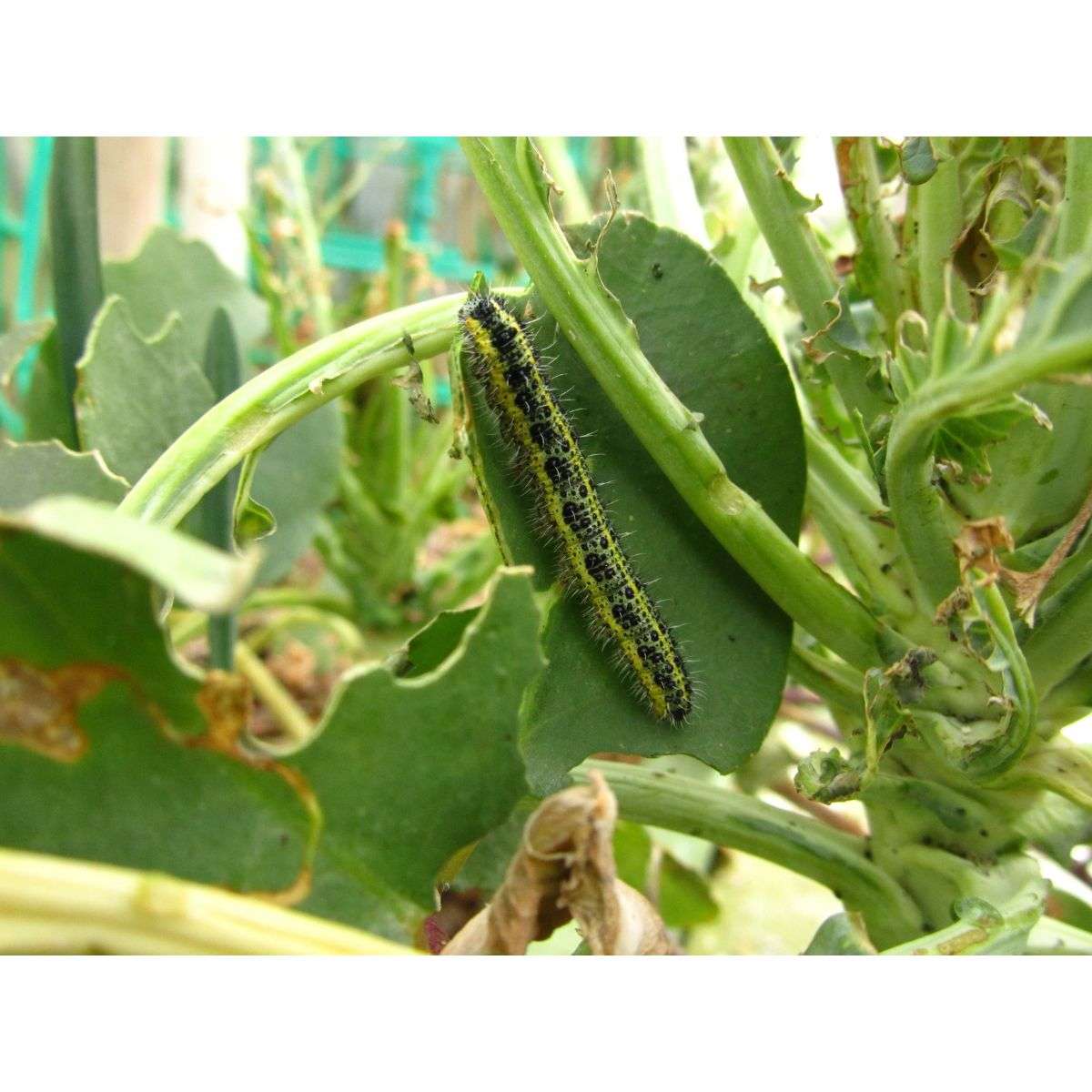
Control your Caterpillars in Vegetable Plants Naturally and Effectively
First, Confirm It’s Actually Caterpillars
What Real Caterpillar Damage Looks Like
Don’t waste time treating the wrong pest. Here’s what caterpillar damage actually shows:
Definitive signs:
- Large irregular holes in leaf centers (not just edges)
- Black or green droppings (frass) on leaves below damage
- Rolled or webbed leaves with caterpillars hiding inside
- Chewed leaf edges with smooth, clean cuts
- Entire leaves eaten, leaving only the stem skeleton
Key identifier most people miss: The droppings. Black pepper-like pellets on leaves or ground below = caterpillars were there.
What ISN’T Caterpillar Damage
Slugs/snails:
- Shiny slime trails on leaves
- Irregular holes with ragged edges
- Damage is worst near ground level
- Most damage occurs overnight when dew is present
See more – 10 Natural Ways to Protect Plants from Snails and Slugs
Beetles:
- Small, round holes
- Leaf damage with beetles visible during the day
- Often, metallic or spotted insectsare present
Earwigs:
- Damage to flowers and soft fruits
- Irregular holes, usually smaller
- Insects hide in dark crevices during the day
Leafminers:
- Squiggly white tunnels INSIDE leaves
- Leaf surface intact but discolored
- No holes through the leaf
When to Inspect for Accurate ID
Early morning (6-8 AM): Best time to find caterpillars still feeding. They’re sluggish from cool temperatures—easy to spot and remove.
Dusk (7-9 PM): Second-best time. Many caterpillar species are nocturnal—active at dusk when you can still see.
Midday inspection: Check undersides of leaves, rolled leaves, and near stems where caterpillars hide from heat and predators.
Pro tip: Use a flashlight at night. Many caterpillars only feed after dark. A 10-minute nighttime inspection reveals problems you’ll never see during the day.
The Underside Check (Critical Step)
Why this matters: 80% of caterpillars rest on leaf undersides during the day. You’ll see chewed leaves above but miss the culprits underneath.
How to check properly:
- Lift every damaged leaf and inspect the underside
- Look for small (1/4 inch) caterpillars—they grow fast
- Check where the leaf meets the stem (favorite hiding spot)
- Examine rolled or folded leaves—caterpillars create these shelters
What you’re looking for:
- Green caterpillars blend with leaf color
- Caterpillars along leaf veins
- Tiny newly-hatched caterpillars (nearly translucent)
- Groups of caterpillars clustered together
Why They Keep Coming Back Every Year
The Life Cycle You’re Fighting
Understanding this cycle shows you exactly where to interrupt it.
Stage 1 – Eggs (3-7 days):
- Adult moths/butterflies lay 100-300 eggs on leaf undersides
- Eggs hatch in less than a week in warm weather
- One missed egg cluster = 50+ caterpillars
Stage 2 – Caterpillar/Larva (2-6 weeks):
- This is when they destroy your plants
- Eat constantly, grow rapidly
- Go through 5-7 molts (shedding skin)
- Late-stage caterpillars eat 10× more than early stages
Stage 3 – Pupa (1-2 weeks):
- Caterpillar forms a chrysalis or cocoon
- In soil, on stems, or under debris
- Vulnerable period—not feeding
Stage 4 – Adult moth/butterfly (1-4 weeks):
- Emerges, mates, and lays eggs
- Cycle repeats every 4-8 weeks
- Multiple generations per season in warm climates
Critical insight: In warm climates, you face 3-5 generations per growing season. One generation surviving creates exponential problems.
Conditions That Invite Infestations
Overcrowded planting:
- Dense foliage creates humidity and shade that caterpillars prefer
- Harder to spot caterpillars when plants touch
- Poor airflow keeps plants moist (caterpillar-friendly)
Lack of predators:
- No birds, wasps, or beneficial insects = unchecked reproduction
- Gardens without diverse plantings lack predator habitat
- Pesticide use (even organic) kills beneficial insects
Stressed plants:
- Drought-stressed, over-fertilized, or diseased plants emit chemical signals attractive to egg-laying moths
- Weak plants can’t fight off even small caterpillar populations
Previous season’s problems:
- Pupae overwintered in soil or garden debris
- Adults emerge in spring ready to lay eggs
- Same species returns to the same garden area
Protect Seedlings Before Damage Starts
Why Seedlings Get Destroyed First
Tender new growth = caterpillar magnet. Seedlings have soft, succulent leaves that are easy to chew. A single caterpillar can destroy an entire tomato seedling overnight.
The math is brutal:
- A 3-4 week-old seedling has 6-8 leaves total
- One caterpillar eats 2-3 leaves per night
- 2-3 nights = dead seedling
Established plants survive partial defoliation. Seedlings don’t.
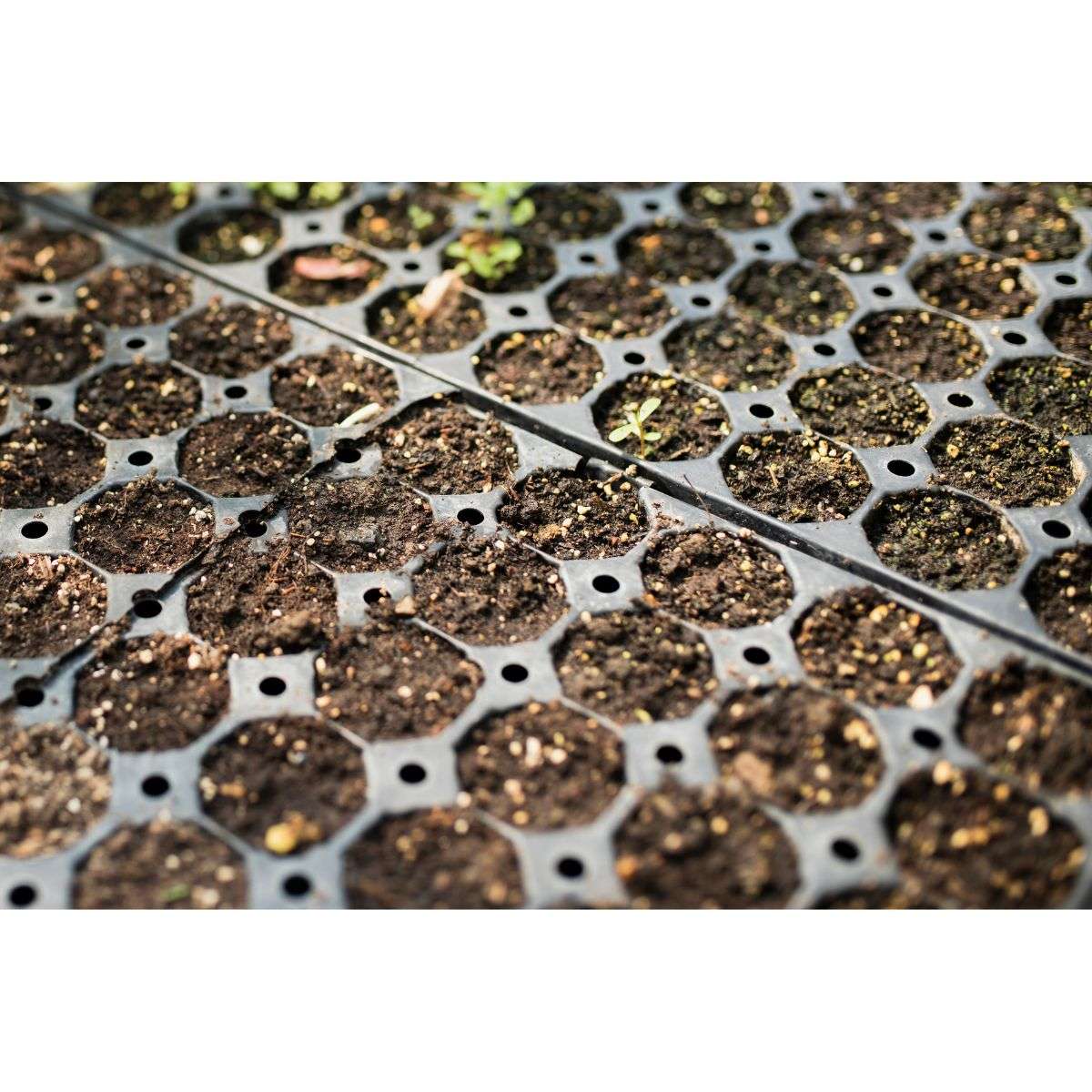
Physical Barriers That Actually Work
Floating row covers (most effective):
What they are: Lightweight fabric that lets light and water through but blocks insects.
How to use:
- Install immediately after transplanting
- Drape loosely over plants (don’t pull tight)
- Secure edges with soil, boards, or landscape pins
- Leave in place for 3-4 weeks until plants establish
Material: Look for insect barrier fabric (0.5-1.0 mm mesh). Costs $0.25-0.50 per square foot. Reusable for 3-5 seasons.
Benefits:
- 100% effective when properly secured
- Also protects from other insects, birds, and light frost
- Increases temperature slightly (speeds growth)
Fine mesh netting:
When to use: For larger plants or permanent installation on raised beds.
Setup:
- Build a simple PVC hoop frame over the bed (1/2″ PVC pipe bent into arches)
- Cover hoops with insect netting
- Secure at ground level
- Access through zippered opening or lift edge
Cost: $30-50 for a 4×8 bed setup
Mistakes that ruin barriers:
Gap at ground level: Most common failure. Moths crawl under. Solution: Bury edges 2-3 inches OR weight down completely with boards.
Fabric touching leaves: Insects lay eggs through fabric onto leaves. Solution: Use hoops or stakes, creating a 4-6 inch gap between fabric and plants.
Removing too early: Taking off after 1-2 weeks invites immediate re-infestation. Solution: Leave barriers on minimum of 3-4 weeks or until plants are substantial.
Read more – 10 Natural Ways to Eliminate Aphids from Your Garden
Manual Removal: The Method That Always Works
Why Hand-Picking Beats Everything Else
Reality check: One 10-minute inspection removing caterpillars by hand is more effective than any spray for established infestations.
The numbers:
- Remove 10 caterpillars today = save 1,000+ leaves over next 2 weeks
- Each caterpillar prevented from becoming adult = 200-300 eggs never laid
- Hand-picking has 100% kill rate (if you actually remove them)
When hand-picking is ideal:
- Fewer than 20 caterpillars per plant
- Caterpillars large enough to see easily (1/2 inch+)
- You have time for 2-3 inspections weekly
Best Time of Day for Removal
Early morning (6-8 AM): #1 best time
- Caterpillars are still feeding or resting on leaves
- Cool temperatures make them sluggish
- Dew makes them easier to spot
Dusk (7-9 PM): Second best
- Nocturnal species are becoming active
- Still enough light to see clearly
- Many caterpillars are visible that hide during the day
After rain: Excellent timing
- Caterpillars are forced to the outer leaves (can’t hide in dry rolled leaves)
- More visible against wet leaves
Avoid midday: Caterpillars hide from the heat. You’ll miss 70% of them.
Proper Removal Technique
What to bring:
- Container with soapy water (dish soap in water)
- Gloves (optional—most caterpillars are harmless)
- Flashlight for early morning or evening
Process:
- Systematically check every plant: Start at one end of the row, work to the other. Check the upper and lower leaves.
- Inspect leaf undersides: This is where you’ll find most caterpillars during the day.
- Check rolled/webbed leaves: Carefully unroll. Caterpillars often live inside.
- Remove caterpillars: Pick off and drop in soapy water. They die within seconds.
- Check stems: Some species hide where leaves meet stems during the day.
- Look for eggs: Yellow, white, or green clusters on the undersides. Scrape off with a fingernail or a knife.
Safe disposal:
- Soapy water drowns them immediately
- Or drop in a sealed container, freeze overnight, then dispose of
- Don’t just drop on the ground—they’ll crawl back up
Which caterpillars can you touch?
Mostly safe (no spines):
- Tomato hornworms (large, green)
- Cabbage worms (small, green)
- Corn earworms
Stinging caterpillars (use gloves):
- Saddleback caterpillar (brown with green saddle)
- Io moth caterpillar (green with spines)
- Puss caterpillar (furry appearance)
When in doubt: Use gloves or knock caterpillars into a container without touching.
Making an Inspection Routine
Frequency that works:
- Early season (first 4 weeks after planting): Check every 2-3 days
- Mid-season: Weekly inspections are sufficient
- During known infestation: Daily checks until population is controlled
Schedule: Same time, same days (Monday-Thursday morning before work, for example). Consistency means you catch problems before they explode.
Time required: 5-10 minutes per 100 square feet of vegetable garden. A small garden takes less time than scrolling social media.
Natural Control Methods That Don’t Harm Vegetables
Bt (Bacillus thuringiensis): The Biological Solution
What it is: Naturally occurring soil bacteria that kill caterpillars when ingested. Completely safe for humans, animals, beneficial insects, and plants.
How it works:
- Caterpillars eat Bt along with leaf tissue
- Bacteria disrupt their digestive system
- Caterpillars stop feeding within hours
- Die within 1-3 days
Critical facts:
- Only kills caterpillars (butterfly/moth larvae)
- Does NOT harm bees, ladybugs, or other beneficial insects
- Safe to eat vegetables sprayed with Bt (just rinse normally)
- Breaks down in sunlight within 1-3 days
Application process:
When to apply:
- At the first sign of caterpillar damage
- When you see small (under 1 inch) caterpillars (most effective on young caterpillars)
- Late afternoon or evening (UV light breaks down Bt—application lasts longer when applied before dark)
How to apply:
- Mix according to label: Typically 1-2 tablespoons per gallon of water
- Add sticker/spreader: Drop of dish soap helps Bt stick to leaves (crucial for effectiveness)
- Spray thoroughly: Cover ALL leaf surfaces, especially undersides where caterpillars feed
- Reapply after rain, But washes off. Reapply after heavy rain or every 5-7 days during active infestation.
Products to look for:
- Monterey Bt
- Safer Brand Caterpillar Killer
- Bonide Thuricide
- Generic Bt products (all work equally well)
Cost: $12-20 for concentrate, making 10+ gallons
Limitations:
- Only works on actively feeding caterpillars
- Must be reapplied regularly
- Doesn’t prevent new caterpillars from arriving
- UV light breaks it down quickly in bright sunlight
See more – Common Garden Pests and How to Identify Them
Homemade Sprays: What Actually Works
Neem oil spray:
Effectiveness: Moderate. Works as a feeding deterrent and disrupts insect hormone systems.
Recipe:
- 2 teaspoons neem oil
- 1 teaspoon mild liquid soap
- 1 quart warm water
- Shake well before each use
Application:
- Spray every 7 days
- Apply evening (neem can burn leaves in the hot sun)
- Cover all leaf surfaces
Reality: Neem works better as a preventive than a treatment. Won’t stop severe infestations, but deters egg-laying and slows feeding.
Garlic-pepper spray:
Effectiveness: Mild deterrent. Caterpillars dislike strong smells/tastes but won’t kill existing populations.
Recipe:
- 5-6 garlic cloves, crushed
- 2-3 hot peppers, chopped
- 1 quart of water
- Steep for 24 hours, strain, and add a drop of soap
Use: Spray plants weekly as a preventive. Reapply after rain.
Honest assessment: Helps reduce new arrivals. Won’t eliminate existing caterpillars. Better for prevention than control.
Soap spray (direct contact only):
Recipe:
- 2 tablespoons castile soap or insecticidal soap
- 1 quart of water
How it works: Must directly hit the caterpillar. Soap disrupts cell membranes. Death within minutes to hours.
Limitation: Requires direct contact. Doesn’t provide residual protection. Practical only for small gardens where you can spray individual caterpillars.
See more – 10 Homemade Organic Pest Spray Recipes for Home Gardens
Read more – Top 8 Organic Pest Control Methods for Home Gardens

Application Timing for Maximum Effect
Best times:
- Late afternoon/evening: Most sprays are more effective when not exposed to harsh sun. Caterpillars begin feeding as the sun sets.
- After rain: Reapply anything that washed off.
- Weekly maintenance: Even after the infestation is controlled, continue preventive applications
Avoid:
- Spraying during the heat of the day (can burn leaves)
- Spraying during rain (waste of product)
- Spraying when beneficial insects are most active (midday for bees)
Encourage Natural Predators Instead of Fighting Alone
Your Free Pest Control Team
Birds: A single chickadee removes 50-100 caterpillars daily during nesting season. Bluebirds, wrens, and sparrows are equally voracious.
Parasitic wasps: Tiny wasps (rice-grain sized) lay eggs inside caterpillars. Larvae eat the caterpillar from the inside. You’ll see caterpillars with white cocoons on their backs—leave these! The caterpillar is already dead or dying, and wasps are reproducing.
Ground beetles: Nocturnal hunters. Eat caterpillars, pupae, and eggs. A single beetle consumes dozens of caterpillars weekly.
Spiders: Web-building and hunting spiders both capture caterpillars. Tolerate spider webs in the garden—they’re working for you.
Beneficial wasps (yellow jackets, paper wasps): Despite their aggressive reputation, these wasps are incredible caterpillar predators. They hunt caterpillars to feed their larvae. A single nest removes thousands of caterpillars per season.
Creating Predator-Friendly Habitat
For birds:
- Install bird houses (chickadees, bluebirds)
- Provide a water source (birdbath, shallow dish)
- Leave some tall perennials/grasses for nesting material
- Don’t use ANY insecticides (birds feed contaminated insects to nestlings)
For beneficial insects:
- Plant diverse flowers (alyssum, yarrow, dill, fennel)
- Provide water (shallow dishes with pebbles for landing)
- Leave some leaf litter and plant stems over winter (overwintering habitat)
- Create brush piles in corners for ground beetles
For wasps:
- Tolerate nests unless they’re in high-traffic areas
- Plant nectar sources (adults feed on flowers)
- Don’t spray broad-spectrum pesticides
Mistakes That Kill Your Allies
Using broad-spectrum insecticides:
Even “organic” sprays like pyrethrin, rotenone, and spinosad kill beneficial insects along with pests. If you must spray, use Bt only—it’s genuinely caterpillar-specific.
Over-tidying the garden:
Perfectly manicured gardens have no predator habitat. Leave some “messy” corners with leaf litter, plant stems, and brush piles.
Removing all caterpillars:
Keep a small population. Sounds crazy, but predators need food to stick around. Remove enough caterpillars to prevent damage, but leave 5-10% for predator food. This sustains predator populations that prevent future infestations.
See more – 11 Ways to Attract Bees and Butterflies Naturally
Read more – Best Pollinator-Friendly Plants for Backyard Gardens
Prevent Caterpillars Before They Hatch
Egg Inspection and Removal
What eggs look like:
Different species lay different eggs, but common patterns:
- Cabbage worms: Yellow, bullet-shaped, single eggs on leaf undersides
- Tomato hornworms: Round, pale green, single eggs
- Cabbage loopers: White or pale green, ridged, in clusters
- Armyworms: Round, white to tan, in clusters
Where to look:
- Leaf undersides (90% of eggs)
- Where leaf meets stem
- On the stems themselves
- Youngest, most tender leaves (preferred laying sites)
Removal method:
Scraping: Use a fingernail or a butter knife to scrape egg clusters into the container.
Crushing: Pinch eggs between fingers. They pop easily.
Leaf removal: If heavily covered in eggs, just remove the entire leaf and dispose of it.
Frequency: Check for eggs every 3-4 days during peak season. One egg check catches problems before caterpillars hatch.
Impact: Removing 5 egg clusters (50-100 eggs) prevents thousands of leaves from being eaten and hundreds of caterpillars in the next generation.
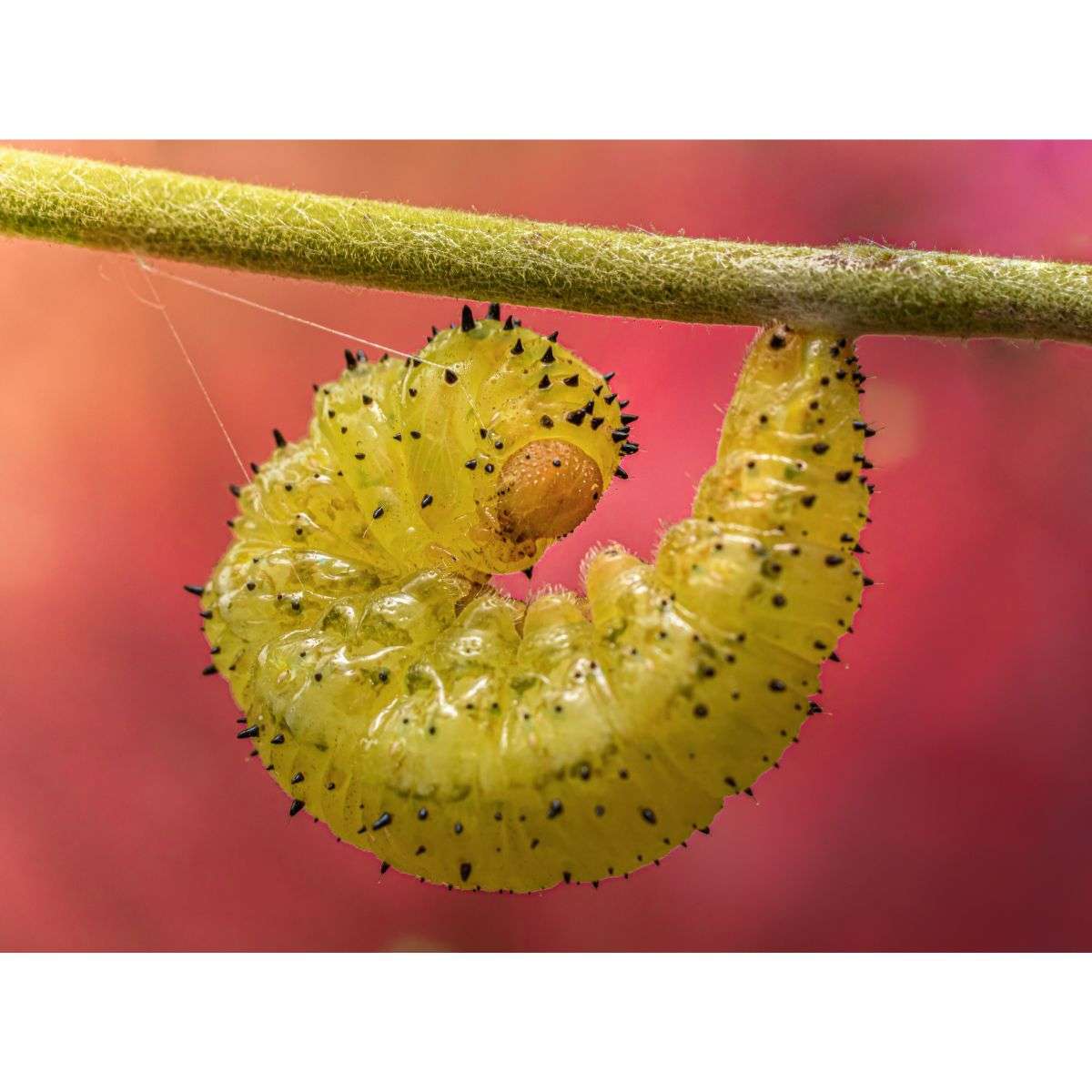
Crop Rotation Breaks the Cycle
Why rotation works: Many caterpillar species are plant-specific. Tomato hornworms eat nightshades (tomatoes, peppers, eggplant). Cabbage worms eat brassicas (cabbage, broccoli, kale).
Planting the same family in the same location year after year allows pupae overwintering in soil to emerge right where their host plants are.
Effective rotation:
- Don’t plant the same family in the same bed for 2-3 years
- Rotate between plant families (nightshades → legumes → brassicas → cucurbits)
- Increases the time/distance pupae must travel to find host plants
Example:
- Year 1: Tomatoes in Bed A
- Year 2: Beans in Bed A, Tomatoes in Bed B
- Year 3: Kale in Bed A, Beans in Bed B, Tomatoes in Bed C
Seasonal Cleanup Eliminates Overwintering Pupae
Fall cleanup (critical):
Remove all plant debris: Many caterpillar species pupate in dead plant material.
Till or turn soil: Exposes pupae to cold, desiccation, and predators. Reduces overwintering survival by 60-80%.
Clear weeds: Many host alternative plants where pupae overwinter.
Compost properly: Hot composting (130°F+) kills pupae. Cold compost piles are pupae hotels—they survive winter and emerge in spring.
Spring cleanup:
Before planting: Turn the soil again, exposing any surviving pupae.
Clear early weeds: Remove before pests have alternate food sources.
Managing Severe Infestations
When Damage Becomes Critical
Severe infestation indicators:
- 20+ caterpillars per plant
- 50%+ defoliation
- Damage is spreading to multiple plants daily
- New damage is appearing faster than you can remove caterpillars
Triage decisions:
Can the plant recover?
- 50-70% defoliation: Usually recovers if the caterpillars are stopped now
- 70-85% defoliation: Might recover, but won’t produce well
- 85%+ defoliation: Pull plant, focus on saving others
Priority protection:
High-value plants: Tomatoes, peppers, squash with developing fruit
Sacrifice zones: Lettuce or greens near the end of the season can be sacrificed to save higher-value crops
Emergency Action Plan
Day 1 – Immediate containment:
- Hand-remove all visible caterpillars (spend 30-60 minutes doing a thorough job)
- Apply Bt spray to all affected and neighboring plants
- Install row covers if practical (stop new moths from laying eggs)
- Check for eggs and remove all you find
Days 2-7 – Intensive monitoring:
- Daily inspections in the morning and evening
- Remove any new caterpillars immediately
- Reapply Bt after rain or every 5 days
- Monitor damage to verify it’s stopping
Week 2+ – Continued control:
- Transition to 2-3x weekly inspections
- Maintain preventive Bt applications weekly
- Continue egg removal
- Watch for predators arriving (they will)
Expected timeline: 2-3 weeks to gain control of severe infestation with consistent effort.
Saving Partially Eaten Plants
Plants can recover from surprising amounts of damage if defoliation stops:
Tomatoes/peppers: Can recover from 60-70% leaf loss. Existing fruits will finish. New flowering has been reduced but not eliminated.
Leafy greens: Pull heavily damaged plants. Focus protection on the undamaged ones.
Cucumbers/squash: Very resilient. Recover from 50-60% damage. Redirect energy to new growth.
Beans/peas: More vulnerable. 40-50% damage significantly reduces yields. Prioritize protection.
Recovery support:
- Ensure adequate water (stressed plants can’t regrow)
- Don’t fertilize immediately (wait until new growth appears)
- Remove any remaining damaged leaves (reduces disease risk)
- Continue monitoring for returning caterpillars
Common Mistakes That Make Problems Worse
Mistake 1: Overusing Chemicals (Even Organic Ones)
Problem: Repeatedly spraying broad-spectrum insecticides kills beneficial insects faster than target pests.
Reality: One application of a broad-spectrum spray kills:
- 90% of beneficial insects (they’re more exposed)
- 60% of caterpillars (many hide during application)
Result: Beneficial insect populations crash. Caterpillars rebound faster. You’ve created the need for more spraying.
Solution: Use targeted products (Bt), manual removal, and barriers instead of broad-spectrum sprays.
Mistake 2: Ignoring Early Signs
Early damage: A few holes in leaves, maybe 5-10 caterpillars per plant.
Gardener’s reaction: “It’s not that bad. I’ll deal with it next week.”
Two weeks later: 50+ caterpillars per plant, 50% defoliation, plants struggling.
Why this happens: Caterpillars grow exponentially. One ignored caterpillar becomes 200+ eggs. Those hatch into the next generation while you’re still dealing with the first generation.
Solution: Act at first damage. Remove the first caterpillars immediately. Check for eggs. Prevention takes 10 minutes. Recovery takes weeks.
Mistake 3: Not Checking Leaf Undersides
What you see: Damaged leaves, no caterpillars during daytime inspection.
What you’re missing: 80% of caterpillars rest on leaf undersides or in rolled leaves during the day.
Result: You think treatment is working (caterpillars hidden, damage continues).
Solution: Always check the undersides. Always inspect early morning or evening when caterpillars are active on upper surfaces.
Mistake 4: Applying Controls at the Wrong Time
Applying Bt at noon in direct sun: UV light breaks down Bt within hours. Waste of product.
Correct: Apply late afternoon or evening. Lasts several days.
Spraying during rain: Everything washes off immediately.
Correct: Apply after the rain stops. Reapply if heavy rain occurs within 24 hours.
Waiting until caterpillars are large: Bt works best on young caterpillars. Large caterpillars (1+ inch) require higher doses and multiple applications.
Correct: Treat at the first sign of caterpillars when they’re small.
Long-Term Strategy for Caterpillar-Resistant Garden
Building Healthy, Resilient Plants
Proper spacing:
- Follow the seed packet spacing recommendations minimum
- Better airflow = less humidity = less caterpillar-friendly environment
- Easier inspections = catch problems earlier
- Reduced plant stress = stronger natural defenses
Spacing examples:
- Tomatoes: 24-36 inches apart
- Cabbage family: 18-24 inches
- Peppers: 18 inches
- Lettuce: 8-12 inches (or succession planting)
Soil health and balanced nutrition:
Healthy soil produces healthy plants that better resist pest damage and recover faster.
Annual soil building:
- Add 2-4 inches of compost yearly
- Maintain pH 6.0-7.0 for most vegetables
- Test soil every 2-3 years, adjust based on results
- Avoid excess nitrogen (produces soft, caterpillar-attractive growth)
Signs of balanced nutrition:
- Deep green leaves (not pale, not dark purple)
- Steady, moderate growth
- Strong stems
- Plants hit the expected size for the variety
Stressed plants emit chemical signals attractive to egg-laying moths. Healthy plants are less attractive targets.
See more – 5 Tips to Prepare Soil for a Vegetable Garden
See more – Top 10 Natural Ways to Improve Garden Soil
Read more – How to Make Compost at Home Using Kitchen Waste
Read more – How to Make Vermicompost at Home (Complete 11-Step Guide)
Year-Round Prevention Routine
Spring (March-May):
- Clean up overwintering debris before planting
- Inspect transplants for eggs before planting
- Install row covers immediately on susceptible crops
- Start weekly inspections as soon as plants are in the ground
Summer (June-August):
- Maintain 2x weekly inspections during peak caterpillar season
- Hand-remove caterpillars and eggs
- Apply Bt preventively on high-risk plants (cabbage, tomatoes)
- Watch for predator presence (reduce intervention if predators are active)
Fall (September-November):
- Remove all plant debris after harvest
- Till or turn the soil to expose pupae
- Compost hot or dispose of infested material
- Clear weeds before they go dormant
Winter (December-February):
- Plan next season’s crop rotation
- Order row covers and Bt if needed
- Sketch garden layout, avoiding the same families in the same locations
- Prepare for early spring cleanup
Monitoring Before Each Planting Cycle
Pre-planting inspection:
- Check previous season’s notes (where were problems?)
- Inspect soil while preparing beds (pupae visible sometimes)
- Examine neighboring areas (weeds, other gardens) for caterpillar presence
First 2 weeks after planting (critical window):
- Daily quick inspections (2-3 minutes)
- Look for egg clusters on new transplants
- Hand-remove any caterpillars immediately
- This intensive early monitoring prevents exponential problems
After establishment:
- Transition to 2x weekly inspections
- Maintain through the entire growing season
- Document when/where problems occur (informs next year’s prevention)
Quick Action Checklist
Immediate Response (Today)
- Inspect plants thoroughly:
- Check the upper and lower leaf surfaces
- Look in rolled leaves and where stems meet leaves
- Count caterpillars and assess damage severity
- Remove all visible caterpillars:
- Drop in soapy water
- Check for and remove egg clusters
- Install physical barriers (if plants are small enough):
- Row covers on seedlings and young plants
- Secure edges completely
This Week
- Apply Bt spray (if you have 10+ caterpillars or prefer not to hand-pick)
- Set inspection schedule:
- Daily for severe infestations
- 2-3x weekly for moderate problems
- Weekly for prevention after control
- Create predator habitat:
- Plant flowers attracting beneficial insects
- Provide water sources
- Stop using broad-spectrum sprays
This Season
- Maintain a monitoring routine
- Continue hand-removal and egg checks
- Document problems (what worked, what didn’t, where issues were worst)
Next Season
- Plan crop rotation, avoidingthe same families in the same spots
- Prepare row covers before planting
- Start early monitoring the day you transplant
Frequently Asked Questions
What’s the fastest way to kill caterpillars without chemicals?
Hand-picking and drowning in soapy water kill instantly. For larger infestations, Bt spray (biological, not chemical) kills feeding caterpillars within 1-3 days. Both methods are safe for vegetables.
How do I identify what type of caterpillar I have?
Key identifiers: size (large = hornworm, small = cabbageworm), color (green, brown, striped), location (tomatoes = likely hornworm, cabbage = cabbage worm or looper). But treatment is the same regardless of species—removal or Bt works on all caterpillars.
Can I eat vegetables that caterpillars have been eating?
Yes, completely safe. Cut away damaged portions if desired. Wash vegetables normally. Caterpillars don’t transmit diseases to humans through feeding damage.
How long does it take to get rid of caterpillars?
With consistent daily hand-removal or Bt application, 1-2 weeks to control the existing infestation. However, new moths can arrive and lay eggs, so monitoring continues throughout the season.
Will Bt harm beneficial insects or bees?
No. Bt (Bacillus thuringiensis) only affects caterpillars (moth and butterfly larvae). It doesn’t harm bees, ladybugs, parasitic wasps, or any other beneficial insects. This is why it’s the preferred spray for organic gardens.
Should I kill all caterpillars, even if they might become butterflies?
In vegetable gardens, yes—remove caterpillars damaging crops. If you want to support butterflies, create a separate butterfly garden with host plants specifically for them, away from food crops.
Do caterpillars come back every year?
Yes, if you don’t break the cycle. Pupae overwinter in soil and debris. Adults emerge in spring and lay eggs. Proper cleanup, crop rotation, and early-season prevention significantly reduce returning populations.
The difference between frustrating caterpillar problems and easy control is early detection and consistent action.
Start inspecting today. Remove what you find. Install barriers on vulnerable plants. Check again in 3-4 days.
Small, consistent effort beats emergency intervention every time.
Your harvest depends on it.