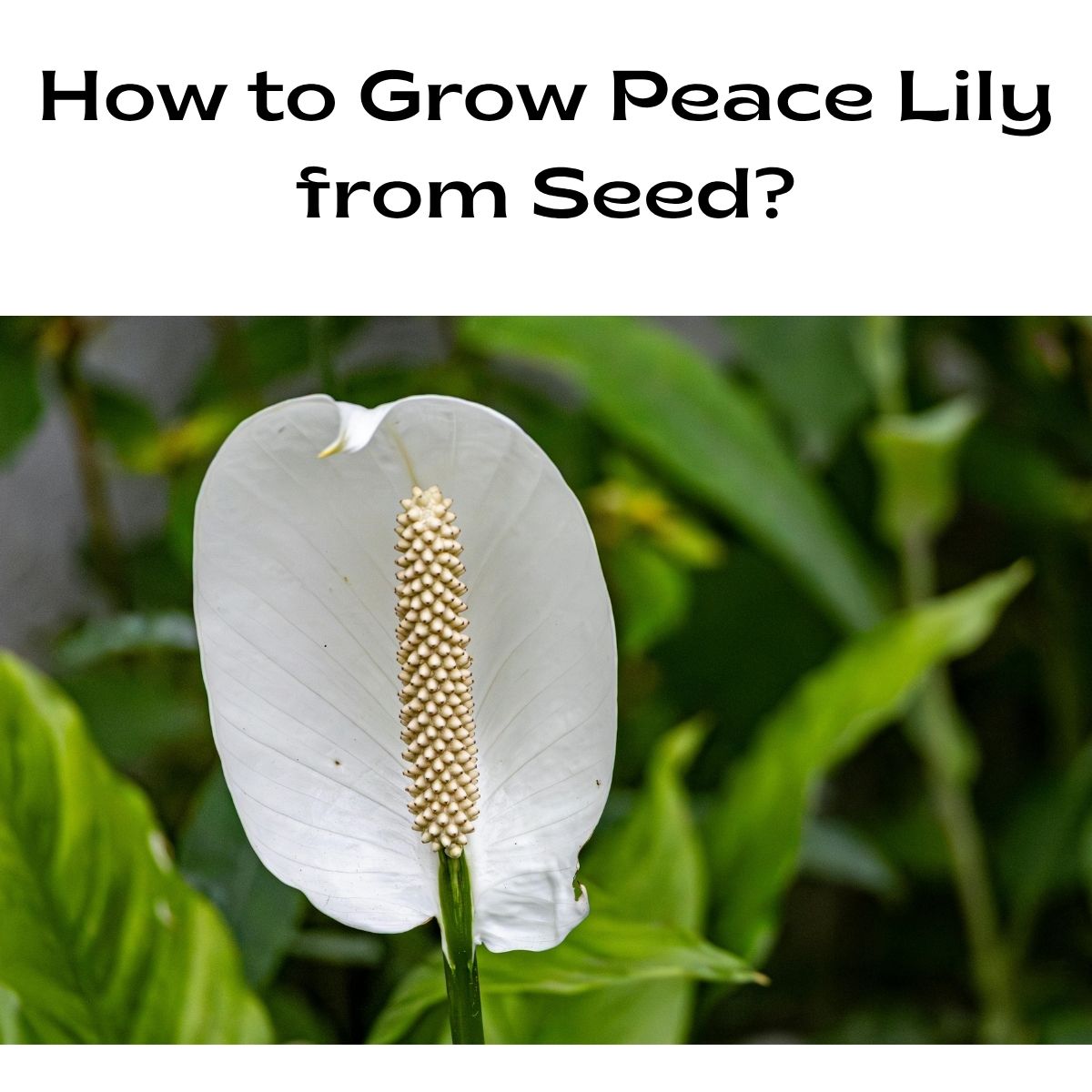
A To Z Guide on How to Grow Peace Lily from Seed
This is the most common complaint I hear: “I planted peace lily seeds two weeks ago, and nothing has happened.” Nine times out of ten, the problem starts before the seed even touches soil.
Using Seeds That Are Already Dead or Non-Viable
Peace lily seeds are nothing like the seeds you buy from a vegetable catalog. They have an extremely short viability window — and most people discover this the hard way after planting an entire packet and waiting a month for nothing.
Fresh vs. Stored Seeds Problem
Spathiphyllum seeds lose viability rapidly after harvest. Unlike tomato or pepper seeds, which can remain viable for years in proper storage, peace lily seeds begin to degrade almost immediately once separated from the fruit. Under ideal cool, moist storage conditions, viability drops sharply after 4 to 6 weeks. In normal room conditions — dry, warm, fluctuating — the seeds may be dead within two weeks of harvest.
This is why buying dried peace lily seeds from random online sellers is almost always a waste of money. By the time seeds are harvested, packaged, shipped, and delivered, they are frequently past the point of reliable germination. I’ve tested dozens of commercially sold peace lily seed packets over the years. The failure rate for dried and shipped seeds is staggering.
The rule: Use freshly harvested seed, planted within days of collection. If you’re buying, source from someone who can confirm the harvest date and shipping method.
Where Most People Go Wrong When Collecting Seeds
Peace lily seeds form inside the berry-like fruits that develop after the spathe is pollinated. Most home gardeners try to collect seed too early — harvesting green fruits before the seeds inside have fully matured.
Wait until the berries are fully ripe: they’ll turn from green to a yellowish-cream color and feel slightly soft when pressed gently. Split the berry open, remove the seed, clean off the pulp, and plant immediately. Don’t dry the seeds. Don’t store them “for later.” The pulp actually contains compounds that help maintain moisture around the seed — rinse it clean, but plant the seed the same day.
If you’re not ready to plant immediately, wrap the cleaned seed in a barely damp paper towel, place it in a small zip-lock bag, and keep it in a cool location — not the refrigerator. This buys you maybe one to two weeks of additional viability.
Wrong Temperature Stops Germination
Even with fresh, viable seed, cold growing conditions are the second most common reason peace lily germination fails.
Cold Indoor Environments Delay Sprouting
Peace lily comes from the tropical rainforest floors of Central and South America. Its seeds evolved to germinate in consistently warm, humid conditions. The minimum soil temperature for reliable germination is 68°F (20°C). The optimal range is 75–82°F (24–28°C).
The typical indoor room temperature of 68–72°F that feels comfortable to us often translates to soil temperatures of 60–65°F — particularly if containers are sitting on tile floors, concrete, or near drafty windows. At these soil temperatures, germination is slow at best, non-existent at worst.
A seedling heat mat is not optional for peace lily seeds. Set one to 78°F, place your seed container on it, and the soil temperature becomes a non-issue.
Inconsistent Warmth Affecting Results
Temperature consistency matters as much as the temperature itself. Seeds that experience daily cycles of 80°F during the day and 60°F at night (common in homes where heating drops at night) take far longer to germinate and produce significantly weaker seedlings than seeds kept at a steady 75–78°F around the clock.
If you can’t maintain consistent nighttime warmth, the heat mat solves this. It runs continuously, maintaining a stable bottom heat regardless of the ambient room temperature overnight.
Seeds Rotting Before Sprouting
You planted fresh seeds at the right temperature, and they still rotted in the soil. This is a soil and water management problem — and it’s entirely preventable.
Overwatering the Soil from Day One
Most gardeners apply their normal “keep the seedbed moist” approach to peace lily seeds — and it kills the seeds before they have a chance to sprout.
Soil Staying Wet for Too Long
Peace lily seeds need moisture, but not saturation. The distinction matters enormously. A constantly wet seed environment encourages the fungal and bacterial pathogens that cause seed rot — particularly Pythium species, which can destroy seeds within days of contact.
The soil around your seeds should feel like a wrung-out sponge: damp throughout, but not transferring water to your fingers when pressed. After sowing, cover the container with clear plastic to maintain humidity and reduce the need to add moisture. Under a well-sealed dome, you may only need to mist once every 3–5 days.
Check soil moisture by pressing your finger into the mix. If it feels damp 1 inch down, don’t water. If it feels dry, mist the surface lightly. Never pour water over the seedbed — always use a fine mist spray.
Lack of Drainage in Containers
A container without drainage holes creates a reservoir of excess water at the bottom that the soil above eventually wicks up, keeping the entire growing medium saturated. There is no way to maintain appropriate moisture levels in a container without drainage.
Every container you use — from the initial seed tray to the final flowering pot — must have drainage holes. If using a decorative pot without holes, plant into a draining nursery pot that sits inside it.
Using the Wrong Type of Soil
Heavy Soil Suffocates Seeds
Standard potting soil or garden soil is wrong for peace lily seeds. It’s too dense, it retains too much water, and it compacts over time in containers — creating the anaerobic conditions that kill seeds through rot rather than germination.
Peace lily seeds need a light, airy medium with good structure. My recommended mix for seed starting: 2 parts peat moss or coconut coir, 1 part perlite, 1 part fine orchid bark. This drains quickly, holds some moisture without waterlogging, and provides the open-air structure that promotes healthy early root development.
Avoid anything labeled “moisture control” or “water-retaining” potting mix. These are engineered for the opposite of what peace lily seeds need.
Poor Airflow Inside the Growing Medium
Dense soil doesn’t just affect moisture — it restricts the air exchange around seeds and developing roots. Seeds need oxygen for the metabolic processes of germination. Compacted, oxygen-poor soil produces anaerobic conditions where pathogens thrive, and seeds suffocate.
The light, chunky mix described above solves both problems simultaneously. When you press a finger into a well-structured seed mix, it should spring back slightly — not stay compressed as packed garden soil does.
Seeds Sprout but Die Quickly
You see the first tiny shoots emerge and feel relief — then watch them collapse within days. This is the damping-off and early-care phase, and it has two distinct causes.
Fungal Problems Killing Young Seedlings
High Humidity Without Airflow
The covered dome that protects seeds during germination becomes a liability once seedlings emerge. Inside a fully sealed dome, humidity approaches 100%, and airflow is zero — exactly the conditions that Pythium, Botrytis, and Rhizoctonia species need to spread rapidly through a tray of seedlings.
The day you see the first seedlings emerge, crack the dome. Prop it open with a pencil or small stone. Over the following week, progressively increase the opening. By day 10 after germination, remove the dome entirely and introduce a fan at its lowest setting, positioned a few feet away from the tray, running for several hours per day.
This transition from the enclosed germination environment to open airflow is where most damping-off occurs. Slow it down, and you lose seedlings. Manage it actively, and your germination cohort survives intact.
Early-Stage Damping-Off Issues
Damping off presents in two ways with peace lily seedlings: pre-emergence (seeds rot before breaking the surface) or post-emergence (seedlings emerge, then collapse at the soil line within a day or two). The post-emergence form is the one that breaks a gardener’s heart — you think you’re past the worst, then the seedlings fall over as someone cut them at the base.
Treatment is ineffective once damping off begins. Prevention is your only tool: well-draining soil, appropriate moisture levels, and active airflow from the moment germination begins.
If you see one seedling collapse from damping off, remove it immediately with tweezers, allow the soil to dry slightly, and increase airflow. You may contain it. If three or more seedlings are affected in the same area, the pathogen load in that section of the tray is likely too high to save remaining seedlings nearby.
… How to Grow Geranium from Seed
… How to Grow Portulaca from Seed
… How to Grow Chrysanthemums from Seed
Watering Mistakes After Germination
Too Much Water Weakening Roots
The instinct to water tiny, fragile-looking seedlings frequently is understandable — they look so vulnerable. But peace lily seedlings in the post-germination phase have poorly developed roots that drown far more easily than they dry out.
Water only when the top quarter-inch of soil surface feels dry. At the seedling stage, this typically means watering every 2–4 days, depending on your temperature, humidity, and soil mix. Use a fine misting spray or bottom-water by setting the tray in a shallow dish of water for 20 minutes, then removing it and allowing it to drain fully.
Letting the Soil Dry Out Completely
The opposite problem: treating peace lily seedlings like established succulents and allowing the soil to go bone dry. At the seedling stage, complete drying causes rapid wilting that the plants rarely fully recover from. Root tips are irreversibly damaged by desiccation, and the setback in growth can be weeks.
The target is consistent, moderate moisture — never waterlogged, never bone dry. Check daily. Adjust based on what you find, not on a fixed schedule.
Seedlings Growing Very Slowly
You have germinated seedlings that are alive and technically healthy, but three weeks in, they’re barely larger than the day they emerged. Slow seedling growth has two common causes: light and nutrition.
Not Enough Light for Early Growth
Keeping Plants in Dark Indoor Corners
Peace lily is marketed as a low-light houseplant, and mature, established plants do tolerate lower light reasonably well. But seedlings are a completely different situation. Tiny seedlings are entirely dependent on photosynthesis to fuel their growth, and insufficient light means insufficient energy for growth.
Seedlings growing in genuinely low light conditions will survive but barely progress. They’ll sit, pale and still, for weeks while consuming the limited energy stored in their seed leaves without producing meaningful new tissue.
Move seedlings to the brightest indirect light available — or better, place them under LED grow lights (full spectrum, 4–6 inches above the seedling tops) running 14 hours per day. The growth difference between a dim corner and a bright grow-light setup is not subtle. You’ll see measurable new leaf growth within days on a light-adequate setup.
Weak Growth Due to Low Light Exposure
Light-starved peace lily seedlings show a characteristic appearance: very pale green or yellowish leaf color, thin and stretched internodes, and leaves that look translucent against the light. If your seedlings show these signs, they’re photosynthesizing at a fraction of their capacity.
Move to better light and the improvement is typically visible within 5–7 days as new growth emerges with proper dark green color and more compact structure.
Poor Soil Nutrition from the Start
No Nutrients in Seed-Starting Mix
Commercial seed-starting mixes are deliberately formulated with minimal nutrients. This is appropriate for the first week or two after germination — high nutrient levels can burn delicate seed roots. But beyond those first two weeks, a seedling with no available nutrition stalls.
Peace lily seedlings growing in a nutrient-free mix for four or more weeks will look healthy, but simply stop progressing — the plant is in a kind of nutritional holding pattern.
Delayed Feeding Affecting Development
Begin feeding your peace lily seedlings at 25% strength of a balanced liquid fertilizer (something like 10-10-10 or a balanced orchid fertilizer) once the first true leaf has fully opened. Apply weekly. This gentle feeding provides the nitrogen, phosphorus, and potassium needed for active cell division without burning the immature roots.
Increase to 50% strength when seedlings are 2 months old and showing active, healthy growth. Full-strength feeding is appropriate only after transplanting to individual containers, and the plant is visibly established.
Seedlings Becoming Weak and Leggy
Leggy seedlings — long, thin, stretched stems with leaves spaced far apart — are a sign that the plant is growing in the wrong direction in both the literal and figurative sense.
Light Direction and Placement Issues
Light Coming from One Side Only
A window is a point light source from the seedling’s perspective. Plants respond to unidirectional light by bending toward the source — etiolating on the shaded side and concentrating growth toward the light. The result is lopsided, leaning plants that develop structural weakness at the points of repeated bending.
Plants Stretching Toward the Light Source
Rotate seedling containers 180 degrees every two days to even out light exposure from window sources. Even better, use overhead grow lights that provide even illumination from above — eliminating the directional lean problem and producing symmetrical, upright growth.
If leggy growth has already developed, you cannot reverse it, but you can prevent further stretching by improving the light setup immediately.
Overcrowding in Small Containers
Too Many Seedlings Competing with Each Other
Multiple seedlings growing in the same cell or container create above-ground competition for light and below-ground competition for moisture and nutrients. The result is that no individual plant receives adequate resources — all of them stretch and weaken simultaneously.
No Thinning After Germination
Once seedlings have their first true leaf, thin to one seedling per cell or one per 2-inch section of open tray. Use small scissors to cut surplus seedlings at the soil level rather than pulling them — pulling disturbs the roots of seedlings you intend to keep.
Thinning is not wasteful. A single well-grown peace lily seedling is worth more than three struggling, overcrowded ones.
… 12 Reasons Why My Flowering Plants Aren’t Blooming
… 15 Low-Maintenance Flowers That Bloom All Year in Pots
Transplanting Shock Killing Young Plants
The transplant stage is where weeks of careful work can be lost in an afternoon. Peace lily seedlings are genuinely sensitive to root disturbance — more so than many other common houseplants.
Moving Seedlings Too Early
Roots Not Strong Enough Yet
The minimum size for transplanting peace lily seedlings is two to three fully developed true leaves with a root ball that holds together when removed from the container. At this stage, the root system has enough density and structure to tolerate the mild disturbance of transplanting.
Before this point — seedlings with only cotyledons or a single true leaf — the root system is too minimal to survive transplanting without a significant setback.
Sudden Change in Environment
Moving seedlings from a stable, enclosed, controlled germination environment directly to open indoor conditions on a bright windowsill or in a different room creates simultaneous changes in light, humidity, temperature, and airflow. Any one of these changes stresses the plant; all of them at once frequently causes acute wilt that small seedlings don’t recover from.
Harden your seedlings to their new environment over 3–5 days: move them to the new location for a few hours per day, then return them to their growing area. Increase the exposure time each day. By day five, leave them in their permanent location. This staged transition dramatically reduces transplant stress.
Handling Roots Incorrectly
Root Damage During Transplant
Peace lily roots are white, fleshy, and relatively brittle at the seedling stage. Torn or crushed roots are entry points for the same fungal pathogens responsible for damping off.
When removing a seedling from a cell or tray, moisten the soil slightly first (this prevents the soil plug from crumbling away from the roots), then gently squeeze the sides of the container to loosen. Support the root ball from below; never pull on the stem. Lower the root ball into its new container without setting it down on any surface, and firm the surrounding soil gently with a finger — not packed, just settled.
Using Unsuitable New Soil
Transplanting a peace lily seedling into standard potting soil that’s significantly denser or with a different water-retention profile than the seed-starting mix can cause immediate root stress. The roots, adapted to one soil environment, suddenly have to manage moisture and air exchange in very different conditions.
A good transplant mix for peace lily: 1 part quality peat-based potting mix, 1 part perlite, 1 part coconut coir. Well-draining, slightly moisture-retentive, and structured enough for healthy root development. This sits between the ultra-light seed-starting mix and the denser potting soil that mature plants eventually do well in.
Plants Survive but Stop Growing
A peace lily seedling that survives all the early challenges and makes it to the 3–4 month mark should be growing actively. If yours isn’t, the issue is usually container size or light placement.
Wrong Pot Size Restricting Roots
Small Containers Slowing Growth
A seedling that has outgrown its container becomes root-bound — the root system fills every available space, circling the pot interior, and has nowhere left to expand. Roots are the engine of plant growth. When they run out of room, growth slows or stops.
Check your seedlings every 4–6 weeks. When roots are circling the drainage holes or visible at the soil surface, it’s time to size up to the next pot size, not dramatically larger. Peace lily doesn’t want to be swimming in excess soil.
Poor Drainage Affecting Root Health
A pot that drains poorly keeps the root zone waterlogged between waterings, gradually asphyxiating roots and creating conditions for root rot pathogens. Even if the seedling isn’t visibly sick, chronically poor drainage produces a plant that “exists” rather than grows.
Check your drainage by watering thoroughly and watching for water to flow freely from drainage holes within 30 seconds. If it doesn’t, your soil is too dense or compacted. Repot into a lighter mix.
Indoor Placement Problems
Lack of Indirect Light
Peace lily’s reputation as a low-light plant creates a tendency to place it in the darkest corners of a room. Established plants tolerate this. Young plants grown from seed cannot. Place seedlings and young plants in bright indirect light — near (but not directly in) a window, or under a grow light on a timer.
Exposure to Direct Harsh Sunlight
The flip side: direct outdoor sun or intense south-facing window sun in summer will scorch peace lily leaves and stress the plant significantly. The leaves turn pale, develop bleached patches, and the plant redirects energy to managing heat stress rather than growing.
Bright, indirect, filtered light is the goal — not dim conditions and not intense direct sun.
… How to Grow Begonia from Seed?
… How to Grow Vinca Flowers from Seed
… How to Grow Calibrachoa from Seed
Leaves Growing but No Flowers
A peace lily growing leafy and green but never producing a spathe and spadix is a common disappointment with seed-grown plants. There are two causes.
Light Conditions Not Supporting Blooming
Too Little Light Indoors
Flowering in peace lily (Spathiphyllum species) requires adequate light energy to fuel the metabolic processes of bloom initiation. Plants in genuinely dim conditions will produce leaves indefinitely without ever accumulating the energy reserves needed to produce a flower.
For reliable flowering from a seed-grown peace lily, bright indirect light for 10–12 hours per day is necessary. This is more than what most home gardeners provide. A grow light supplement for 4–6 additional hours beyond what a window provides makes a measurable difference in flowering frequency.
Wrong Placement in the Room
The distance from a window matters dramatically. A plant sitting 3 feet from a bright window receives roughly one-quarter of the light available at the window surface. At 6 feet, that drops to about one-tenth. These aren’t approximations — they reflect how light intensity drops with the square of distance.
Measure where your peace lily actually sits relative to your light source and consider whether it’s getting what it needs. Moving it 12 inches closer to a bright window can make a significant practical difference.
Nutrient Imbalance Affecting Flowering
Too Much Nitrogen Causes Leafy Growth
Nitrogen drives vegetative growth — stems and leaves. A peace lily fed regularly with a high-nitrogen fertilizer (anything with a significantly higher first number, like 24-8-16) will produce lush, dark green foliage and no flowers. The plant is using all its resources for leaf production.
Lack of Balanced Feeding
Switch to a balanced or slightly phosphorus-forward fertilizer (10-10-10, or something like 5-10-5 during the growing season once the plant is mature enough to consider flowering. Phosphorus supports root development and flowering. Stop all feeding during the winter months — peace lily rests during this period and doesn’t need or benefit from fertilizer.
Long Waiting Time With No Visible Progress
Growing peace lily from seed tests patience more than almost any common houseplant. Managing your expectations from the beginning prevents the frustration that causes gardeners to give up on plants that are actually doing fine.
Expectation vs. Reality with Seed-Grown Plants
Slow Natural Growth Cycle
A peace lily grown from seed will not look like the plants at a garden center for 12 to 18 months — and may not produce its first flower for 2 years. This is not a sign of failure. It is the normal growth timeline for this plant started from seed.
During the first 3 months, growth is genuinely slow. The plant is developing its root system before putting significant energy into above-ground growth. Weeks can pass with minimal visible change. This is normal, and it doesn’t mean anything is wrong.
Comparing with Nursery Plants
Nursery peace lily plants are typically grown from tissue culture or divisions of mature plants — they’re not weeks old, they’re genetically equivalent to plants that are already 2–3 years old. Comparing your seedling to a nursery plant is like comparing a newborn to a teenager and concluding that something’s wrong with the newborn.
Seed-grown plants are slower. They’re also, in my experience, more adaptable and often more vigorous once they reach maturity — because they’ve developed their root systems from scratch in your specific growing environment.
Environmental Factors Slowing Development
Temperature Fluctuations
Peace lily seedlings growing in rooms with significant temperature swings — warm days, cold nights, drafts from windows, or proximity to air conditioning vents — slow down noticeably. Growth happens primarily when temperatures are stable and warm.
Keep seedlings away from windows at night in winter (cold radiates from glass), away from heating/cooling vents, and off cold floors. A consistently warm, draft-free location produces noticeably faster development than a variable one.
Inconsistent Care Routine
Irregular watering, irregular feeding, and irregular light exposure all produce irregular growth. Peace lily responds well to consistency. Water on a need-based schedule (check daily, water when appropriate), feed on a fixed weekly schedule at the right dilution, and maintain a consistent light cycle with a timer if using grow lights.
Inconsistency forces the plant into a cycle of stress and recovery that consumes energy better spent on growth.
Indoor Growing Challenges for Peace Lily
Humidity and Airflow Imbalance
Dry Indoor Air Affects Growth
Heated indoor environments in winter can drop to 20–30% relative humidity — significantly below the 50–70% that the peace lily prefers. At low humidity, leaf edges brown and curl, the plant loses moisture faster than roots can replace it, and overall growth slows.
A humidifier near your peace lily, a pebble tray with water beneath the pot (the water evaporates around the plant without the pot sitting in it), or grouping plants (plants collectively raise humidity in their immediate vicinity) all help maintain adequate humidity without creating the disease-promoting conditions of excessive wetness.
Stagnant Air Causes Disease
Low airflow in an enclosed indoor growing space — particularly during winter when windows stay closed — allows humidity to build around the plant and creates conditions for fungal disease. Gentle air movement (a low-speed fan a few feet away, or simply good room ventilation) keeps the leaf surfaces drier and reduces disease pressure significantly.
Never place a peace lily in a completely still, enclosed space. It doesn’t need a breeze — it needs air that moves.
… How to Grow Kalanchoe Flowers from Seeds?
… How to Grow Anthurium from Seed
… How to Grow Impatiens Flowers from Seed
Water Quality and Care Habits
Using Unsuitable Water
Peace lily is sensitive to fluoride and chlorine in tap water — more so than most houseplants. The characteristic brown leaf tip that even well-cared-for peace lilies frequently develop is largely caused by fluoride accumulation in leaf tissue over time.
Use filtered water, collected rainwater, or allow tap water to sit overnight in an open container before using it (this off-gasses chlorine, though not fluoride). If your tap water is heavily fluoridated, rainwater or filtered water is the reliable long-term solution for tip browning.
Avoid using water that has passed through a sodium-based water softener — the sodium accumulates in soil and is toxic to plants at higher concentrations.
Irregular Watering Patterns
Peace lily in a pot signals its need for water clearly: the outermost leaves begin to droop slightly before wilting becomes severe. This slight drooping is the plant’s prompt — water now, before wilting becomes stress. Respond to it consistently, and you’ll have a reliable rhythm.
Letting a peace lily reach severe wilt — leaves flat on the pot rim — causes root-tip damage and leaf damage that the plant carries as brown or yellow patches for the remainder of that leaf’s life. The damaged leaves don’t recover. The plant will put out new, healthy leaves eventually, but the damaged ones won’t heal.
Consistent, attentive watering — responding to the plant’s signals rather than a fixed calendar schedule — produces the most reliably healthy, actively growing peace lily.
Frequently Asked Questions
Can peace lilies really grow from seeds?
Yes, peace lilies can grow from seeds, but it’s uncommon. Most people propagate it by division because seeds are harder to germinate and require more time and controlled conditions.
Why are my peace lily seeds not germinating?
The most common reasons are using old seeds, low temperature, or incorrect moisture levels. Peace lily seeds lose viability quickly, so fresh seeds and warm conditions are important.
How long does it take for peace lily seeds to sprout?
Peace lily seeds usually take around 2 to 4 weeks to germinate. Inconsistent temperature or poor care can delay this process.
Do peace lily seeds need light to germinate?
Peace lily seeds prefer bright, indirect light during germination. Direct sunlight can damage them, while complete darkness can slow growth.
Why do my peace lily seedlings keep dying?
Seedlings often die from overwatering, fungal problems, or poor airflow. Keeping soil slightly moist and ensuring proper ventilation helps prevent this.
How long does it take for a peace lily grown from seed to flower?
It can take one to three years for a peace lily grown from seed to produce flowers. Growth is slow, and proper light and care are needed for blooming.