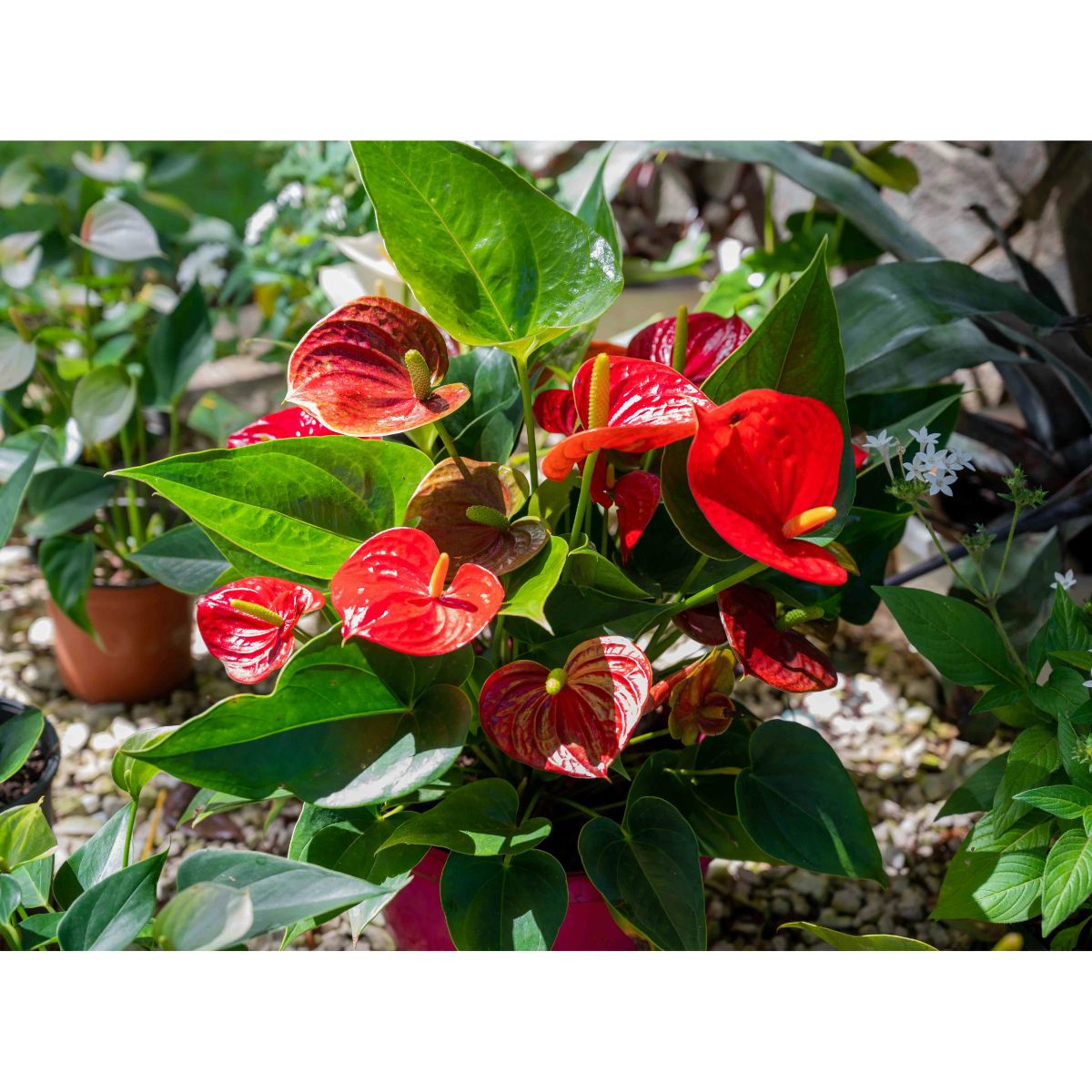
A To Z Guide how i Grow Anthurium from Seed
Anthurium from seed is one of the slowest, most exacting seed-starting projects in tropical horticulture. Every stage has a specific failure point. This guide covers each one directly — what goes wrong, why, and how to fix it.
Seeds Not Germinating or Losing Viability Quickly
Anthurium germination failure most often traces back to the seeds themselves — not technique, not soil, not temperature. Start with compromised seeds, and nothing downstream saves you.
Using Old or Dried Anthurium Seeds
Why Fresh Seeds Are Critical for Germination
Anthurium seeds are recalcitrant — a botanical term meaning they cannot survive drying. Unlike orthodox seeds (tomatoes, peppers, most vegetables) that store viably for years in cool, dry conditions, anthurium seeds are physiologically designed to germinate immediately after leaving the fruit. The moisture content inside the seed is not a storage problem — it is a germination requirement.
Once an anthurium seed dries out, the embryo dies. There is no reversing this. A seed that looks intact but has been allowed to desiccate is non-viable regardless of what you do with it afterward.
Germination rates from fresh anthurium seeds planted within 1–3 days of extraction from ripe berries typically run 70–90%. Seeds planted two weeks after harvest under poor storage conditions frequently fall below 20%. Seeds that have been fully dried and packaged for commercial sale are usually dead before they’re purchased.
What Happens When Seeds Are Stored Too Long
Even under the best short-term storage — wrapped in barely damp sphagnum moss, sealed in a bag, kept at 65–70°F — anthurium seeds begin losing viability after about two weeks. By four weeks, germination rates drop sharply. By six to eight weeks, most seeds in storage are no longer reliably germinable.
The degradation isn’t visible. The seed looks the same at week six as it did at day one. This is why gardeners who purchase dried anthurium seeds from online sellers and plant them carefully in perfect conditions still see zero germination — the seeds were dead before they arrived.
Delay Between Harvesting and Planting
Seed Lifespan Issues in Anthurium
Anthurium berries take 6–12 months to ripen after pollination on the spadix. Ripe berries change color — from green to orange, red, or purple depending on the species — and feel slightly soft when pressed. Extract seeds immediately when berries reach this stage by squeezing or splitting them open. Clean off the gelatinous pulp coating (it contains germination inhibitors) by rinsing under room-temperature water and gently rubbing against a fine mesh or paper towel.
Plant the cleaned seeds the same day. Every day of delay costs you a viable germination percentage.
Immediate Sowing vs. Delayed Planting Problems
If you genuinely cannot plant immediately — perhaps your growing setup isn’t ready — the maximum acceptable delay is one week, using this method: wrap cleaned seeds in damp (not wet) long-fiber sphagnum moss, place in a sealed zip-lock bag, and store at 65–70°F away from direct light. Check daily for any signs of premature sprouting, which can begin within days of extraction in optimal conditions.
Never refrigerate anthurium seeds. Chilling damages the embryo of this tropical plant just as surely as desiccation.
Seeds Rotting Before Sprouting
You have fresh seed and planted it promptly, but it rots in the medium before germinating. This is a moisture and soil problem.
Excess Moisture in the Growing Medium
Overwatering Causes Seed Decay
Anthurium seeds need consistent moisture to germinate, but the distinction between moist and saturated is critical. A waterlogged growing medium deprives seeds of oxygen and creates the warm, wet, anaerobic conditions in which Pythium and Fusarium species — the primary causes of anthurium seed rot — proliferate rapidly.
Moisten your growing medium before sowing until it feels like a firmly wrung-out sponge: moisture throughout, but nothing transferring to your hand when pressed. Cover the container with a clear plastic or a humidity dome to maintain that moisture level without repeated overhead watering. You should be adding almost no water during the first one to two weeks if the dome is well-sealed.
Poor Drainage in Containers
A container without adequate drainage holds excess water at the base. Through capillary action, this reservoir keeps the entire medium saturated far longer than the surface moisture level suggests. Anthurium seeds sitting in this perpetually wet zone rot consistently.
Drainage holes in every container are non-negotiable. After filling your container and moistening the medium, tip it and confirm water moves through and out freely. If it doesn’t, your medium is too dense or your holes are blocked.
Incorrect Soil Choice
Heavy Soil Suffocates Seeds
The standard potting mix is too dense for anthurium seed starting. It retains too much water, compacts over time, and restricts the oxygen availability that germinating seeds require. The expanded seeds that begin the process of radicle emergence need a medium they can push through without resistance.
The appropriate anthurium seed-starting medium: 2 parts long-fiber sphagnum moss (chopped fine), 1 part perlite, 1 part coconut coir. This holds appropriate moisture, drains freely, stays loose and open over time, and provides the slightly acidic pH (5.5–6.5) that anthurium roots prefer. It is also naturally somewhat anti-fungal — sphagnum moss contains sphagnol, which inhibits certain bacterial and fungal pathogens.
Lack of Aeration Increases Fungal Risk
Compact, poorly aerated growing medium creates dead zones where fungal pathogens multiply unchecked. The perlite in the mix above serves two purposes: drainage and aeration. It creates permanent air pockets that don’t compress under the weight of the medium or with repeated watering. These pockets are not luxury — they’re the oxygen supply for both seeds and developing roots.
If your medium looks or feels like potting soil after you’ve moistened it, it’s too dense for anthurium seeds.
Germination Happens, but Seedlings Die Early
The seeds germinated, and you have visible seedlings — then they collapse within days. Damping off and early watering errors are responsible for almost all early seedling loss.
Fungal Infections and Damping-Off
High Humidity Without Airflow
The enclosed dome that protects seeds during germination becomes a disease incubator the moment seedlings emerge. Inside a sealed dome, humidity approaches saturation and air is completely still — the precise conditions that Botrytis, Rhizoctonia, and Pythium species need to spread through a tray of seedlings within 48 hours.
The day you see the first seedling emerge, begin transitioning the dome. Day one: prop it open with a pencil. Days two through four: increase the opening progressively. By day seven after first germination, remove the dome entirely and position a fan at its lowest speed 3–4 feet from the tray, running 6–8 hours daily. This controlled transition prevents both the sudden humidity crash that stresses seedlings and the stagnant conditions that enable disease.
Contaminated Soil or Containers
Reusing old potting mix or unwashed containers from previous plants introduces fungal inoculum at levels that overwhelm tiny anthurium seedlings. Use fresh, sterile growing medium for every batch of seeds. Wash containers with a 10:1 water-to-bleach solution and rinse thoroughly before use. If you’ve experienced damping off in a previous tray, discard that medium entirely — don’t compost it.
Watering Mistakes During Early Growth
Keeping the Soil Too Wet
Post-germination, anthurium seedlings need consistent moisture but are acutely vulnerable to root oxygen deprivation from saturated medium. The roots at this stage are microscopic and have almost no tolerance for anaerobic conditions.
Check moisture by pressing a finger into the medium surface. Water only when the top quarter-inch feels dry. Use a fine mist spray or bottom-water (tray in shallow water for 20 minutes, then remove and drain). Never pour water directly over seedlings — the physical disruption damages stems too fragile to recover from it.
Inconsistent Watering Patterns
Alternating between too wet and too dry teaches seedlings nothing — it stresses them in both directions, damages root tip cells during dry periods, and creates the ideal disease conditions during wet ones. Check moisture daily and respond to what you find rather than following a fixed schedule. Anthurium seedlings in different positions in the same tray often dry at different rates depending on their proximity to the dome edge and the drainage pattern of the container.
Slow or Uneven Germination
Your seeds were fresh, your medium is right — but germination is sparse, spread over three or four weeks, or concentrated in one area of the tray.
Temperature Not Suitable for Tropical Seeds
Low Temperature Slows Sprouting
Anthurium originates in the tropical rainforests of Central and South America. Its seeds germinate reliably only within a narrow warm temperature range: 75–85°F (24–29°C) soil temperature. Below 70°F, germination slows dramatically. Below 65°F, most seeds in a batch will not germinate at all, even if viable.
The typical household temperature of 68–72°F translates to soil temperatures of 62–66°F when containers sit on countertops, floors, or near windows — well below anthurium’s germination threshold. A seedling heat mat set to 80°F solves this completely. It is the single most impactful investment you can make for anthurium seed starting.
Fluctuating Indoor Conditions
Anthurium seeds that experience warm days and cooler nights — common in homes where HVAC cycles or heating drops overnight — germinate unevenly over several weeks rather than in a cohesive flush. The physiological processes of germination require continuous warmth; interruption resets or delays them.
A thermostat-controlled heat mat eliminates this variable by maintaining stable bottom heat regardless of room temperature fluctuations. Run it continuously through the entire germination period, not just during daylight hours.
Light Exposure Problems
Too Much Direct Sunlight Damages Seeds
Unlike kalanchoe, anthurium seeds do not need light to germinate and should not be exposed to direct sunlight during this phase. Intense direct sunlight through the dome raises the container’s internal temperature dramatically — sometimes to 95°F or higher — denaturing the enzymes driving germination and killing seeds outright.
Keep covered seed containers in bright indirect light or under grow lights at an appropriate distance. If using a south-facing window in summer, add a layer of shade cloth or move containers back from direct sun exposure.
Insufficient Light Delays Growth
Once seedlings emerge, light becomes critical — not for germination, but for photosynthesis that fuels all subsequent growth. Anthurium seedlings receiving inadequate light after germination grow very slowly, remain pale, and develop weak stems that are vulnerable to disease.
Move seedlings to bright indirect light immediately upon emergence — within arm’s reach of a bright east or west-facing window, or under full-spectrum LED grow lights positioned 6 inches above seedling tops and running 14 hours per day.
… 15 Low-Maintenance Flowers That Bloom All Year in Pots
… How to Grow Peace Lily from Seed?
… How to Grow Anthurium from Seed
… How to Grow Portulaca from Seed
Weak and Leggy Seedlings
Tall, pale, and thin anthurium seedlings with widely spaced leaves are experiencing light deficiency and possibly crowding. Both are correctable.
Poor Lighting Conditions Indoors
Seedlings Stretching Toward Light
Etiolation — the elongation of stems in response to insufficient or unidirectional light — is the plant’s survival response when light is inadequate. The seedling sacrifices structural integrity to reach light. The resulting stretched stems are mechanically weak and physiologically stressed.
For anthurium seedlings, etiolation is primarily a light intensity problem. Even bright-looking rooms are often 10–20 times dimmer than what the plant is seeking. Grow lights eliminate this by delivering controlled intensity directly over the plants.
Placement Mistakes Near Windows
A window is a good source of directional light, not uniform light. Anthurium seedlings on a windowsill receive light from one side and shadow from the other, producing asymmetric growth. If grow lights aren’t available, rotate the container 180 degrees every two days to distribute light exposure evenly, and keep containers as close to the glass as practical without touching it.
North-facing windows in the Northern Hemisphere are insufficient for anthurium seedlings regardless of season. South-facing windows in summer with appropriate indirect light management are the best window option available.
Overcrowding in Seed Trays
Competition for Nutrients and Space
Multiple anthurium seedlings developing in the same cell or section of tray compete simultaneously for light, water, and the limited nutrients in a seed-starting mix. None receives adequate resources; all show reduced growth rates and increased vulnerability to disease.
Lack of Thinning After Sprouting
Once anthurium seedlings show their first true leaf — a small, heart-shaped leaf distinct from the rounded seed leaves — thin to one seedling per 2-inch section. Use scissors to cut surplus seedlings at the soil level. Never pull them — root disturbance from pulling damages the seedlings you intend to keep.
Thinned seedlings from an anthurium tray can sometimes be rescued if removed with a toothpick carefully enough to preserve their minimal root system, then transplanted immediately to their own small container. They often establish if handled gently enough.
… How to Grow Kalanchoe Flowers from Seeds? A To Z Guide
… How to Grow Vinca Flowers from Seed?
… How to Grow Chrysanthemums from Seed
… How to Grow Calibrachoa from Seed
Transplant Shock After Moving Seedlings
Anthurium roots at the seedling stage are among the most sensitive of any common tropical houseplant. Transplant shock ranges from a temporary setback to plant death, depending on what went wrong.
Transplanting Too Early
Underdeveloped Root Systems
The minimum readiness markers for anthurium seedling transplanting: two to three fully expanded true leaves and a root ball that coheres when gently removed from the container — meaning roots have colonized the medium rather than sitting loosely in it.
Before these markers are reached, the root system is too minimal to support the plant through the stress of relocation. The seedling will wilt immediately after transplanting and may not recover if the root system can’t adequately absorb water from its new container.
Wait for visible root development at the container’s drainage holes, or check by gently pressing the sides of a flexible container to observe whether the root ball holds together.
Sudden Environmental Changes
Moving a seedling from a warm, humid, still germination environment to a room with different temperatures, lower humidity, and air movement creates simultaneous stresses that small plants can’t always manage. Transition over 4–5 days: move the seedling to its new location for progressively longer periods each day before making the change permanent.
Damaging Roots During Transfer
Handling Delicate Roots Incorrectly
Anthurium roots at the seedling stage are pale, fine, and fragile. Tearing them during extraction from the germination container creates infection points and significantly reduces the transplanted seedling’s ability to absorb water.
Moisten the medium slightly before attempting removal. Squeeze the flexible container sides to loosen the root ball. Support from below — never grip the stem. Lower the root ball directly into a pre-made hole in the new container without setting it on any surface. Firmly grasp the root ball with a finger. Water lightly to settle the medium, then wait until the top half-inch dries before watering again.
Using an Unsuitable New Growing Medium
The transition from seed-starting medium to a more permanent mix should be gradual in composition if not in action. A significant jump in density or water retention between the two media creates immediate moisture management stress — roots adapted to one drainage pattern suddenly dealing with very different conditions.
An appropriate anthurium seedling transplant mix: 1 part orchid bark (medium grade), 1 part perlite, 1 part coconut coir, 1 part quality peat-based potting mix. This provides excellent drainage, adequate moisture retention, and the slightly chunky structure anthurium roots prefer as they mature. It transitions naturally from the seed-starting medium without creating a dramatic environmental shift.
Plants Survive but Growth Stalls
A seedling that made it through germination and early growth but has now stopped progressing is experiencing a container or environmental limitation.
Wrong Pot Size and Drainage Issues
Small Containers Restricting Root Expansion
Anthurium roots need room to grow laterally as well as downward. A seedling that has filled its container’s root zone has nowhere to expand, and anthurium root expansion is directly linked to above-ground growth. Stalled roots mean stalled plants.
Check containers every 6–8 weeks. When roots are visible through drainage holes or circling the container’s inner surface, move up one pot size. Don’t leap to a large container — excess medium around a small root ball stays wet too long and increases root rot risk. One pot size at a time.
Water Retention Affecting Root Health
Dense, poorly draining medium in a container that has been in use for months compacts progressively with each watering. The result is a medium that drains well initially and then retains water progressively longer over time. Watch for the sign: if the medium surface stays dark and damp for more than two days after watering, it’s retaining too much water. Repot into fresh medium.
Indoor Environment Problems
Low Humidity Affecting Tropical Plants
Anthurium evolved in environments with 70–90% relative humidity. Indoor heated environments in winter commonly drop to 20–35%. At these humidity levels, anthurium leaves develop brown edges and tips, the stomata close to prevent water loss, and photosynthesis and growth slow significantly.
Target 60–70% humidity around anthurium plants. A small ultrasonic humidifier running near (not directly on) the plant maintains this adequately. A pebble tray with water below the pot — with the pot sitting on the pebbles above the water line, not in it — provides a localized humidity boost without root rot risk.
Poor Airflow Causing Stress
Stagnant air is a disease vector and a physiological stressor for anthurium. In still air, Botrytis and other foliar fungal pathogens accumulate around leaf surfaces, and the boundary layer of air around leaves thickens — reducing gas exchange efficiency and slowing photosynthesis.
Gentle air circulation from a fan on its lowest setting, running several hours daily, keeps leaves drier, reduces disease pressure, and actually improves CO₂ availability at the leaf surface. It also strengthens stems through mild mechanical stimulation.
… How to Grow Begonia from Seed? – Complete A To Z Guide
… How to Grow Geranium from Seed: The Complete A To Z Guide
… How to Grow Impatiens Flowers from Seed
Leaves Grow, but No Flowers Appear
A seed-grown anthurium producing lush foliage but no spathes and spadices is either too young, getting inadequate light, or being fed incorrectly.
Light Conditions Not Supporting Blooming
Insufficient Indirect Light
Anthurium flowering requires high energy input. The metabolic cost of producing a spathe and spadix is significant — more than leaf production. Plants receiving insufficient light simply don’t accumulate the energy reserves needed to initiate blooming, regardless of how good the care is in every other respect.
For reliable anthurium flowering indoors, bright indirect light for 10–12 hours daily is the baseline requirement. This means being within 1–2 feet of a large bright window, or directly under a grow light. Plants beyond 3 feet from a window, even a bright one, typically receive too little light intensity for consistent blooming.
Exposure to Harsh Direct Sunlight
The opposite problem — intense direct afternoon sun — scorches anthurium leaves and causes the plant to redirect energy from growth and flowering to heat and UV stress management. Bleached patches, yellowing leaves, and flower bud abortion all result from excessive direct sun exposure.
Bright, filtered or indirect light is the target: a sheer curtain over a south-facing window in summer, morning sun from an east-facing window, or carefully positioned grow lights. Avoid direct afternoon sun from a west-facing window in summer without shading.
Nutrient Imbalance in Container Soil
Excess Nitrogen Causes Leafy Growth
A high-nitrogen fertilizer applied regularly produces exactly what nitrogen is designed to produce: vigorous vegetative growth — larger leaves, faster stem development, darker green color. The plant directs resources into leaf tissue at the expense of the reproductively costly business of producing flowers.
Fertilizing potted anthurium with high-nitrogen products (first number significantly higher than the other two — 24-8-16, 20-20-20) creates impressive foliage and few or no flowers.
Lack of Balanced Feeding
For flowering anthurium, use a phosphorus-forward or balanced fertilizer: 5-10-5, 10-10-10, or a dedicated bloom formula. Phosphorus supports root development and the energy transfer processes involved in flowering. Feed at half the labeled rate every two weeks during the active growing season (spring through early fall). Reduce to monthly feeding in winter. Stop feeding completely if the plant is visibly stressed from any cause — fertilizing a stressed plant compounds the problem.
Long Waiting Time With No Visible Results
Anthurium from seed is a commitment measured in years, not weeks. Understanding the timeline before you start prevents the frustration that causes gardeners to abandon plants that are performing exactly as expected.
Natural Slow Growth of Anthurium from Seed
Long Juvenile Stage Before Maturity
Anthurium seedlings spend their first 3–6 months primarily developing root systems with minimal above-ground growth to show for it. The first true leaf may not appear until 6–8 weeks after germination. The transition from seedling to recognizable young plant takes 3–4 months. First flowers from seed-grown anthurium typically appear at 18 months to 3 years after germination, depending on the species and growing conditions.
This timeline is fixed by the plant’s biology. It cannot be significantly accelerated. Plants in ideal conditions reach the juvenile-to-mature transition faster, but there is no shortcut past the juvenile phase.
Expectations vs. Actual Growth Timeline
Nursery anthurium plants are almost universally propagated through tissue culture or offsets from mature plants — not from seed. When you compare your 6-month-old seedling to a nursery plant in full bloom, you’re not comparing equivalents. The nursery plant is the product of a mature genetic line; your seedling is genuinely young.
Seed-grown anthuriums, once they reach maturity, are often more vigorous and better adapted to your specific growing environment than tissue-cultured plants — because their root systems developed from scratch in your conditions rather than being transplanted from a sterile laboratory medium.
Environmental Factors Delaying Development
Temperature Fluctuations Indoors
Anthurium growth actively occurs in a temperature window of 65–85°F (18–29°C). Below 60°F, growth slows dramatically. Below 55°F, cold damage to leaves and roots begins. Above 90°F without high humidity, heat stress reduces photosynthetic efficiency and slows growth.
Placement matters: near air conditioning vents, on cold floors in winter, or near drafty windows in cold climates all expose the plant to temperature ranges outside its growth zone. A consistent, warm location away from temperature extremes — 70–80°F year-round — produces the fastest achievable growth from seed.
Inconsistent Care Routines
Every inconsistency in care — delayed watering, skipped feeding, irregular light cycles — translates directly into interrupted growth cycles. Anthurium is not particularly forgiving of neglect at the seedling stage. It doesn’t bounce back quickly from setbacks; it simply pauses, then resumes cautiously.
Consistent daily checking, consistent watering response, consistent feeding schedule, and consistent light delivery (a timer for grow lights is worth every dollar) produce the most predictable and fastest realistic growth. The difference between attentive care and occasional care is, in anthurium, measured in months of development.
Anthurium from seed rewards patience and precision. Get the conditions right at each stage, and you’ll grow a plant that no garden center sells — yours, from start to flower, all the way through.
… How to Grow Petunias: The Complete Petunia Flower Guide
Still Have a Question?
Why do anthurium seeds stop working after a few days?
Anthurium seeds don’t stay viable for long. Once they dry out, their ability to grow drops fast. That’s why fresh seeds—planted almost immediately—give much better results than stored ones.
Is it normal for anthurium seeds to take longer than expected?
Yes, it’s normal. Even in good conditions, some seeds sprout faster while others take more time. Uneven germination usually happens due to small changes in temperature or moisture.
Why do my seeds turn mushy instead of sprouting?
This usually happens when the growing medium stays too wet. Anthurium seeds are sensitive to excess moisture, and instead of growing, they start to rot in soggy soil.
Do I really need high humidity for anthurium seeds?
Yes, humidity plays a big role. Dry air slows down germination, but too much humidity without airflow can cause fungal problems. It’s about keeping a balanced environment.
Why are my seedlings growing but not getting stronger?
This often happens when the light is not strong enough. The seedlings survive, but they don’t develop properly and stay weak or slow-growing.
How long should I expect before seeing a mature anthurium plant?
Growing anthurium from seed is slow. It can take a few years before the plant becomes mature enough to flower, especially if conditions are not consistently ideal.