A To Z Guide on how to Grow Kalanchoe Flowers from Seed
Everything starts here. Before you think about soil, timing, or containers — think about your seeds. A weak start with poor seeds cannot be rescued by good technique. A strong start with high-quality seeds forgives many downstream mistakes.
Choosing Suitable Kalanchoe Varieties for Seed Propagation
Kalanchoe is a large genus with over 200 species — but not all of them are equally amenable to seed propagation. Understanding which types make sense for seed starting and which ones don’t will save you enormous frustration.
Flowering Kalanchoe Types Commonly Grown from Seed
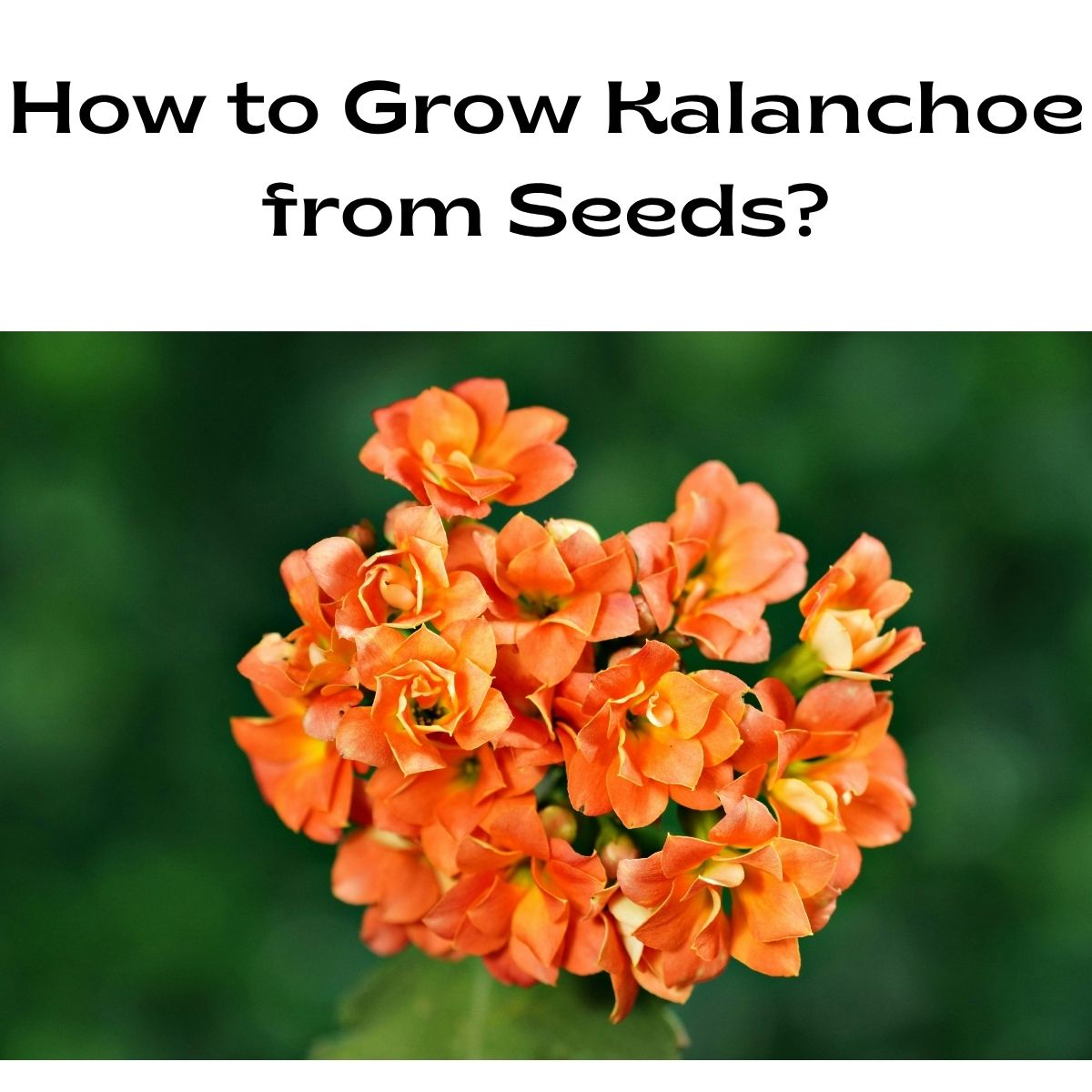
The kalanchoe most familiar to North American and European gardeners is Kalanchoe blossfeldiana — the holiday kalanchoe, the one with the dense clusters of small, waxy flowers in red, orange, yellow, pink, and white. This is also the most practical species to grow from seed, and it’s what most commercial seed suppliers offer.
Beyond the standard blossfeldiana, a few other species are worth exploring for seed starting:
- Kalanchoe daigremontiana (Mother of Thousands) — produces plantlets along leaf margins rather than through traditional flowering, but can be grown from its seeds when available. Extremely fast-growing, almost weedy in warm climates.
- Kalanchoe pinnata (Air Plant or Cathedral Bells) — another leaf-margin reproducer that also sets seed. Traditional medicinal uses across tropical regions. Seeds are viable and germinate reasonably well.
- Kalanchoe tomentosa (Panda Plant) — slower from seed, but the fuzzy silver-grey leaves are worth the wait—a gorgeous windowsill plant.
- Kalanchoe thyrsiflora (Paddle Plant) — large, striking rosettes with red-edged leaves. Takes patience from seed, but produces impressive plants.
For your first attempt at growing kalanchoe from seed, I strongly recommend starting with K. blossfeldiana from a reputable seed supplier. It’s the most forgiving, the fastest to bloom, and the easiest to find quality seed for.
Limitations of Growing Some Hybrids from Seeds
Here’s something most gardening guides don’t tell you clearly: many of the kalanchoe plants sold at garden centers, grocery stores, and nurseries are F1 hybrids. These were bred for specific traits — uniform flower color, compact growth habit, precise bloom timing — using controlled crosses between parent lines.
If you collect seed from a grocery-store kalanchoe and try to grow it, here’s what will happen: the seeds will likely germinate (if viable at all), but the resulting plants will be genetically unpredictable. They won’t reliably reproduce the parent plant’s color, form, or habit. You might end up with something interesting — or you might end up with small, weak plants that bloom sparsely in muddy, off-colors.
This isn’t a reason to avoid seed starting. It’s a reason to buy seed from sources that sell open-pollinated or properly described varieties rather than trying to harvest seed from commercial store plants.
Trusted sources for kalanchoe seed include specialty succulent seed suppliers, established seed companies that list germination percentages, and reputable online seed communities where home growers share hand-pollinated seed from known parent plants.
Checking Seed Quality Before Planting
Kalanchoe seeds are not large. They’re not the reassuring, fat little seeds you get from a squash or a bean. They’re tiny — barely larger than a grain of coarse salt — and because of their size, quality checks are even more important than with larger seeds.
Fresh vs. Old Seeds and Germination Impact
Kalanchoe seed viability drops faster than many gardeners realize. Fresh seed — harvested within the past year and stored properly — will typically show germination rates of 60–80% under good conditions. Seed that is two or more years old may struggle to hit 30–40%, even under ideal conditions.
The frustrating thing about old kalanchoe seed is that it looks identical to fresh seed. There’s no visual difference. You can’t tell by looking at it. The only reliable test is germination itself — or checking the packed-for date on the packet.
When I order kalanchoe seed, I specifically choose suppliers who print the harvest or packed-for date on the packet. If that information is missing, I consider the seed suspect unless the supplier has an excellent reputation and fast stock turnover.
The water float test that works for larger seeds is less reliable for kalanchoe because the seeds are so small and light that even viable ones may float. Your best quality indicator is a clearly packed-for-date within the past 12 months from a supplier with high stock turnover.
Storage Conditions Affecting Seed Viability
If you’re saving leftover kalanchoe seed from one season to the next, storage conditions matter enormously for this particular plant.
Kalanchoe seed is sensitive to both moisture and temperature fluctuations. The ideal storage environment is cool (around 40°F / 4°C), dark, and dry — which means a sealed container in the refrigerator. Not the freezer. Not a garden shed. Not a warm kitchen drawer.
The enemy of seed viability is the cycle of absorbing and releasing moisture that happens when seeds are stored in environments with fluctuating humidity. Each cycle of dampening and drying damages the seed embryo slightly. Over a season or two, this cumulative damage reduces germination rates substantially.
My storage method: Small labeled paper envelopes inside a zip-lock bag with a silica gel packet, stored in the vegetable crisper drawer of the refrigerator. Remove from the refrigerator at least 24 hours before planting to allow the seeds to warm to room temperature gradually — sudden temperature shifts when you open the container can cause condensation inside the packet.
Getting the Timing Right for Seed Starting
Timing a kalanchoe seed start is a different calculation from timing a vegetable. You’re not working backward from a frost date. You’re working forward from when you want flowering plants — and you need to account for the fact that kalanchoe’s flowering is triggered by short days (long nights) rather than by season or temperature alone.
Ideal Season for Starting Kalanchoe Seeds
Indoor Sowing Timelines
Kalanchoe blossfeldiana typically takes 4 to 6 months from seed to first flower under good growing conditions — sometimes longer with beginner setups or suboptimal light. This is significantly longer than most flowering annuals.
The best time to start kalanchoe seeds indoors for most gardeners in temperate climates is late winter to early spring — January through March in the Northern Hemisphere. Starting then gives seedlings the summer and early fall to grow and mature, so they’re large enough to initiate flowering (which happens naturally as days shorten in fall) and you have blooming plants by late fall or winter.
If you start in summer or fall, you can still grow healthy plants — but they may initiate flowering while still quite small, producing miniature bloom sets on undersized plants.
Temperature-Based Timing Adjustments
In climates with mild winters — Zones 9–11, or indoor environments where temperatures stay above 60°F year-round — kalanchoe seed starting can happen in almost any month. The plants are not frost-tolerant, but they don’t need cold stratification, and they don’t have a required dormancy period.
What they do need is warmth for germination: soil temperatures of 68–75°F (20–24°C) consistently. Below 65°F, germination becomes unreliable. Below 60°F, it essentially stops.
If you’re in a cold climate and your house drops below 65°F at night, start your seeds in early spring when you can maintain consistent warmth with a heat mat — rather than fighting inconsistent temperatures throughout winter.
… How to Grow Begonia from Seed?
… How to Grow Vinca Flowers from Seed
… How to Grow Anthurium from Seed
… How to Grow Chrysanthemums from Seed
Indoor vs. Outdoor Sowing Decisions
Why Indoor Control Improves the Success Rate
Kalanchoe seeds need light to germinate (more on this in a moment) — but they need consistent, protected light, not the unpredictable exposure of an outdoor seedbed. They need consistently warm temperatures without the drops that outdoor nights can bring. And they need moisture levels that can be fine-tuned, not the feast-and-famine of outdoor watering or rain.
For all of these reasons, kalanchoe seed starting belongs indoors, without exception. This isn’t a guideline — it’s a hard rule earned through experience. Every time I’ve tried outdoor sowing or even cold-frame starting of kalanchoe seeds, the results have been significantly inferior to indoor propagation.
Risks of Direct Outdoor Sowing
Direct outdoor sowing of kalanchoe fails for compounding reasons. The seeds are so small they’re easily washed away by irrigation or rain. They need light to germinate, but unprotected outdoor soil often develops a crust or gets covered by debris that blocks that light. Temperature fluctuations — even in warm climates — disrupt the consistent warmth germination requires. And slugs, fungus gnats, and other soil-level pests find tiny kalanchoe seedlings irresistible.
I have spoken to exactly zero experienced kalanchoe growers who recommend direct outdoor sowing. If you find instructions that suggest it, they’re almost certainly written by someone who hasn’t actually tried it seriously with this specific plant.
Preparing Soil and Containers for Seeds
The soil and container combination for kalanchoe seed starting needs to accomplish two things that can seem contradictory: it must retain just enough moisture to keep seeds hydrated during the weeks-long germination period, while draining freely enough to prevent the root rot and fungal disease that kill kalanchoe seedlings faster than almost anything else.
Soil Requirements for Kalanchoe Seeds
Importance of Light, Well-Draining Soil
Kalanchoe is a succulent. It evolved in arid and semi-arid regions of Madagascar and tropical Africa. Its roots are not adapted to sitting in moist soil for extended periods — they’re adapted to growing quickly through fast-draining, gritty substrates, accessing water efficiently, and then drying out between waterings.
Your seed-starting mix needs to respect this biology.
A commercial cactus and succulent potting mix is a reasonable starting point, but most commercial mixes — even those labeled for cacti and succulents — retain more moisture than ideal for tiny kalanchoe seeds. I modify every commercial mix before using it for kalanchoe seed starting.
My kalanchoe seed-starting mix:
- 1 part commercial cactus/succulent mix
- 1 part coarse perlite
- 1 part fine horticultural sand (not beach sand or play sand — these are too fine)
This produces a mix that drains almost immediately, has excellent air porosity, and provides just enough structure for delicate seedling roots to anchor into. It looks almost too loose and gritty when you’re filling your trays — and that’s exactly right.
Problems with Dense or Water-Retentive Soil
Regular potting soil, garden soil, or standard seed-starting mix designed for vegetables and annuals is wrong for Kalanchoe in multiple ways. It stays too wet. It compacts over time. It holds fungal pathogens at levels that would kill kalanchoe seedlings before they’re even visible.
I’ve seen gardeners lose entire flats of kalanchoe seedlings within two weeks of germination because they used standard potting mix and the mix never fully dried between waterings. The seedlings emerged beautifully, then collapsed over the course of three or four days — classic damping off in a soil that was simply too water-retentive for these particular plants.
Never use standard potting soil for kalanchoe seeds. The extra $8 for proper cactus mix and perlite is the best investment you’ll make in this project.
Container Selection for Seed Starting
Seed Trays vs. Small Pots
For the initial sowing, a shallow seed tray or flat works better than individual small pots. Here’s why: kalanchoe seeds are tiny enough that trying to place them in individual cells is genuinely difficult, and the fine seed-starting mix in a shallow tray provides a stable, uniform surface for surface sowing (which is how kalanchoe seeds need to be planted).
I use standard 10×20-inch seedling trays filled to about ¾ inch depth with my modified succulent mix. This depth is sufficient for the shallow-rooted seedlings that will emerge, and the thin layer dries more evenly and predictably than a deeper container.
Once seedlings reach ½ to 1 inch tall and show their second set of true leaves, I move them to individual 2-inch pots. From there, they’ll progress to 4-inch pots as they mature.
Drainage Requirements to Prevent Root Issues
Every container you use for kalanchoe — from the initial seed tray to the final flowering pot — must have drainage holes. Non-negotiable.
Even with the best fast-draining mix, a container without drainage will eventually accumulate water at the bottom. Kalanchoe roots sitting in that water will rot. The plant will struggle for a while — succulent stems and leaves can mask root problems for weeks — and by the time you see visible distress above the soil line, the roots may already be beyond recovery.
If you’re using decorative containers without drainage for a mature kalanchoe display, use the same cachepot method I described for vinca: grow the plant in a draining nursery pot, and slip that inside the decorative container. Remove it for watering, let it drain thoroughly, then return it.
… How to Improve Soil Water Retention Without Causing Drainage
Sowing Kalanchoe Seeds Properly
The actual moment of sowing kalanchoe seeds is where technique really separates experienced growers from beginners. These seeds are so small that the normal approach — pressing a seed into a hole in the soil and covering it — simply doesn’t work.
Handling and Placing Tiny Seeds
Surface Sowing Without Burying Seeds
Kalanchoe seeds are photoblastic — they require light to germinate. This is a critical, non-negotiable biological requirement. Bury the seeds even slightly and you block the light they need to trigger germination. The seeds will sit in the soil, potentially for weeks, and do nothing.
Surface sowing means exactly that: placing seeds on top of the soil surface and not covering them with anything. Not a sprinkle of soil. Not a layer of vermiculite. Nothing. The seeds go on top of the mix and stay there.
The practical technique I use: Moisten your seed-starting mix before filling the tray, so the surface is slightly damp. Gently press the surface level with a flat piece of cardboard. Then carefully open your seed packet and tap seeds out into the fold of a piece of white paper — the white background helps you see the tiny seeds. Using the paper as a guide, distribute seeds evenly across the tray surface.
Because the seeds are so small and light, any air current will scatter them. Work in a still room, away from fans, open windows, or heating vents. Move slowly and deliberately.
Avoiding Overcrowding During Sowing
When seeds are nearly invisible, the temptation is to just shake the packet and assume the distribution will work out. It won’t. You’ll end up with dense clusters in some areas and bare patches in others — and those clusters will produce a mat of competing seedlings that are difficult to separate without damage.
Aim for seeds spaced approximately ½ inch apart. Given their size, this is harder to achieve than it sounds — I use a toothpick dampened with water to pick up and place individual seeds when I want precise placement, or I practice tapping the paper very gently while moving it slowly across the tray surface for a more scattered distribution.
Light Exposure During Germination
Why Kalanchoe Seeds Need Light to Sprout
Most gardeners learn early that seeds need darkness to germinate. For many plants, that’s true. For kalanchoe, it’s the opposite.
Kalanchoe seeds contain phytochrome pigments that sense red and far-red light wavelengths. In nature, these mechanisms ensure that seeds germinate at the soil surface — where seedlings have the best chance of surviving — rather than underground, where they’d exhaust their limited energy reserves trying to reach light.
When a kalanchoe seed is exposed to light, the phytochrome system is activated and triggers the germination process. In darkness, that trigger is absent, and germination either doesn’t occur or occurs poorly and unevenly.
This is why surface sowing is not just a convenience — it’s a biological necessity.
Mistakes That Block Light and Reduce Germination
The most common mistake: covering the seed tray with a solid plastic dome or newspaper, as you would for many other seedlings. With kalanchoe seeds, this blocks the light they need, and your germination rate plummets.
Use a clear plastic dome or plastic wrap — something that maintains humidity (which is important during the weeks-long germination period) while allowing light through. Place the covered tray under bright grow lights or in a very bright, warm location.
A second common mistake: placing the covered tray in a warm but dark location, like on top of a water heater or in a cabinet. Warmth is necessary, but not at the expense of light. Kalanchoe needs both simultaneously during germination.
Watering Techniques for Healthy Germination
With kalanchoe seeds on the soil surface — not buried where soil can wick moisture to them — maintaining the right moisture level requires a gentle, attentive approach that’s different from most seed starting.
Managing Moisture Without Overwatering
Light Misting vs. Heavy Watering
The seeds are sitting on the surface of your mix. If you water from above with any force at all — even with a gentle rose watering can — you’ll wash the seeds to the edges of the tray, bury some under displaced soil particles, and disturb your careful sowing pattern.
Misting is the only appropriate watering method during germination. Use a fine-spray misting bottle set to its finest setting. Hold it 12–18 inches above the tray and mist lightly, evenly, until the surface looks uniformly damp — not wet, not glistening with water droplets, just uniformly dark and damp.
The clear dome covering your tray will retain a significant amount of moisture, reducing how often you need to mist. Check the tray daily. If condensation is covering the inside of the dome heavily, lift it slightly for an hour to allow some moisture to escape. If the soil surface looks pale and dry, mist gently.
Bottom watering becomes an option once seedlings are a few weeks old and have started to develop roots into the mix. At that point, setting the tray in a shallow dish of water for 15–20 minutes allows the mix to draw up moisture from below without disturbing the surface or the delicate plants.
Keeping Soil Slightly Moist, Not Wet
The goal during kalanchoe germination is a soil surface that feels like a barely-damp piece of cloth — moisture present, but not transferring freely to your fingertip when touched. Never saturated. Never dripping. And never allowed to dry out completely during the germination period.
This is a narrow window to manage, and it requires daily checking. Set a reminder if needed. Inconsistent moisture during germination produces uneven, stretched-out germination over weeks instead of a clean flush of seedlings over a few days.
Preventing Early-Stage Plant Diseases
Overwatering Leading to Damping Off
Damping off (Pythium, Rhizoctonia, and related fungal pathogens) is as dangerous for kalanchoe seedlings as it is for any other seed-started plant — and arguably more so, because the tiny kalanchoe seedlings have so little reserve tissue that the disease progresses from infection to death within 24 hours.
The critical window is the first four weeks after germination. During this time, the seedlings are almost hairline thin, have minimal stem tissue, and cannot afford any moisture stress in either direction — too wet or too dry.
Prevention through good drainage and careful watering is your only real option. Once damping off appears in a tray, remove affected plants immediately with a toothpick, allow the mix to dry slightly, and improve airflow around the tray. You may save some seedlings, but don’t count on it.
Poor Drainage Causing Root Rot
Root rot in kalanchoe is sneaky. Because kalanchoe stores water in its leaves, a plant with rotting roots can look deceptively healthy above the soil line for weeks. The leaves stay plump. The stem looks firm. But underground, the root system is dying.
By the time leaves start to yellow, wrinkle, or drop — the classic above-ground symptoms of root rot — the root system may already be beyond recovery.
The prevention is the same as for damping off: excellent drainage, fast-draining soil, and watering only when the top layer of soil is dry. But with root rot, the time lag between cause and symptom means you need to build good habits before you see problems, not after.
… Automatic Drip and Mist Irrigation Kit – Give Your Plants Water on Demand and Save Your Time!
Temperature and Growing Conditions
Kalanchoe evolved in the subtropics and tropics. It does not tolerate temperature well, especially during the early germination and seedling phases. Give it warmth, and it rewards you generously. Let it get cold, and it stalls, sulks, or simply fails.
Ideal Temperature for Germination
Warm Conditions for Faster Sprouting
Kalanchoe seeds germinate best at consistent soil temperatures of 68–75°F (20–24°C). At these temperatures, germination typically begins within 10 to 20 days — though some seeds in the same batch may sprout earlier or later, and stragglers can appear weeks after the main flush.
At 78–80°F, germination can accelerate to 7–14 days. This is toward the upper end of what I’d recommend without risking heat stress, but a seedling heat mat set to this temperature can produce noticeably faster and more even germination.
I use a thermostat-controlled heat mat for all my kalanchoe seed starting. It’s not an extravagance — it’s the difference between 60% germination over three weeks and 80% germination in ten days. If you’re serious about this plant, get a heat mat.
Effects of Low Temperature on Seed Growth
Below 65°F, kalanchoe germination slows dramatically and becomes highly uneven. Some seeds may sprout after a month. Others won’t sprout at all. The seedlings that do emerge are often weak, prone to damping off, and slow to develop their first true leaves.
Below 60°F, don’t expect germination. The seeds will sit, slowly deteriorating, until conditions improve — or until they’ve deteriorated past viability.
If your growing space drops below 65°F at night, the heat mat becomes absolutely critical. Ambient air temperature matters less than soil temperature, and a heat mat maintaining 72°F soil temperature in a 60°F room is adequate for germination — but that same 60°F room without a heat mat will give you poor results.
… 15 Low-Maintenance Flowers That Bloom All Year in Pots
… How to Grow Peace Lily from Seed?
… How to Grow Portulaca from Seed
… How to Grow Calibrachoa from Seed
Airflow and Humidity Control
Preventing Fungal Issues with Proper Airflow
The enclosed, humid environment needed during kalanchoe germination is the same environment that fungal pathogens prefer. Once seeds begin to sprout, it’s time to start increasing airflow — gradually, not abruptly.
Starting on day one after you see the first seedlings emerging, prop the dome slightly with a pencil or small stone to allow air exchange. Over the following five to seven days, remove the dome for progressively longer periods each day. By two weeks after germination, seedlings should be growing in fully open conditions with good air circulation.
A small oscillating fan at its lowest setting, positioned several feet from the seedling tray, provides the kind of light, consistent airflow that strengthens seedling stems and keeps the air moving enough to discourage fungal growth. Run it 8–12 hours per day, not continuously.
Maintaining Balanced Humidity Levels
The target humidity range for kalanchoe seedlings post-germination is 40–60% relative humidity. This is drier than the near-saturation conditions inside the germination dome, and much drier than the levels that trigger fungal disease.
In most homes during winter (when heating runs frequently), relative humidity drops well below 40% — sometimes to 20–25%. At these levels, tiny kalanchoe seedlings can dry out even with careful surface watering. If you’re growing in a heated home during winter, a small tray of water placed near (not under) your seedling tray, or a small ultrasonic humidifier in the growing area, can help maintain adequate humidity without creating the saturated conditions that invite disease.
In humid climates or during humid summer conditions, the opposite concern applies: high ambient humidity increases disease pressure. In these conditions, emphasize airflow over humidity management.
Caring for Seedlings After Germination
The day your first kalanchoe seedlings emerge is genuinely exciting. They’re impossibly small — each a tiny pair of round seed leaves (cotyledons) on a stem thinner than a hair. This is also the moment when your care decisions have the most leverage on the outcome.
Light and Placement for Strong Growth
Preventing Weak or Leggy Seedlings
At this seedling stage, Kalanchoe’s need for light is at its most critical. The seedlings have almost no stored energy reserves. They are living entirely on what light they can capture through those tiny cotyledons. Insufficient light means slow, stretched growth as they reach desperately toward any light source — and those elongated, fragile stems are magnets for disease.
A south-facing windowsill is rarely enough. Winter sun angles are low, and day length is short. Even in spring, window glass filters out significant portions of the light spectrum that seedlings use for compact, sturdy growth.
Grow lights are the correct tool for kalanchoe seedlings. I use LED grow lights with a full spectrum (3000K to 6500K) positioned 4–6 inches above the tops of the seedlings. At this close range, the light intensity is high enough to produce compact, sturdy growth even in the darkest months of the year.
Providing Consistent Bright Light
Run your grow lights for 14 to 16 hours per day on a timer. Consistency matters — kalanchoe is sensitive to day length, and irregular light cycles can trigger premature flowering in very young plants (which stresses them and produces poor blooms on undersized plants).
If you’re growing near a window without supplemental lighting, rotate the tray 180 degrees every day to prevent seedlings from leaning toward the light source. Leaning stems that correct and re-lean in alternate directions develop structural weakness at each bend point.
Thinning and Spacing Seedlings
Avoiding Overcrowding
Kalanchoe seedlings in an open flat will naturally form a dense mat if sowing is generous. This might look appealing — a thick carpet of green — but it’s a problem in the making. Crowded seedlings compete for light, air, and moisture. The ones in the center of dense patches receive less light and less airflow, making them prime candidates for damping off.
Once seedlings have developed their first true leaves (the pair that appear after the rounded seed leaves), it’s time to thin.
Supporting Proper Root Development
Thinning tiny kalanchoe seedlings without disturbing neighbors requires patience and a toothpick. Rather than pulling seedlings out — which disrupts the soil and dislodges neighbors — use a toothpick to gently separate individual seedlings and transfer the extras to their own 2-inch pots filled with your succulent mix.
Kalanchoe seedlings are surprisingly willing to transplant at this tiny size if handled with extreme care. The key is working with dampened soil (not wet, not dry), supporting the seedling by its leaves rather than its stem (stems crush easily; leaves are more resilient), and placing the transplanted seedling at the correct soil level without burying the stem.
After thinning or separating, water very lightly and keep transplants out of direct sun for 48 hours while their minimal root systems adjust to the disturbance.
Transplanting Kalanchoe Seedlings
Moving kalanchoe from its initial seed tray to individual containers is the first major transition in the plant’s life — and it requires the same slow, careful approach that the entire process has demanded so far.
Identifying the Right Time to Transplant
Seedling Maturity and Root Strength
The earliest I consider moving kalanchoe seedlings from a seed tray to individual pots is when they show at least 2–3 pairs of true leaves and the roots are visible at the drainage holes of the tray (or when you can see roots circling the plug when you gently remove a seedling).
In practical terms, this typically happens 6 to 10 weeks after germination under good light and temperature conditions. Under suboptimal conditions, it can take longer. Never rush this step based on calendar time — assess the plant, not the calendar.
Risks of Early Transplanting
Kalanchoe seedlings transplanted too early have root systems that haven’t developed enough to support the plant through the transition. They’ll wilt within hours of transplanting (even in identical conditions), recover slowly if at all, and frequently stall in growth for weeks.
A seedling that isn’t ready to transplant will tell you: it will look slightly limp, the root ball won’t hold together when removed from the tray, and you’ll see minimal white root development at the plug base.
Give it two more weeks. Check again. It will be ready when it’s ready — and transplanting a properly matured seedling is dramatically easier and more successful than trying to move an immature one.
Reducing Transplant Shock
Gentle Handling of Roots
Kalanchoe roots at the seedling stage are fine and fragile. They don’t tolerate rough handling, significant disturbance, or exposure to air for more than a minute or two.
When removing a seedling from a seed tray, use a toothpick or thin dibber to loosen soil around the plant gently before lifting. Support the root ball from below. Don’t pull the plant out by the stem. Move it directly to its new container without setting it down on any surface — roots exposed to air even briefly can desiccate and die.
Pre-fill the new pot with slightly damp succulent mix, make a hole with your finger or a pencil, lower the root ball in, and firm the mix gently around it. The seedling should sit at the same depth it was growing at previously — don’t bury the stem or sit it higher than it was before.
Gradual Adjustment to New Containers
After transplanting, keep seedlings in a bright but not intensely sunny location for 5–7 days. This “transition period” allows the plant to focus on re-establishing roots rather than managing the additional stress of high light intensity.
Water very lightly immediately after transplanting — just enough to settle soil around the roots without saturating the mix. Then wait until the top half-inch of the new mix feels dry before watering again. New roots establish fastest in slightly dry conditions because they’re actively searching for moisture; in saturated soil, they have no incentive to grow outward.
Growing Kalanchoe in Pots After Transplant
Kalanchoe is fundamentally a container plant, both indoors and in mild outdoor climates. Getting the container situation right makes the difference between a plant that blooms repeatedly for years and one that struggles from pot to pot without ever really flourishing.
Choosing the Right Pot and Soil
Container Size for Healthy Growth
One of the most consistent mistakes I see with potted kalanchoe is choosing containers that are too large. Unlike many plants that benefit from generous potting space, kalanchoe actually performs better when slightly pot-bound. This is related to its succulent nature — a large volume of soil around a small root system retains moisture longer than the plant wants, increasing root rot risk.
Match pot size to root ball size. When you transplant a seedling into its first individual pot, a 2-inch pot is appropriate. As the plant grows, move up in pot size gradually — from 2 inches to 4 inches to 6 inches, with each move happening only when roots are actively growing through the drainage holes of the current container.
A mature kalanchoe blossfeldiana in a 6-inch pot is typically at its happiest — large enough for a substantial root system, small enough to dry out appropriately between waterings.
Importance of Drainage for Succulents
I’ll repeat this because it cannot be overstated: every pot must have drainage holes. Not “some” pots. Every single one.
Kalanchoe root rot is one of the leading causes of death in this otherwise tough little plant. And it’s almost entirely preventable with proper drainage and appropriate watering. The soil should be a cactus or succulent mix, possibly amended with additional perlite (up to 50% by volume for particularly heavy commercial mixes). The pot should drain freely within seconds of watering, not minutes.
Placement and Light Conditions
Indoor vs. Outdoor Positioning
Kalanchoe is one of the most adaptable succulent house plants for indoor conditions — but it has clear preferences that, when honored, produce dramatically better plants than the struggling specimens you often see on north-facing windowsills.
Indoors: A south or west-facing window that receives at least 4–6 hours of direct sun per day is the minimum for healthy growth. Bright indirect light keeps the plant alive but typically produces leggy, pale growth and reluctant flowering. If your indoor light is genuinely insufficient (common in apartments with small windows or north/east exposures), supplement with a grow light on a timer.
Outdoors in warm weather: Kalanchoe thrives outdoors in warm climates or during summer in temperate climates — but with one caveat. The transition from indoors to direct outdoor sun must be gradual. Direct midday sun without acclimatization will scorch the leaves of a plant that’s been growing indoors. Start with morning sun and afternoon shade for a week, then gradually increase sun exposure over 10–14 days.
In USDA Zones 10–12, kalanchoe can grow outdoors year-round. In Zone 9, it can stay 10–11 months of the year with frost protection during occasional cold snaps. In cooler zones, treat it as a summer outdoor plant that comes inside before the first frost.
Sunlight Requirements for Healthy Plants
For flowering — not just survival, but genuine, repeated, vigorous flowering — kalanchoe needs at least 6 hours of bright, direct or near-direct sun per day. This is the level that most indoor environments struggle to provide naturally.
Plants receiving less than this threshold will grow, look reasonably healthy, and produce occasional flowers — but they won’t bloom with the density and frequency that kalanchoe is capable of, and they’ll require the artificial short-day treatment (covering for 14 hours of darkness each day for 6 weeks) to force re-blooming more reliably than sun-grown plants.
The practical takeaway: grow your kalanchoe in the brightest spot available to you. South-facing windowsill in winter. Partially sunny patio spot in summer. Grow light supplement in dark environments. The investment in light pays off in blooms — and with kalanchoe, blooms are the whole point.
… How to Grow Impatiens Flowers from Seed
… How to Grow Geranium from Seed: The Complete A To Z Guide
A Final Word from Fifty Years of Growing These Plants
I still have a soft spot for kalanchoe that goes back to that cold February in 1983, watching tiny seedlings appear like magic on a tray of gritty soil while snow fell outside my greenhouse windows.
Growing kalanchoe from seed is not a weekend project. From sowing to first bloom, you’re looking at 4–6 months of consistent attention. The seeds are demanding. The seedlings are fragile. The process requires you to unlearn some intuitions you’ve built with other plants — covering seeds, watering freely, reaching for rich soil — and replace them with approaches that match this plant’s specific, succulent biology.
But here’s what I know after fifty years: the gardeners who grow kalanchoe from seed never go back to buying transplants if they can help it. The variety available through seed is extraordinary. The cost is a fraction of nursery plants. And the pride of seeing a full-size, blooming kalanchoe that started as a speck on a tray of gritty mix — that never gets old.
Start with fresh seed. Give it light, warmth, and patience. Don’t drown it. Don’t rush it. And it will reward you with color and blooms that last far longer than you might expect.
That’s been my experience, anyway. And after fifty years, I’m still learning from it.
FAQ
Are kalanchoe plants easy to grow from seeds?
Kalanchoe can be grown from seeds, but it’s not the easiest method. The seeds are very small and need specific conditions like proper light, warmth, and controlled moisture to germinate successfully.
How long does it take for kalanchoe seeds to germinate?
Kalanchoe seeds usually take around 10 to 21 days to germinate. Germination may be slower if the temperature is low or the soil conditions are not ideal.
Do kalanchoe seeds need light to germinate?
Yes, kalanchoe seeds need light to germinate. They should be placed on the soil surface and not covered, as blocking light can prevent them from sprouting.
Why are my kalanchoe seeds not sprouting?
Common reasons include lack of light, overwatering, low temperature, or poor-quality seeds. Even small mistakes in moisture or lighting can affect germination.
Can I grow Kalanchoe from seeds indoors?
Yes, kalanchoe grows well indoors from seeds. Indoor environments allow better control over temperature, light, and humidity, which improves germination success.
How often should I water kalanchoe seeds and seedlings?
Water lightly to keep the soil slightly moist. Avoid overwatering, as kalanchoe is a succulent, and excess moisture can quickly lead to root rot or fungal problems.
Why are my kalanchoe seedlings dying?
Seedlings usually die from overwatering, poor drainage, or fungal diseases. Using well-draining soil and avoiding excess moisture helps prevent this problem.
When should I transplant kalanchoe seedlings?
Transplant when seedlings have developed a few strong leaves and a stable root system. Moving them too early can damage the roots and slow growth.
How long does it take for Kalanchoe to flower from seed?
Kalanchoe plants grown from seed typically take several months to a year to bloom, depending on growing conditions like light, temperature, and care.
Can kalanchoe grow well in pots after starting from seed?
Yes, kalanchoe grows very well in pots. It prefers containers with good drainage and thrives in well-draining soil with plenty of light.