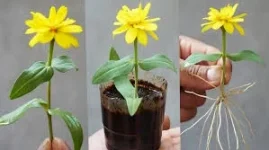
A To Z Guide how i Grow Chrysanthemums from Seed
That single lesson—that chrysanthemums operate on a day-length trigger most gardeners never hear about—captures something essential about this plant. It rewards knowledge. It punishes assumptions. And growing it successfully from seed, all the way through to autumn bloom, requires understanding things that most beginner guides simply don’t cover.
I’ve been growing chrysanthemums from seed for over fifty years. Let me cover what actually matters.
First: Know Which Chrysanthemum You’re Growing
This step alone saves more failed projects than anything else I can offer.
The word “chrysanthemum” covers a family of plants with dramatically different growing requirements. What works perfectly for one type will fail for another.
The Classic Autumn Garden Mum—Chrysanthemum morifolium
This is what most people picture: the dense, rounded, heavily flowering plants that appear at every garden center and grocery store in September and October. They’re perennials in Zones 5–9. They’re what Margaret was growing. And they are, without question, the most demanding type to grow from seed—specifically because of that day-length flowering requirement.
- Morifolium is a short-day plant, meaning it initiates flower buds only when nights are long enough—typically more than 11–13 hours of uninterrupted darkness per night, depending on the variety. In natural conditions, this happens in late summer and early fall. Any artificial light interrupting that dark period—street lights, porch lights, or indoor lighting through windows—can prevent bloom initiation entirely.
Growing garden mums from seed is a long project. Expect five to seven months from seed sowing to first flower, all going well. Patience is not optional.
Annual Chrysanthemums — Carinatum, Coronarium, and Segetum Types
Chrysanthemum carinatum (painted daisy), Chrysanthemum coronarium (edible garland chrysanthemum, common across Asian cuisines), and Chrysanthemum segetum (corn marigold) are true annuals—cool-season plants that complete their life cycle in a single growing season.
These are dramatically easier from seed than morifolium types. They are not day-length sensitive. They germinate quickly, grow fast, and bloom in 10 to 14 weeks from seed. They thrive in cool weather and actually decline in summer heat. First-time chrysanthemum seed growers are far better served starting with annual types before attempting the perennial garden mum.
Shasta Daisy — Leucanthemum × superbum
Botanically reclassified out of the chrysanthemum genus decades ago, but culturally still grouped with mums and widely sold alongside them. Perennial, easy from seed, and not day-length sensitive for flowering. Blooms in its second year when started from seed. A good gateway plant for someone who wants the satisfaction of growing a mom-family plant through to perennial establishment.
Throughout this guide, I’ll note where advice differs between these types. Don’t skip these distinctions—they’re not minor.
The Seed Question: What You Buy Determines Everything
Commercial Seed vs. Saved Garden Seed
If you’re purchasing seed, buy from specialty suppliers rather than mass-market garden center racks. Companies like Jelitto Perennial Seeds, Chiltern Seeds, Thompson & Morgan, and Select Seeds regularly turn over their chrysanthemum stock and maintain higher germination standards than generic packets that sit in heated retail displays for months.
The practical test: look for a ” best by ” date on every packet. If the date isn’t printed — if the supplier doesn’t consider it worth mentioning — that’s meaningful information about their standards.
Fresh chrysanthemum seed (harvested within the past 12 months, stored properly) shows germination rates of 60–80% under good conditions. Two-year-old seed stored in a warm warehouse drops to below 30%. Old seed is the single most common reason chrysanthemum germination projects fail before they even begin.
The Hybrid Truth About Saved Seed
If you’re collecting seed from your own garden mums—from those bronze pompoms or white spiders or deep red decoratives—you need to know what you’re actually collecting.
Modern garden mums are the product of decades of complex hybridization. The specific variety you love was created by crossing multiple parent lines under controlled conditions.
The seeds from that plant carry genetic information from all those ancestors — and when they germinate, they express that diversity. Some seedlings will be beautiful surprises. Most will revert toward earlier forms in the breeding line, producing simpler, smaller, or differently colored flowers than the parent.
This is not a reason to stop collecting garden mom seed. I’ve grown hundreds of seedlings from saved mom seed and found genuinely exceptional plants I’d never have discovered in a catalog. But go in with clear eyes: you’re creating a new plant, not copying the one you started with.
For plants that come true from seed, stick to open-pollinated annual species—C. carinatum, C. coronarium, and C. segetum reproduce with reasonable fidelity.
Collecting Seed Properly
Let spent flowers remain on the plant after blooming. The seed head matures over four to six weeks, transitioning from a green button to a dry, papery structure. The seeds inside — narrow, chaff-like, and light-colored — separate easily from a mature head when crumbled between your fingers.
Collect into a small paper envelope. Leave the envelope open on a dry surface indoors for one week to allow any residual moisture to evaporate. Then seal and store in the refrigerator.
Storage method: A paper envelope inside an airtight glass jar with a silica gel packet, stored in the vegetable crisper drawer at 38–42°F. This setup extends chrysanthemum seed viability to two years reliably. Plastic bags without silica gel, warm kitchen drawers, and garden sheds destroy viability within a single off-season.
Timing the Seed Start
Annual Types: Think Cool Season, Not Spring
The carinatum, coronarium, and segetum types prefer cool weather. Start them too late, and they run into summer heat before they’ve had a chance to bloom properly.
- Zones 3–7: Start 6–8 weeks before the last frost. Transplant when nights are still cool — these plants tolerate light frost and actually grow better in it than in summer warmth.
- Zones 8–10: Late summer sowing (August to September) for autumn and winter bloom. These plants die in summer heat in hot climates—grow them as a cool-season crop and let them finish before temperatures climb.
Annual chrysanthemums are among the best cool-season cut flowers a home gardener can grow. In mild climates, they bloom from late winter into early summer and then again from fall if a second sowing is made. In cool-summer climates like coastal Oregon and the Pacific Northwest, they perform magnificently from spring through midsummer.
Perennial Garden Mums: Start in Late Winter
For C. morifolium seedlings to reach flowering size in their first autumn, they need a long vegetative growing season — meaning they need to be started when the growing season is just beginning.
Start seeds 14 to 16 weeks before your average last frost date. For most Northern Hemisphere temperate gardeners, this means mid-January through mid-February. The seedlings will spend the late winter and spring indoors under lights, be hardened off and transplanted in May or June, and spend the summer growing into bushy, well-branched plants ready to respond to the shortening days of late August and September.
Garden mom seedlings started in spring—April or May—are playing catch-up all season. They’re smaller at bloom trigger time, produce fewer flowers, and present a fraction of the display that a January-started seedling delivers.
The late-winter indoor start requires grow lights. On this, there’s no shortcut.
Preparing the Growing Medium
What Chrysanthemum Seeds Need from Soil
Chrysanthemum seeds are small and have modest energy reserves. The growing medium needs to:
- Drain quickly enough to prevent seed rot
- Retain enough moisture for consistent germination
- Stay loose enough for delicate emerging roots to penetrate without resistance
- Contains no significant nutrient load that could burn emerging rootlets
Standard commercial seed-starting mix satisfies points 2, 3, and 4 reasonably well but often falls short on drainage—especially in enclosed germination setups where moisture accumulates. I amend every batch:
Chrysanthemum seed-starting mix:
- 3 parts commercial seed-starting mix
- 1 part coarse perlite
The perlite addition opens the structure, improves drainage, and prevents the surface crusting that can impede tiny emerging seedlings. It also reduces the moisture retention that encourages Pythium root rot.
Do not use potting soil as a seed-starting medium. It’s too dense, retains too much moisture, and contains fertilizer levels that can injure germinating seeds. Seed-starting mix and potting soil are different products designed for different purposes.
Sterility Is Not Optional
Chrysanthemum seedlings are more susceptible to damping-off than many common annuals. Damping-off — caused primarily by Pythium irregulare, Rhizoctonia solani, and Fusarium species — kills seedlings by rotting the stem at the soil line, usually within 24–48 hours of visible infection. By the time you see a seedling tip over, the pathogen has already moved to neighboring plants.
The pathogens responsible are present in garden soil, nonsterile potting mix, and on the surfaces of reused containers that haven’t been properly sanitized.
Use only unopened, commercially sterilized seed-starting mix. Wash all containers with a 10:1 water-to-bleach solution, rinse thoroughly, and allow to air-dry before use. This takes ten minutes and prevents the loss of an entire flat of seedlings that might represent eight weeks of patient growing.
Sowing the Seeds
Shallow Is Correct — But Not Surface
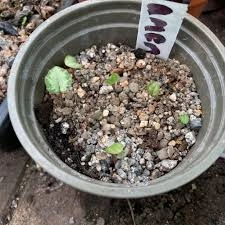
Unlike portulaca or kalanchoe, chrysanthemum seeds do not require light to germinate. You can cover them — and should, because the cover maintains moisture contact around the seed and supports more reliable germination than surface sowing.
The correct sowing depth is 1/8 inch—approximately 3 mm. No deeper. At greater depths, the seedling exhausts its energy reserves trying to reach the surface and never makes it.
Technique: Pre-moisten your seed-starting mix in a large bowl until it reaches the consistency of a firmly wrung-out sponge. Fill your seed tray or individual plug cells and firm the surface gently with a flat piece of cardboard—not packed down, just leveled and lightly firmed for good seed-to-medium contact.
For open trays: use a pencil or thin dowel to make rows of shallow furrows at 1/8-inch depth, spaced 1 inch apart. Tap seeds along the furrows approximately ½ inch apart from each other. Cover with a thin layer of fine vermiculite—not soil, not more seed-starting mix. Vermiculite is ideal because it holds moisture around the seed without compacting over it, and emerging seedlings push through it without resistance.
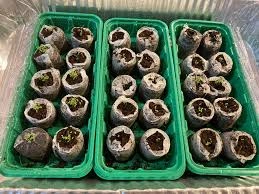
For plug trays: one to two seeds per cell, covered with vermiculite. Thin to one seedling per cell after germination by snipping the weaker seedling at the soil level with scissors. Never pull surplus seedlings—root disturbance damages the one you’re keeping.
Covering the Tray
Place a clear plastic humidity dome over the seeded tray. Chrysanthemum seeds don’t need light during germination, so dome opacity doesn’t affect germination rates, but clear domes allow you to monitor the tray without lifting the cover repeatedly.
Check the dome daily. If condensation is heavy enough to drip from the dome interior, prop it slightly with a pencil to allow some moisture to escape. Excessive humidity inside a sealed dome creates the perfect conditions for fungal problems even before seedlings emerge.
Temperature: The Make-or-Break Factor
The Correct Germination Range
Chrysanthemums are cool-to-moderate-climate plants. Their seeds germinate best at a 65–72°F (18–22°C) soil temperature—a range that feels mild compared to the 78–85°F that tropical plants like anthurium and portulaca require.
This moderate requirement means chrysanthemum seeds can germinate reliably without a heat mat in many homes during late winter, when indoor temperatures are maintained by heating systems. However—and this matters—the soil temperature in containers sitting on cold countertops or near drafty windows can be 5–10°F below ambient air temperature. A soil thermometer costing $8 tells you what’s actually happening in the growing medium, which is the only number that matters for germination.
Soil temperatures below 60°F, germination becomes slow and erratic. Below 55°F, most seeds won’t sprout. Above 75°F, germination rates for perennial morifolium types drop—they’re not tropical plants and respond poorly to excessive heat during germination.
If your late-January indoor environment runs cool overnight, a heat mat set to the low end of its range — around 68–70°F — is appropriate. If your mat’s single setting runs at 78–80°F, place the tray beside it rather than on it to moderate the temperature.
What Consistent Temperature Produces
Fresh, quality chrysanthemum seeds germinated in correct soil temperature conditions (65–72°F) with adequate moisture produce a cohesive emergence—most seeds in the batch sprouting within a 14–21 day window.
Seeds germinating in fluctuating temperatures (warm days, cool nights without a heat mat) produce staggered emergence spread over four to six weeks. Some seeds sprout quickly. Others wait for the next warm period. A few never sprout at all. This pattern leads gardeners to conclude their seeds were low quality, when the real variable was temperature consistency.
If you reach 28 days with correct temperature and moisture conditions and see zero germination, the seeds are not viable. Check the packed-for date and source your next batch from a supplier who takes viability seriously.
… How to Grow Portulaca from Seed
… How to Grow Impatiens Flowers from Seed
… How to Grow Anthurium from Seed
Watering: Two Phases, Two Approaches
Phase One — The Germination Period
The sealed dome maintains moisture effectively. Your job during germination is surveillance, not watering.
Check daily by lifting a corner of the dome and pressing a finger to the surface of the medium. If it feels uniformly damp, replace the dome and leave it. Mist lightly with a fine-spray bottle only if the surface looks pale and dry. Use the minimum water needed to restore surface moisture — nothing more.
The most common germination failure after temperature and seed viability problems is overwatering during this phase. The dome creates a humid enclosed environment. The medium stays moist far longer than you’d expect. Gardeners who water on a daily schedule, regardless of soil condition, saturate the medium and create the anaerobic, pathogen-friendly conditions that rot seeds in the ground before they ever sprout.
Phase Two — After Germination
The transition from covered dome to open air is the riskiest moment in the early seedling stage. Begin it on the day you see the first seedlings emerge.
Day one: prop the dome open about ½ inch. Day two: open it to 1 inch. By day five to seven: remove the dome entirely and introduce gentle airflow from a fan running 4–6 hours daily at its lowest speed.
After dome removal, switch to bottom watering for the next four weeks. Set the tray in a shallow dish of room-temperature water for 20 minutes, then remove and allow to drain completely. Never leave chrysanthemum seedlings sitting in water — the root rot this causes is silent, fast, and often fatal.
Bottom watering delivers moisture to the entire root zone without ever wetting seedling stems at the soil level, which is the primary infection point for damping-off. It’s a small change in technique that prevents the most common and most devastating early seedling disease in chrysanthemums.
Water only when the top quarter-inch of medium feels dry. In a typical indoor environment during late winter, this means every two to three days for most setups. Check daily. Water based on what you find, not on a schedule.
Light: The Difference Between Compact and Leggy
What Seedlings Actually Need
Chrysanthemum seedlings are not low-light plants. The mature plants are grown in full sun — 6 hours minimum, preferably more — and their seedlings have the same appetite for light from the moment they emerge.
Insufficient light produces pale, stretched, structurally weak seedlings with widely spaced leaves. These etiolated plants are harder to transplant, more susceptible to disease, and slower to establish in the garden. The stem tissue that develops under insufficient light doesn’t strengthen after the fact — it remains weak for the plant’s entire life.
The correct indoor light setup: Full-spectrum LED grow lights (3000K to 6500K color temperature works well for chrysanthemums) positioned 4–6 inches above seedling tops, running on a timer for 14–16 hours per day.
This is the setup that produces dark green, compact, well-branched seedlings. A south-facing window in January or February is not a substitute — the combination of short days, low sun angle, and glass-filtered light delivers intensity levels 5–20 times lower than what this setup provides.
If grow lights aren’t available, use the brightest available window and supplement with any additional lighting you can arrange. Rotate the tray 180 degrees daily to compensate for directional light. Accept that seedlings will be somewhat less compact than ideal. Then invest in grow lights before next season.
The Day-Length Trap for Perennial Mums
Seedlings of C. morifolium growing under 14–16 hours of grow-light photoperiod will not initiate flowering. They’re in vegetative mode. This is correct — you want them growing larger and bushier all through spring and summer before short-day bloom initiation happens in fall.
The trap: gardeners panic when their mum seedlings grow beautifully through summer but show no sign of flowering. They increase fertilizer, change watering, and wonder what’s broken. Nothing is broken. The plant is waiting for short nights.
Move plants outside in late spring. Let natural day-length progression work through summer. As days shorten in late August and September, flower buds will initiate if nights are genuinely uninterrupted. This is where Margaret’s porch light was the problem — even brief light during the dark period resets the short-day clock.
If your outdoor growing location is near artificial light sources, evaluate whether that light reaches the plants at night. A plant in a pool of artificial light that never fully experiences thirteen consecutive hours of darkness may never bloom.
…
The Pinching Technique That Doubles Your Bloom
Most chrysanthemum seed guides mention pinching. Very few explain it well enough to be useful.
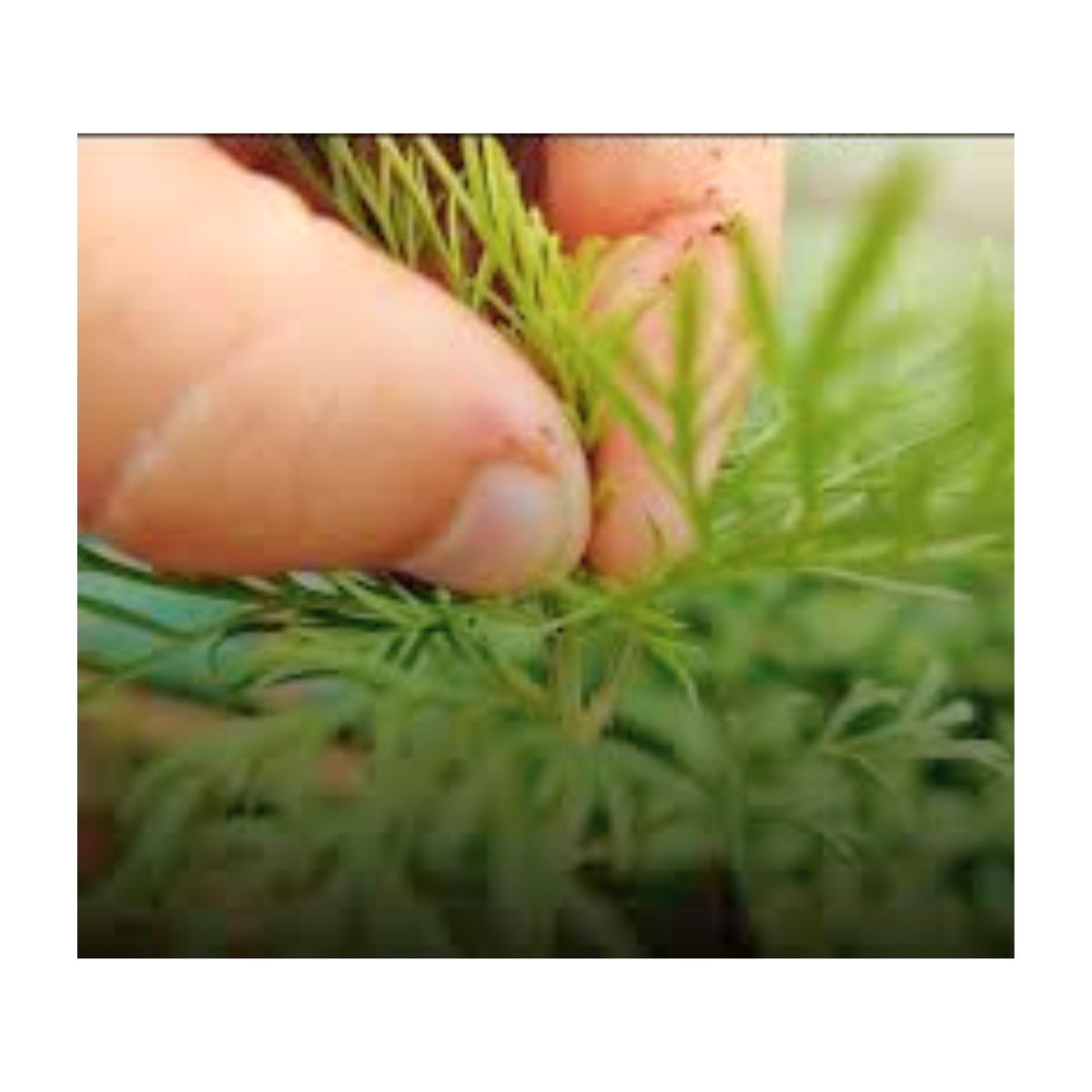
Pinching is the deliberate removal of the growing tip to force lateral branching. Each pinched stem produces two to four new branches. Two rounds of pinching at the right time transform a single-stemmed seedling into a dense, multi-branched plant that presents dozens of flowering stems in autumn instead of a handful.
Unpinched mum: 5–8 flower heads. Twice-pinched mum: 30–50+ flower heads. The difference in autumn display is not subtle.
First pinch: When the seedling reaches 6 inches tall and has developed several pairs of true leaves — typically in April or May for plants started in January — cut or pinch out the top 1–2 inches of the main stem just above a leaf node. The remaining stem will produce two to four new branches within two weeks.
Second pinch: When each of those new branches has grown 4–6 inches long — typically 4–6 weeks after the first pinch — pinch each branch at its tip in the same way. You’re now creating a plant with 6–12 growing points instead of one.
The critical cutoff date: Mid-July in most Northern Hemisphere temperate climates. Pinching after mid-July removes developing flower buds on varieties that have already begun responding to the shortening days of late summer. Late pinching delays bloom until it’s too late in the season, or prevents it entirely. Set a calendar reminder if needed.
Annual chrysanthemum types also respond well to pinching — it produces more branching and more cut flowers — but the timing isn’t as critical because they’re not day-length triggered.
… How to Grow Peace Lily from Seed?
… How to Grow Kalanchoe Flowers from Seeds?
… How to Grow Vinca Flowers from Seed?
… How to Grow Calibrachoa from Seed
Transplanting: Doing It Without Losing Plants
The Readiness Markers
Chrysanthemum seedlings are ready to move from the seed tray to individual containers when they show:
- Four to six true leaves beyond the initial seed leaves
- A root ball that holds together when the plant is gently removed from its cell, meaning roots have colonized the medium
- Visible root development at the drainage holes of plug cells, or circling the base of the plug
At this stage, seedlings are typically 3–4 inches tall. They look small relative to what they’ll become, but they have the root structure to establish in a larger container and continue growing without a significant setback.
Before these markers are met, transplanting causes unnecessary stress. The root system is too minimal to support the plant through relocation, and the setback in growth can push development back by weeks.
Moving to Individual 4-Inch Pots
Use a quality potting mix — not seed-starting mix, which is too lean for active vegetative growth. A good formula: 2 parts quality peat-based potting mix, 1 part perlite, 1 part compost. This provides nutrition, structure, and drainage in the right balance for the months of vegetative growth ahead.
Fill each pot, make a planting hole sized for the seedling’s root ball, lower the root ball in, and firm the surrounding medium gently. Water in. Keep out of direct sun for 48–72 hours while roots settle, then return to full light.
Hardening Off: Ten Days That Protect Weeks of Work
Indoor-grown chrysanthemum seedlings moved directly to outdoor sun will experience photooxidative damage — bleaching of leaf tissue, collapse of photosynthetic function, and growth stall that lasts two to three weeks. The light intensity difference between indoor grow lights and outdoor mid-spring sun is enormous, regardless of how powerful your grow lights are.
Harden off over 10–14 days:
- Days 1–3: Outdoors in full shade, 1–2 hours maximum, then back inside
- Days 4–6: Outdoor location with morning sun only (before 10 AM), 2–3 hours, then inside
- Days 7–9: Half-day outdoors, morning and early afternoon sun, then inside before peak afternoon heat
- Days 10–12: Full day outdoors in their intended permanent location
- Day 14 and beyond: Plants stay outside
Properly hardened chrysanthemum seedlings show almost zero transplant stress. Skip this process with seedlings that cost you five months of indoor care, and you’ll be spending two weeks watching them recover from damage you could have completely prevented.
Final Outdoor Location
Full sun. At least 6 hours of direct sunlight daily — more produces better and more abundant bloom. Good drainage — chrysanthemums dislike waterlogged soil, and their winter hardiness is significantly reduced in poorly draining beds. Adequate spacing — 18–24 inches between garden mum plants to allow for the lateral spread these plants develop over the season and to maintain airflow that reduces powdery mildew pressure.
Feeding Through the Season
The Three-Phase Feeding Approach
Phase 1 — Early seedling stage: No feeding until the second pair of true leaves has fully opened. Before this point, seed nutrient reserves are handling growth, and added fertilizer can burn emerging roots.
Once the second true leaf pair is established, balanced liquid fertilizer (10-10-10 or 20-20-20) at 25% of the labeled rate is applied weekly. This light, regular feeding supports steady vegetative development without the salt buildup that injures immature roots.
Phase 2 — Active vegetative growth: Increase to 50% strength at 8 weeks from germination, and to full strength after transplanting to individual containers. Continue with balanced feeding through the summer vegetative growing period. The goal is consistent, active vegetative growth — building the bushy, multi-branched plant that will carry dozens of flower heads in fall.
Phase 3 — Pre-bloom: As days shorten and you see the first signs of bud development (typically late August to early September), shift from balanced fertilizer to a phosphorus-forward bloom formula — 5-10-10 or a dedicated bloom fertilizer with the second and third numbers higher than the first. Phosphorus supports the energetic demands of flower production. High nitrogen at this stage pushes vegetative growth at precisely the moment you want energy redirected to bloom.
Stop feeding once plants are in full bloom.
… How to Grow Begonia from Seed?
… How to Grow Geranium from Seed?
Common Problems
Seeds Didn’t Germinate
The two most common causes, in order of frequency: old or poorly stored seed, and soil temperature below 65°F. Check the packed-for date. Use a soil thermometer. If soil temperature is adequate and the seed is fresh, wait the full 28 days before concluding failure.
A third cause worth checking: drowning seeds with overwatering during the covered germination phase. Saturated, anaerobic medium rots seeds before they sprout.
Seedlings Collapsed Overnight
Classic damping-off from Pythium or Rhizoctonia. Remove affected plants immediately. Allow the medium to dry partially. Improve airflow aggressively. If multiple plants are collapsing across a tray, discard the entire tray and start fresh with sterile medium in bleach-sanitized containers. Do not attempt to save seedlings from a tray where damping-off has established — the pathogen load is too high.
Seedlings Are Pale and Stretched
Light deficiency. Move grow lights to within 4–6 inches of seedling tops. Extend the daily photoperiod to 16 hours. Act immediately — leggy stem tissue is permanent and weakens the plant’s structural integrity for its entire life.
Plants Grew Beautifully but Didn’t Flower
For C. morifolium types: evaluate night-length interruption. Is there any artificial light source reaching the plants during the night period? Street lights, porch lights, neighbors’ security lights, or light through windows where indoor lighting runs at night can all disrupt the uninterrupted dark period this plant needs for bloom initiation.
If light interruption is ruled out and the plants are in their first autumn from seed, verify that they received the full vegetative growing season. Plants started late (April or May rather than January or February) are simply too small at first bloom trigger to produce a meaningful display in their first year.
White Powder on Leaves
Powdery mildew — Erysiphe cichoracearum — the most common fungal disease in garden chrysanthemums. It appears as white, talcum-like patches on upper leaf surfaces, typically starting on older inner leaves where airflow is lowest. It spreads rapidly in conditions of moderate temperatures and high humidity.
Prevention is the practical approach: adequate plant spacing, watering at the soil level rather than overhead, and good airflow through and around plants. Once established, remove heavily affected leaves, improve airflow, and avoid any overhead irrigation. Sulphur-based fungicide sprays applied at the first sign of infection provide moderate control. Systemic fungicides are more effective but should be used with caution on plants that pollinators visit.
Mums Don’t Come Back in Spring
Winter survival of perennial garden mums requires three conditions: a strong root system established before frost (which means transplanting in early summer, not as a fall purchase), crown protection through the freezing months (leave dead stems standing — they trap insulating snow — and apply 3–4 inches of loose mulch after the ground freezes), and drainage adequate that crowns don’t sit in waterlogged, frozen soil.
Mums planted as fall transplants from the garden center rarely have sufficient root establishment to survive their first winter. Mums planted from your own seed-grown seedlings in May or June, given a full season to root deeply, have a fundamentally different chance at perennial survival.
Growing Chrysanthemums in Containers
Container growing gives you control that in-ground planting doesn’t — you can adjust soil, drainage, and placement throughout the season.
The Right Container
Annual types: 8–10 inch diameter pots, at least 8 inches deep.
Perennial garden mums: 12–14 inch diameter minimum. Smaller containers restrict the lateral root expansion that supports the extensive branching these plants need for a full autumn display. Root restriction is one of the most consistent reasons potted garden mums underperform relative to their potential.
Material: Terracotta is genuinely better for chrysanthemums than plastic in most growing situations. Terracotta allows moisture to evaporate through the pot walls, creating faster and more reliable dry-down between waterings — which is exactly what chrysanthemum roots prefer. Plastic holds moisture longer, increasing root rot risk at the same watering frequency.
Container Soil and Feeding
A quality flowering-plant potting mix amended with 20–25% additional perlite for drainage. Avoid moisture-retaining formulas marketed for tropical plants or vegetables — these are engineered for plants that want consistently moist soil, which chrysanthemums do not.
Container feeding schedule: balanced liquid fertilizer (10-10-10) every two weeks through the vegetative growing season, shifting to a phosphorus-forward bloom formula as flower buds initiate. Stop feeding once in full bloom. Container plants leach nutrients with every watering and need more frequent feeding than their in-ground counterparts.
… 15 Low-Maintenance Flowers That Bloom All Year in Pots
Still Have a Question
How many months before chrysanthemums bloom?
Most chrysanthemums take around 3 to 5 months from active growth to blooming, but it depends on when they’re planted and the daylight length. They naturally bloom when days start getting shorter, not just based on time.
Can you grow chrysanthemums in pots?
Yes, they actually do very well in pots. The key is giving them enough space for roots and making sure the pot drains well—otherwise, roots can struggle even if the plant looks fine on top.
How many days does it take to grow a chrysanthemum?
From planting to a fully developed plant, it usually takes 90 to 150 days. Early growth feels slow, but once established, they grow faster before the blooming season.
Do chrysanthemums self-seed?
They can self-seed, but it’s not very reliable. In most home gardens, new plants don’t appear consistently from seeds, so gardeners usually rely on cuttings or divisions instead.
Why does it feel like chrysanthemums take forever to bloom?
Because they are light-sensitive plants, not just time-based growers. Even if the plant is healthy, it will wait for the right day length before producing flowers.
What are the most common problems with chrysanthemums?
The most common issues are too much water, poor airflow, and lack of sunlight. These lead to weak growth, yellow leaves, or fewer blooms—even when everything else seems fine.