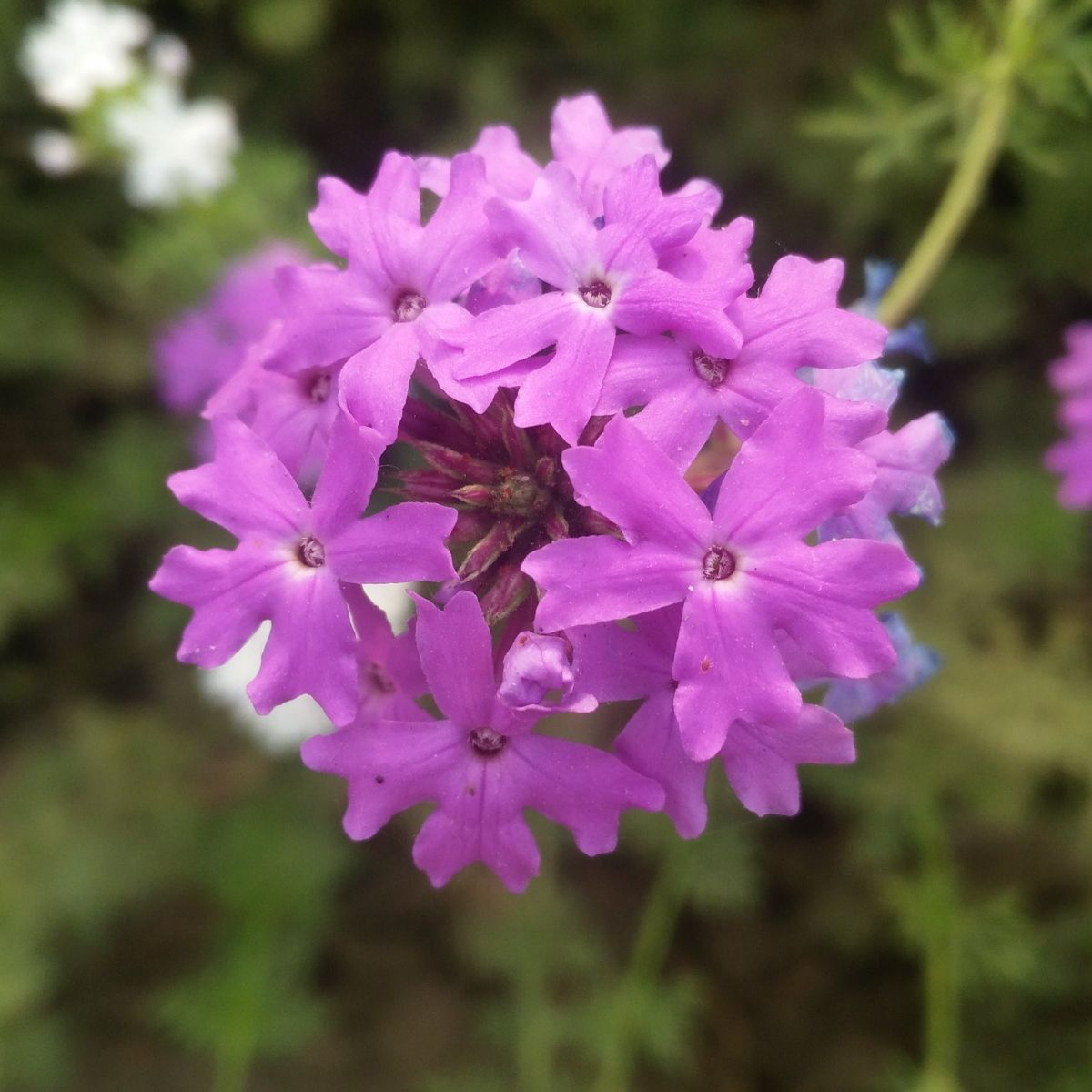
A To Z Guide how i Grow Verbena from Seed
The head deacon had planted verbena every spring for thirty years — always bought as transplants from the same nursery, always the same compact red-and-purple bedding types, always reliable. The nursery closed that winter. The deacon showed up at my door in January with a seed catalog, a look of quiet determination, and a question I’d been answering for years by then:
“Can I start these from seed myself?”
“Yes,” I said. “But it won’t go the way you’re expecting.”
He looked surprised. Everyone does at first. Verbena looks like it should be simple. Small seeds, a common plant, are sold everywhere. What could be complicated?
What nobody tells you — what most seed guides still don’t explain clearly — is that verbena seeds carry a dormancy mechanism built by evolution, not by accident. The seeds don’t want to germinate in October or November when they first fall from the plant. They want to germinate in spring, when the frost risk has passed, and conditions are stable. So they wait. And if you don’t know how to tell them it’s time — how to speak the language of winter cold that breaks that waiting — you’ll sit in front of an empty seed tray for six weeks, wondering what you did wrong.
I spent two hours with the deacon that January explaining exactly what Verbenaa needs. By April, he had a tray of healthy transplants. By June, the church garden was better than it had been in three decades.
Here’s what I told him — and everything I’ve learned since.
Know Your Verbena Before You Touch a Seed
The genus Verbena holds more than 250 species in the family Verbenaceae. Treating them identically is the first mistake. The four you’ll most commonly encounter have meaningfully different growing needs:
Garden verbena — Verbena × hybrida. The complex hybrid bedding plant. Low, spreading, available in every color from white through deep purple. The most popular, the most planted, and by a significant margin, the most challenging type to grow from seed. The hybrid breeding that produced its uniform beauty also produced erratic seed dormancy. If you’re committed to growing this one from seed — and the results are worth it — read every section of this guide carefully.
Tall verbena — Verbena bonariensis. Four feet tall, wire-thin branching stems, small, tight clusters of violet-purple flowers from July until hard frost. Butterflies treat it like a landing strip — I’ve counted eleven species on a single plant in one afternoon. Genuinely the easiest verbena from seed. A beginning seed grower can succeed with this one. A gardener in Zone 7 or warmer can let it self-seed and essentially never plant it again after the first year.
Moss verbena — Verbena tenuisecta Ferny, fine-textured foliage that looks more like a groundcover fern than a flowering annual until the clusters open. Exceptionally drought-tolerant. One of the best verbenas for hot, dry regions. Self-seeds readily. Easy from seed.
Rose vervain — Verbena canadensis, a North American native with a natural range from Virginia to Kansas. More cold-hardy than the South American types. Better mildew resistance than V. × hybrida. The native bees know this plant — it’s one of those species where if you grow it near a wildflower meadow, the pollinators arrive before you’ve finished planting.
For this guide, I’ll address V. × hybrida and V. bonariensis in the most detail — they represent the two ends of the seed-starting difficulty spectrum, and understanding both gives you a complete picture.
The Dormancy Science That Changes Everything
In 1991, researchers publishing in HortScience (Volume 26) documented something that experienced verbena growers had been observing for years without a scientific framework to explain it:
Garden verbena seeds — V. × hybrida — exhibit physiological dormancy driven by inhibitory compounds in the seed coat. These compounds — primarily abscisic acid (ABA) derivatives — chemically suppress germination regardless of how good the temperature, moisture, and light conditions are. The seed is biologically locked against sprouting until those inhibitors are broken down.
What breaks them down? Cold. Specifically, a sustained period of moist cold — the biochemical equivalent of a winter spent in soil. The researchers found that germination rates in stratified seed batches reached 65–80%, while the same seed planted immediately without stratification showed only 35–45% germination under otherwise identical conditions.
The study also confirmed something equally important and equally ignored in most home gardening guides: V. × hybrida seeds germinate more reliably in darkness than in light. This makes verbena the direct opposite of calibrachoa and portulaca — two plants often discussed in the same breath as summer bedding annuals — whose seeds require light to trigger germination. Cover verbena seeds. Don’t cover calibrachoa. Getting these reversed explains a significant portion of beginner germination failures with both plants.
What this science means practically:
- Cold stratify your V. × hybrida seeds for 7–14 days before sowing
- Cover seeds to maintain darkness during germination
- V. bonariensis is less deeply dormant — it germinates without stratification, though cold exposure still improves results
Seed Selection
Sources Worth Trusting
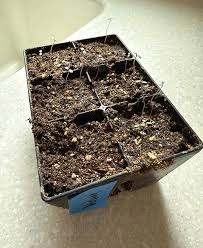
For V. × hybrida: Burpee, Park Seed, Stokes Seeds, and Thompson & Morgan are consistent performers — they turn their verbena stock regularly and print packed-for dates. For species Verbena — V. bonariensis, V. canadensis, V. tenuisecta — Prairie Moon Nursery handles native species with care, and Jelitto Perennial Seeds and Chiltern Seeds maintain excellent species stock.
Avoid unlabeled “verbena mix” packets without a variety name or date. These packets are where old, mystery stock goes to be purchased by optimistic gardeners who then conclude verbena is impossible from seed.
Named Varieties Worth Seeking
Not all V. × hybrida seed performs equally. Some lines have been developed with better germination consistency than others:
- Quartz series — among the more seed-stable hybrid lines; better-than-average germination rates
- Obsession series — compact, heat-tolerant, good color range
- Imagination — trailing, violet-blue, germinates with unusual reliability for a hybrid verbena
- EnduraScape series — developed specifically for heat and drought endurance; excellent for Zone 8 and above
How Long Seeds Stay Viable
- × hybrida at peak freshness (within 12 months of harvest, properly stored): 50–70% germination. At two years: 30–50%. Beyond two years: a gamble. V. bonariensis stores somewhat better — 65–80% in year one, still reasonable through year two.
Storage method: airtight container with a silica gel desiccant packet, refrigerator vegetable crisper at 38–42°F. Remove seeds at least 24 hours before opening — cold packets develop condensation when opened in warm air, and that moisture is the fastest route to embryo damage.
Timing
Verbena is genuinely slow from seed to transplant-ready size. Allow 12 to 16 weeks from seed sowing to garden-ready transplant for V. × hybrida. For V. bonariensis, 10 to 14 weeks.
Add 7–14 days of cold stratification time before sowing, and the total timeline from start to transplant runs 13 to 18 weeks. Most gardeners who start verbena in March and wonder why their May plants are too small to perform well have simply started too late.
Practical start dates for stratification:
- Zone 5 (last frost mid-May): Begin cold stratification in early January
- Zone 6 (last frost late April): Begin stratification in late December
- Zone 7 (last frost mid-April): Begin stratification mid-December
- Zone 8 (last frost mid-March): Begin stratification in mid-November
- Zones 9–10: Stratify in September to October, sow October to November for winter bloom
These dates are not suggestions. Verbena’s long growing timeline is fixed. Shorten the indoor period, and you get undersized transplants that bloom weeks late and never reach their potential.
… How to Grow Calibrachoa from Seed
… How to Grow Chrysanthemums from Seed
… How to Grow Portulaca from Seed
… How to Grow Impatiens Flowers from Seed
How to Cold Stratify Verbena Seeds
The Refrigerator Method
- Place seeds onto a small piece of barely damp paper towel or damp sterile vermiculite. The moisture level should be cool and damp to the touch — not dripping, not dry.
- Fold the towel around the seeds or seal vermiculite and seeds in a small labeled zip-lock bag.
- Note the date on the label along with the variety.
- Place in the vegetable crisper drawer at 35–40°F.
- Check every three to four days. If any seeds show a tiny emerging radicle — a pale root tip breaking through the seed coat — plant those seeds immediately. Stratification doesn’t need to be complete for all seeds before planting.
- After 7–14 days, sow all seeds as described below.
Stratified seeds, planted at the correct temperature and in darkness, typically begin germinating within 10 to 21 days. Unstratified seeds in the same conditions take 21 to 35+ days and do so unevenly.
Winter Sowing for Verbena bonariensis
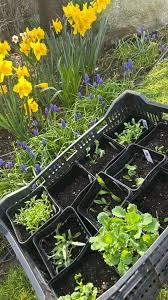
For V. bonariensis specifically, winter sowing is arguably the best method of all — easier than indoor starting and producing hardier plants.
Punch drainage holes in the bottom of a clear recycled container (a deli container, a milk jug cut in half, or a dedicated winter sowing container). Fill with moistened seed-starting mix. Sow V. bonariensis seeds at ⅛ inch depth. Seal the top loosely to retain some humidity. Set outside in a sheltered spot — out of heavy rain and direct wind — from late January onward.
Natural winter cold and the freeze-thaw cycles of late winter provide stratification. The clear container creates a solar greenhouse effect on warmer days. Seeds germinate in early spring when conditions are naturally right. The resulting seedlings are compact, cold-conditioned, and often stronger than their indoor-started counterparts.
I’ve used this method for V. bonariensis for the past twenty-five years. It requires almost no attention and rarely disappoints.
Soil Preparation and Container Setup
The Growing Medium
Verbena seed-starting mix:
- 2 parts commercial seed-starting mix (not potting soil — potting soil is too dense and too nutritionally rich for seeds)
- 1 part coarse perlite
- ½ part fine horticultural sand
Pre-moisten thoroughly in a bowl before filling trays. The correct moisture: a firmly wrung-out sponge. Fill 72-cell plug trays or small individual pots. Press the surface level.
Sterilization: Use only fresh, commercially packaged seed-starting mix. Wash all containers with a 10:1 water-to-bleach solution. Rinse thoroughly. Verbena seedlings are moderately susceptible to Pythium and Rhizoctonia damping-off — sterile starting conditions reduce the pathogen load enough to make a visible difference in early seedling survival.
Why Plug Trays Beat Open Flats
Verbena seedlings tangle roots quickly. Getting individual seedlings out of a densely sown open flat without root damage is difficult, and root-disturbed verbena seedlings take longer to recover and establish after transplanting. Plug trays produce self-contained root balls that move from the indoor tray to the outdoor bed cleanly, without the separation problem.
Sowing the Seeds
The Darkness Requirement in Practice
Verbena × hybrida seeds go in darkness, not light. This means:
- Sow at ⅛ inch depth (3mm) — either make shallow furrows and cover, or surface-sow and cover with a thin layer of fine vermiculite
- Press the cover layer gently against the seeds for contact
- Cover the entire tray with an opaque dome, cardboard sheet, or dark cloth — not a clear dome
- Place in a warm location (65–75°F soil temperature) and check daily by lifting one corner
For V. bonariensis and V. tenuisecta: sow at the same ⅛ inch depth, but a clear dome is adequate. These species are not as strongly negatively photoblastic as the hybrid type.
Spacing
One to two seeds per plug cell. ½ inch apart in open trays. Verbena seedlings look delicate, but root competitively — crowded seedlings develop tangled root systems quickly,y and none of them grows as well as a single seedling with adequate space.
Temperature: Two Phases, Two Targets
Phase 1 — Germination: 65–75°F soil temperature. A heat mat set to its lower range — around 68–70°F — is appropriate. Standard 78–80°F heat mat settings are too warm for verbena and suppress germination. Buffer with a folded towel between the mat and the tray if your mat runs hot. Use a soil thermometer — ambient air temperature is not a reliable proxy for soil temperature.
Phase 2 — Growing-on after germination: Drop to 60–68°F. Verbena is a cool-season plant at its best. Seedlings grown in consistently warm conditions (above 72°F) develop long internodes, weak stems, and disease susceptibility. The same seedlings grown at 62–65°F become compact, dark-stemmed, and structurally strong.
Research from the Michigan State University Extension horticulture program documented this effect as DIF — the difference between day and night temperatures — and its direct relationship to internode elongation in bedding plant species. Verbena shows one of the strongest DIF responses among common annuals. Cooler growing-on temperatures aren’t just a preference — they are the physical mechanism that produces compact, transplant-ready seedlings.
… How to Grow Anthurium from Seed
… How to Grow Peace Lily from Seed?
… How to Grow Kalanchoe Flowers from Seeds?
… How to Grow Vinca Flowers from Seed
Watering Through Each Stage
Germination Phase
The opaque cover retains moisture effectively. Check by lifting one corner, not by visual inspection from outside. Mist lightly with a fine-spray bottle if the medium surface appears pale and dry. Never saturate the covered tray — waterlogged, anaerobic conditions rot seeds before they sprout.
The Transition Period (Days 1–14 After Emergence)
Remove the opaque cover the day seedlings break the surface — darkness was for germination only. Transition to a clear dome propped slightly open. Over five to seven days, increase the opening daily. Remove entirely at day seven to ten and introduce airflow with a fan on its lowest setting running several hours daily.
Switch immediately to bottom watering when the dome comes off. Set the tray in a shallow dish of room-temperature water for 15–20 minutes, remove, and drain completely. Bottom watering keeps the soil surface and seedling stems dry — the critical prevention technique for damping-off in verbena.
Water only when the top ¼ inch of medium feels dry to the touch. For most indoor environments, this means every other day, not daily. Check and respond to what you find rather than following a fixed schedule.
Established Seedlings: Lean Toward Dry
From week six onward, allow the top half-inch to fully dry between waterings. Verbena evolved in lean, well-drained soils — its roots develop deeper and denser when they search for moisture rather than finding it immediately. Seedlings conditioned to brief dry-down cycles indoors, transplant, and establish significantly better outdoors than seedlings kept consistently moist.
Light
Once seedlings emerge, the darkness requirement is over. Now they need the opposite: as much light as you can provide.
Full-spectrum LED grow lights, 4–6 inches above seedling tops, running 14–16 hours per day. This is the standard setup that produces compact, well-branched, dark green verbena transplants. Move the light closer as the seedlings grow and the gap increases. Verbena that drifts to 8–10 inches below a grow light begins stretching within days.
A south-facing windowsill in January and February provides insufficient intensity for compact verbena growth in almost all Northern Hemisphere temperate climates — low sun angle, short days, glass-filtered light. Supplemental grow lighting is worth the investment before the season begins.
Fixing Leggy Seedlings
Leggy growth — pale, thin-stemmed, with long gaps between leaf pairs — is the most common complaint about indoor-started verbena. The cause is almost always light deficiency in the first four to six weeks after germination.
Two fixes when you find yourself with stretched seedlings:
Fix 1 — Pinch: When seedlings reach 3–4 inches tall, pinch out the growing tip above a leaf node. The plant redirects energy into lateral branches, producing two to four new stems from the nodes below the cut. Within two weeks, you will have a bushier plant. The leggy stem section doesn’t compact, but the going-forward growth is compact and healthy.
Fix 2 — Bury it: At transplanting time, set the seedling deeper than it was growing indoors. Verbena stems root from buried sections — a technique I’ve used for decades to rescue overly leggy seedlings and turn them into well-established transplants that nobody would guess had started poorly.
Feeding Verbena Seedlings
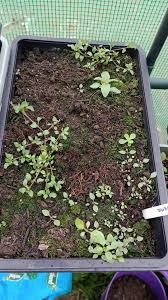
Begin feeding when the second pair of true leaves is fully open.
Starting dose: balanced water-soluble fertilizer (10-10-10 or 20-20-20) at 20–25% of the labeled rate, applied weekly. Verbena is not a heavy feeder. Pushing nitrogen in the early seedling phase produces soft, lush growth that’s more prone to disease and less tolerant of transplant stress.
Increase to 50% strength at six weeks. Full rate after transplanting to individual containers or outdoor beds.
As plants approach transplant size, shift to a phosphorus-forward formula (5-10-5 or a dedicated bloom fertilizer). Phosphorus supports root development and bloom initiation. Verbena transplants fed phosphorus-forward fertilizer in the final two weeks before outdoor planting root more quickly and begin blooming 10–14 days sooner than those maintained on balanced nitrogen feed.
Transplanting: The Bridge from Indoor to Garden
Readiness Markers
Verbena is ready to transplant when it shows:
- Six to eight pairs of true leaves — distinctly serrated, slightly rough-textured, clearly different from the smooth oval cotyledons
- A root ball that holds together when removed from its cell
- Active new growth at the growing tip
- Visible branching from pinching
Typically 4–6 inches tall at 10–14 weeks after germination for V. × hybrida, slightly earlier for V. bonariensis.
The Hardening-Off Schedule
- Days 1–3: Outdoor shade only, 1–2 hours, then back inside
- Days 4–5: Shade, 3–4 hours
- Days 6–8: Morning sun before 10 AM for 2–3 hours, then inside
- Days 9–11: Half-day outdoors, including direct morning sun
- Days 12–14: Full-day outdoor exposure in the permanent location
Watch for persistent evening wilt — plants still drooping an hour after sunset need another 48 hours of indoor recovery before the next outdoor attempt. Morning wilt that recovers by midday is normal and not a cause for concern.
Outdoor Location Requirements
Full sun, 6 hours minimum. In partial shade, verbena produces sparse bloom and becomes progressively more vulnerable to powdery mildew (Erysiphe verbenae — the verbena-specific species). This is not a plant that adapts gracefully to shade.
Well-draining soil. Verbena’s natural habitat — open grasslands and disturbed ground across South America and North America — is rarely waterlogged. Its root system evolved for soil that drains, dries, and drains again. Improve drainage with coarse grit and organic matter before planting in heavy clay.
Spacing:
- Compact bedding types (V. × hybrida): 10–12 inches
- Trailing types: 14–18 inches
- V. bonariensis: 18–24 inches — it fills gaps through self-seeding
Verbena as an Ecological Resource
A 2014 study published in Insect Conservation and Diversity ranked Verbena bonariensis among the highest-performing garden plants for total pollinator visits per unit time — outperforming lavender, echinacea, and most salvias under the study conditions.
The specific advantage: Verbena’s small, openly accessible florets deliver nectar at concentrations and accessibility levels that benefit short-tongued bee species — including multiple Bombus (bumble bee) species and many solitary bee genera — that cannot reach nectar inside tubular flowers. In a garden full of salvias, agastaches, and penstemons, verbena is one of the few plants doing real work for the bees that can’t access those tubes.
Beyond bees, V. bonariensis is documented as a significant autumn nectar source for migrating monarch butterflies (Danaus plexippus) along the eastern North American flyway. Late-blooming tall verbena in September and October provides fuel at a critical migration window when other nectar sources are declining.
Growing verbena from seed isn’t just about flowers for your garden. The plants you start in January and put in the ground in May are functioning ecological infrastructure by August.
Problems, Causes, and Fixes
Nothing Germinated After Three Weeks
Diagnostic in order:
- Were seeds stratified? No stratification = likely 40–50% of the germination potential left on the table, or complete failure in deeply dormant seed batches
- Were seeds in genuine darkness? A clear dome over V. × hybrida seeds suppresses germination.
- Is the soil temperature between 65 to 75°F? Use a thermometer. Too warm (above 80°F) triggers secondary dormancy. Too cold (below 60°F) stalls the process entirely.
If all three conditions were correct and germination failed, the seed is not viable. Source fresh seed with a clear packed-for date.
Damping-Off
Pythium and Rhizoctonia are the primary pathogens. Sterile medium, clean containers, and bottom watering prevent the majority of cases. Remove affected plants immediately, allow the medium to dry slightly, and improve airflow. If spreading across a tray, discard and restart.
Powdery Mildew on Established Plants
Erysiphe verbenae — white, talcum-like patches on upper leaf surfaces, beginning on inner, older leaves where airflow is lowest. Full sun placement and adequate spacing (not a recommendation, a disease-prevention necessity) are the primary controls. Water at the soil level, never overhead. Neem oil at 7–10 day intervals from the first sign provides meaningful protection. Once established, mildew covers a significant leaf area, the affected leaves should come off — the fungal hyphae inside them don’t clear.
Gardeners who fight mildew repeatedly on V. × hybrida: try V. canadensis varieties instead. Significantly better mildew resistance, similar flower effect, and more heat tolerance.
Midsummer Bloom Pause
Normal above 90°F sustained temperatures. Not a problem to solve with water or fertilizer. Cut plants back by one-third, maintain consistent moisture, and wait for the temperature to moderate. The second flush of bloom in September is often the best of the season.
V. bonariensis Spreading Beyond the Intended Area
In Zone 7 and warmer, this plant self-seeds freely. Deadhead before the seed ripens if you want to manage it. Transplant unwanted seedlings when they’re 2–3 inches tall — before the taproot becomes too deep to move cleanly. Or accept that some degree of naturalistic spread is part of what you’re getting with this plant and plan accordingly.
… How to Grow Begonia from Seed?
… How to Grow Geranium from Seed
… 15 Low-Maintenance Flowers That Bloom All Year in Pots
Saving Your Own Seed
From Species Verbena
- bonariensis, V. tenuisecta, and V. canadensis produce seed in small nutlets within each dried calyx. When the flower clusters are fully brown and papery, collect them into a paper envelope. Clean by crumbling heads between palms over a white sheet, then blow gently to remove chaff.
Cold stratification saved seed for 14 days before planting — longer than the 7-day minimum for commercial seed, because fresh home-collected seed typically carries stronger dormancy than commercially conditioned packets.
From Hybrid Verbena
Hybrid plants produce variable offspring. The seedlings won’t match the parent reliably. Some will be simpler in form and color. Occasionally, one will be better than anything in the catalog. Grow them with curiosity, not expectation.
Still Have A Question?
How long does Verbena bloom?
Verbena can bloom for several months, often from late spring until the first frost, if conditions stay warm and the plant is properly cared for. It’s one of those flowers that keeps producing blooms for a long season, especially when spent flowers are removed, and the plant gets plenty of sun.
What are common problems with verbenas?
Verbena usually struggles more from care mistakes than from being a difficult plant. The most common problems are weak flowering, floppy stems, powdery mildew, and root stress from wet soil. When verbena starts looking tired, it’s often because the soil stays damp too long or the plant isn’t getting enough direct sun.
What is the best month for verbena to grow?
Verbena grows best when planted in spring, once the weather starts warming up and cold nights are mostly gone. In most places, the best time is between March and May because the plant establishes more quickly in warm soil and with longer daylight.
Can Verbena be grown in pots?
Yes, verbena grows very well in pots, especially compact and trailing types. It’s actually easier to manage in containers because you can control drainage, sunlight, and airflow better than in crowded garden beds.
Does Verbena grow in shade?
Verbena can survive in light shade, but it rarely performs well there. It tends to grow thinner, bloom less, and stretch toward light. For healthy growth and steady flowering, it needs plenty of direct sun.
Can Verbena get too much sun?
Verbena loves the sun, but extreme heat can still stress it if the roots dry out too fast. Full sun helps it bloom better, but in very hot weather, container-grown verbena may need extra water to handle intense afternoon heat.