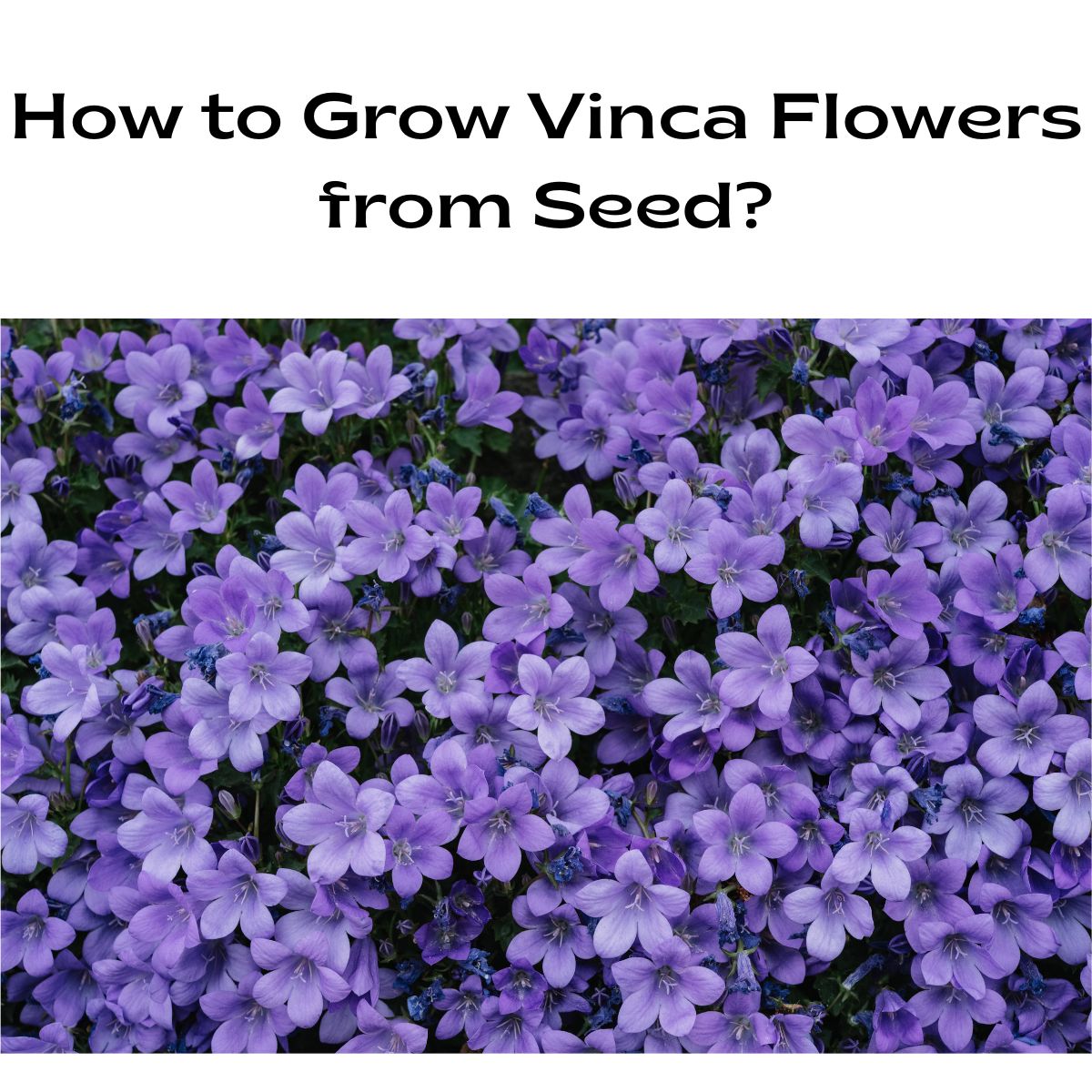
A To Z Guide on how to Grow Vinca Flowers from Seed?
Before you even touch a trowel, the seeds you choose will determine everything that follows. I’ve seen gardeners do everything else perfectly and still end up with 20% germination rates — all because of the seeds they started with.
Selecting Reliable Vinca Varieties for Seed Starting
Not all vinca seeds are created equal, and not all varieties behave the same way when you’re starting from seed indoors.
Annual Vinca Types That Grow Faster and Bloom Longer
When people say “vinca,” they’re often thinking of Catharanthus roseus — the annual bedding plant. This is your best bet for seed starting. It germinates faster than perennial vinca (Vinca minor or Vinca major), establishes more vigorously in containers, and blooms continuously from early summer until hard frost.
The varieties I’ve had the best luck with over the decades:
- Pacifica Series — Compact, early-blooming, and tolerates heat with impressive consistency. This is what I recommend to first-time growers every single time.
- Cora Series — Slightly larger, with exceptional disease resistance. If you’re in a humid climate, grow Cora.
- Titan Series — Bigger blooms, more spreading habit. Excellent for hanging baskets or wide containers.
- Mediterranean Series — Trailing growth that’s perfect if you want cascading color from a porch railing planter.
Stay away from unlabeled “mixed vinca” packets from bargain bins. Those are often older stock, mixed poorly, and inconsistent in germination.
Why Some Seed Packets Fail and How to Avoid Low-Quality Seeds
I once bought a flat of vinca seed packets from a discount dollar store to give away at a community garden event. Out of 30 packets, roughly half germinated at all — and those that did took nearly three weeks longer than expected.
Here’s what I’ve learned: low-quality seed packets are usually old stock that wasn’t stored properly at the retailer level. The seeds were viable when they left the grower, but they sat in fluctuating temperatures or humid storage conditions for months before reaching the shelf.
What to look for when buying:
- Trusted seed companies with a track record: Burpee, Park Seed, Johnny’s Selected Seeds, PanAmerican Seed, and Ball Seed are all reliable for vinca.
- Lot numbers and packed-for dates on the back of the packet. Fresh is better — always.
- Sealed foil packets rather than paper-only envelopes. Foil preserves viability far better.
- Germination rate printed on the packet — look for 75% or higher. If it’s not listed, that’s a red flag.
Checking Seed Freshness Before Planting
This is one of those steps most gardeners skip, and they pay for it with empty trays and wasted weeks.
How Old Seeds Affect Germination Success
Vinca seeds have a relatively short viable lifespan compared to something like tomato or pepper seeds. Under ideal conditions, vinca seeds stay viable for about 2–3 years. But those are ideal conditions: cool, dark, and dry. In real-world storage, that window often shrinks to 1–2 years.
When seeds age, the embryo inside begins to degrade. The seed coat may still look perfect, but internally, the energy reserves that fuel germination have diminished. You might still get some seeds to sprout, but germination will be slow, uneven, and overall disappointing.
The water test for seed viability: Take 10 seeds and drop them in a glass of room-temperature water. Wait 15 minutes. Seeds that sink are likely viable; seeds that float are usually duds. It’s not 100% foolproof, but it’s a fast, free way to check before you commit to a whole sowing session.
Storage Mistakes That Reduce Seed Viability
I’ve seen people store their leftover seed packets in places that absolutely destroy viability:
- On top of the refrigerator — warm air rises, and this is one of the warmest spots in many kitchens.
- In a garden shed, temperature swings from winter cold to summer heat are devastating to seeds.
- In plastic bags inside a drawer — if there’s any moisture in that drawer, your seeds are absorbing it.
The right way to store leftover vinca seeds: Place them in a labeled paper envelope inside an airtight container, then put that container in the refrigerator — not the freezer, not the shed, and definitely not on top of the fridge. Cool (around 40°F/4°C), dark, and dry conditions extend seed life.
Getting the Timing Right Before You Plant
I can’t tell you how many emails I’ve gotten from gardeners who did everything right but planted at the wrong time. Timing isn’t just a detail — it’s the foundation your entire growing season rests on.
Starting Seeds Too Early vs. Too Late
How Wrong Timing Leads to Weak or Stunted Plants
Start too early, and your seedlings will outgrow their starter cells while it’s still too cold outside to transplant. They’ll get rootbound, start struggling for nutrients, and by the time they reach the garden, they’re already stressed. These plants often bloom late, stay small, and never really hit their stride.
Start too late, and your transplants hit the garden small and underdeveloped. They’ll still grow, but you’ll lose 4–6 weeks of blooming time — and in shorter-season climates, that’s a significant portion of your summer.
The sweet spot for vinca: Start seeds 10 to 12 weeks before your last expected frost date. Vinca is not frost-tolerant at all. It needs soil temperatures above 65°F (18°C) to thrive outdoors. Plant it out after the danger of frost has completely passed.
Adjusting Sowing Time Based on Your Climate
This is where I see a lot of “follow-the-packet-instructions” failures. Seed packets are often written for some mythical average garden, not for your specific climate.
If you’re in Zone 9 or 10 (Florida, Southern California, South Texas), you can start as early as late January or February for spring transplanting — or even grow vinca year-round.
In Zone 7–8 (most of the Mid-Atlantic, Pacific Northwest), start in late February to early March for transplanting in late April.
In Zone 5–6 (Upper Midwest, New England), you’re looking at a mid-March start indoors for late May transplanting.
In cooler Zone 4 areas, vinca is genuinely challenging because the outdoor growing window is short. Focus on the faster-maturing compact varieties and give them every advantage you can indoors.
Indoor vs. Outdoor Seed Starting Decisions
Why Direct Sowing Often Fails with Vinca
I have tried direct-sowing vinca seeds outdoors more times than I care to admit. In fifty years, I have had exactly two successes that I’d call “acceptable.” Every other time, the seeds either rotted in spring rains, dried out in the summer sun before germinating, or got eaten by birds and soil insects.
Here’s the fundamental problem: Vinca seeds need a controlled, dark, warm environment to germinate. Direct-sowing exposes them to fluctuating soil temperatures, inconsistent moisture, and light. All of those things work against you.
Additionally, Vinca has a relatively long seed-to-bloom timeline — about 75 to 90 days from seed to first flower. If you’re waiting for warm enough outdoor soil to direct sow, you’re already behind.
When Indoor Starting Gives Better Control and Results
Indoor seed starting gives you complete control over every variable that matters to germination: temperature, moisture, darkness, and protection from pests. You can keep your seed trays at a consistent 75–80°F using a heat mat. You can water carefully without exposing seeds to rain or drought. You can keep them covered until they sprout, then move them under grow lights.
The result? Germination rates are consistently in the 80–95% range. Compare that to the 30–50% I’ve seen from outdoor direct sowing, and the case for indoor starting is overwhelming.
Soil Setup That Prevents Rot and Seed Failure
Soil might be the most under-appreciated part of seed starting. I’ve watched people spend $15 on premium seeds and then press them into regular garden soil — and then wonder why nothing happened.
Why Regular Garden Soil Causes Problems for Vinca Seeds
Compacted Soil Blocking Root Development
Garden soil — even good garden soil — is too dense for seed starting. When you put it in a container, it compacts under its own weight and with each watering. That compaction leaves no air pockets for delicate seedling roots to grow through. The roots hit a wall of compressed soil and stall out, leading to stunted plants that never quite take off.
Vinca roots, in particular, are fine and fibrous. They need loose, airy soil to establish quickly. Dense soil is a slow death sentence for vinca seedlings.
… How to Improve Soil Water Retention Without Causing Drainage
Excess Moisture Leading to Fungal Issues
Garden soil also holds too much water relative to air space. What happens is: you water your seed tray, the soil stays saturated for days, and the combination of warmth and moisture becomes a perfect breeding ground for fungal pathogens — especially the ones responsible for damping off.
Damping off is the gardener’s nightmare. Your seedlings emerge looking healthy, and then within 24–48 hours, they collapse at the soil line, rotting from the stem down. Once you see it, it’s already too late for those seedlings.
Building a Seed-Starting Mix That Actually Works
Loose, Fast-Draining Soil for Healthy Germination
After decades of experimentation, here’s the seed-starting mix I come back to every single time:
- 2 parts commercial seed-starting mix (not potting soil — seed-starting mix is finer and lighter)
- 1 part perlite (adds drainage and prevents compaction)
- 1 part vermiculite (holds just enough moisture and improves air exchange)
This combination gives vinca seeds the loose, well-aerated environment their roots need to establish quickly. It’s light enough that delicate sprouts can push through it easily, and it drains fast enough to prevent fungal buildup.
Don’t skip the perlite. It’s cheap, it’s effective, and it will save your seedlings from root rot more reliably than anything else you can do.
Balancing Moisture Retention Without Waterlogging
The goal is a mix that feels damp like a wrung-out sponge — moist throughout but never waterlogged. When you squeeze a handful, a few drops might come out, but water shouldn’t stream freely.
Before filling your seed trays, pre-moisten your mix. Put it in a large container, add water gradually, and work it through with your hands until it reaches that perfect damp consistency. Trying to water dry seed-starting mix from the top down is inefficient — the dry mix often repels water and channels it around rather than through.
Sowing Vinca Seeds the Right Way
You’ve got fresh seeds, perfect timing, and the right soil. Now comes the actual sowing — and this is where subtle mistakes make big differences.
Depth and Spacing Mistakes That Stop Germination
Planting Too Deep vs. Too Shallow
Vinca seeds are small — about the size of a piece of coarsely ground black pepper. The rule of thumb in seed starting is: plant at a depth equal to twice the seed’s diameter. For vinca, that means covering them with approximately ⅛ inch (3mm) of soil or fine vermiculite.
Plant too deep — say, ½ inch — and the seedling runs out of stored energy before it can push through to the surface. You’ll see nothing germinate and assume the seeds were bad.
Plant too shallow, or not at all — just pressing seeds against the surface — and they’ll dry out between waterings before they have a chance to germinate. Or they’ll wash away with the first careful misting.
My method: Make shallow depressions in the soil surface using a pencil eraser or the blunt end of a chopstick. One seed per depression, then cover with a fine layer of vermiculite. The vermiculite is light enough not to impede sprouting but holds moisture well around the seed.
Overcrowding Seeds in Small Containers
I understand the impulse — if you’re not sure how many will germinate, you want to sow extra “just in case.” But overcrowding creates its own cascade of problems.
When too many seeds germinate in the same small space, the seedlings immediately begin competing for light, water, and nutrients. The weaker ones don’t survive long, but as they die, they create conditions for fungal disease that can spread to your healthy seedlings.
Sow one seed per cell in a 72-cell plug tray. If you’re using open flats, space seeds at least ½ inch apart in all directions.
Light and Darkness Requirements During Germination
This is one of the most counterintuitive things about vinca seed starting, and it’s something I emphasize every time I teach a seed-starting class.
Why Vinca Seeds Struggle When Exposed to Light Early
Vinca seeds are hypogeal germinators that benefit from darkness during the germination phase. Unlike some flower seeds that need light to trigger sprouting, vinca seeds actually germinate more reliably when kept in the dark until they’ve pushed through the soil surface.
Light exposure before germination can suppress the biochemical processes happening inside the seed. The result: slower, more uneven germination — or in some cases, seeds that never sprout at all.
Covering Seeds Properly to Trigger Sprouting
After sowing, cover your seed trays with a dark plastic dome, a piece of black plastic sheeting, or even layers of newspaper. The goal is to block all light while maintaining warmth and humidity.
Check daily by lifting a corner of the cover. At 77–80°F (25–27°C), vinca typically begins sprouting within 14 to 21 days. The moment you see the first curved stem arching out of the soil, remove the cover immediately and move the tray under bright light.
This transition from darkness to light is a moment that rewards attentiveness. Check every morning. Miss the sprouting by even two days, and your seedlings will be pale, stretched, and fragile by the time they reach light.
… How to Grow Petunias: The Complete Petunia Flower Guide
… How to Grow Kalanchoe Flowers from Seeds?
… How to Grow Anthurium from Seed
… How to Grow Portulaca from Seed
Watering Techniques That Prevent Seedling Loss
Watering sounds simple. In fifty years, I’ve seen watering mistakes kill more seedlings than any pest, disease, or weather event combined.
Overwatering Problems in the Early Stages
How Excess Water Leads to Damping Off
Damping off is caused by a group of soil-borne pathogens — primarily Pythium, Rhizoctonia, and Fusarium species — that thrive in wet, warm conditions. These aren’t exotic garden problems. They’re in virtually every batch of commercial potting mix, waiting for the right conditions to proliferate.
When soil stays persistently wet and warm, these pathogens multiply rapidly around seedling stems. The stem tissue softens and collapses, the seedling tips over, and within hours it’s gone. In a densely planted tray, the disease spreads from plant to plant through water movement and soil contact.
There is no cure. Once damping off starts in a tray, affected seedlings cannot be saved. Your only option is to remove affected plants immediately, let the soil dry somewhat, and hope the remaining seedlings have developed enough stem tissue to resist infection.
Prevention is everything: don’t overwater, ensure excellent drainage, and don’t crowd your seedlings.
Signs Your Soil Is Staying Too Wet
Learning to read your soil is one of the most valuable skills a seed starter can develop. Look for these warning signs:
- The soil surface stays dark and shiny hours after watering
- You can see standing water at the bottom of the tray through the drainage holes
- The soil smells musty or slightly sour
- Moss or algae begins to grow on the surface
- Seedling stems look pinched or discolored at the soil line
If you see any of these signs, you’re overwatering. Skip the next watering entirely, check that your drainage holes are functioning, and add more perlite to your mix when you start your next batch.
Keeping Moisture Balanced for Steady Growth
Light Watering vs. Soaking the Soil
The ideal watering approach for vinca seedlings is frequent-but-light rather than infrequent-but-heavy. I use a spray bottle set to a fine mist for the first two weeks after germination. The goal is to keep the top inch of soil consistently damp without ever saturating the entire growing medium.
As seedlings develop their second set of true leaves, I transition to a small watering can with a gentle rose head, watering carefully at the base of each plant rather than overhead. This reduces moisture on foliage and minimizes disease risk.
Bottom watering is even better once seedlings are established. Set your trays in a shallow container of water and let the soil absorb moisture through the drainage holes for 20–30 minutes, then remove and let the excess drain completely. Bottom watering ensures the entire root zone gets moisture without ever wetting the soil surface or the seedling stems.
Maintaining Consistent Moisture Without Stress
Inconsistent moisture is almost as damaging as overwatering. Seedlings that experience wet-dry-wet-dry cycles develop stress responses that slow growth and weaken cell structure. They become more susceptible to disease and more likely to struggle with transplanting.
A simple trick: insert your finger an inch into the soil. If it feels dry, water. If it feels damp, wait. Do this check every morning, and you’ll develop an intuitive sense for your specific soil mix and environment within a week or two.
Temperature and Environment Control for Fast Germination
In all my years of gardening, if I had to name the single biggest factor that separates successful vinca growers from frustrated ones, it would be temperature management. Not watering. Not fertilizing. Temperature.
Why Temperature Is the Biggest Factor for Success
Low Temperatures Slow or Stop Germination
Vinca comes from tropical and subtropical regions of Madagascar. It is not designed to cope with cool temperatures. Below 65°F (18°C), germination slows dramatically. Below 60°F, it effectively stops.
I’ve seen people set up their seed trays on a cool basement floor and wait three weeks with no results. They assume the seeds were bad. But the moment they move those same trays onto a heat mat? Germination starts within days.
Your seed-starting area might feel comfortable to you at 68°F room temperature, but the soil in your trays could easily be 10 degrees cooler than that — especially if they’re on a concrete floor, near a drafty window, or in an uninsulated garage.
Vinca seeds need soil temperatures of 75–80°F (24–27°C) consistently throughout germination. Not air temperature — soil temperature. Use a soil thermometer to verify. This changes everything.
Keeping Soil Warm for Consistent Sprouting
A seedling heat mat is the single best investment you can make for growing vinca from seed. They’re inexpensive — usually $20–$35 for a basic single-tray model — and they provide consistent bottom heat that raises soil temperature 10–20°F above ambient air temperature.
If you don’t have a heat mat, try placing your covered seed trays on top of your refrigerator (yes, on top — not inside), near a hot water heater, or on a high shelf where warm air accumulates. These are imperfect solutions, but they’re better than cold basement floors.
Check germination rates at different positions in the room if you’re having uneven results. Often, one corner of a seed tray will germinate well while the other remains empty — a sign of uneven heat distribution.
Managing Airflow and Humidity
Poor Airflow Causing Fungal Issues
Humidity is a double-edged sword. You need moisture to germinate the seeds and keep young seedlings hydrated, but stagnant humid air is a highway for fungal disease.
The solution is gentle air movement. A small fan set to its lowest speed, positioned 3–4 feet from your seed trays, does wonders. Run it for a few hours each day — not constantly blasting air, but enough to prevent the dead-air pockets where fungal spores love to settle.
Once seedlings emerge and the covers come off, airflow becomes even more critical. Damping-off fungi multiply fastest in still, humid air. A light breeze keeps leaf surfaces drier and creates a less hospitable environment for pathogens.
Creating a Stable Environment for Seedlings
Consistency is the keyword here. Swings in temperature, humidity, or light disrupt seedling development and slow growth. Here’s what I aim for in my seed-starting setup:
- Soil temperature: 75–80°F during germination, dropping to 68–72°F once seedlings are established
- Relative humidity: 50–65% — humid enough to prevent desiccation, dry enough to discourage disease
- Air circulation: Light and consistent throughout the day
- Light cycle: 14–16 hours of bright light once seedlings emerge
This might sound like a lot of variables to manage, but once you dial them in, you’ll be repeating the same setup year after year with reliable results.
Fixing Weak or Leggy Vinca Seedlings
You planted your seeds, they germinated, and now you have seedlings — but they look pale, stretched, and fragile. This is one of the most common problems in indoor seed starting, and it’s almost always fixable.
Light-Related Growth Problems
Insufficient Light Causes Stretched Seedlings
Seedlings stretch toward light — it’s a natural survival response called etiolation. But when they stretch too far and too fast, they develop long, weak stems that can’t support themselves properly. These leggy seedlings are more prone to breaking, more difficult to transplant, and slower to establish in the garden.
The most common cause is simply not enough light. A sunny windowsill, even a south-facing one, rarely provides enough light intensity to grow compact, sturdy vinca seedlings — especially in late winter and early spring when days are shorter, and the sun angle is lower.
Grow lights are not optional for serious seed starting. A basic two-tube T5 fluorescent or LED grow light provides dramatically better results than any windowsill. Keep lights 2–3 inches above the tops of seedlings and adjust as they grow.
Positioning Plants for Stronger Growth
If you’re using a windowsill without grow lights, rotate your trays 180 degrees every day. This ensures all sides of the plants receive equal light and prevents the “lean” that causes uneven growth.
For grow lights, run them for 14–16 hours per day on a timer. Consistency matters — seedlings benefit from a predictable light/dark cycle that mimics natural day length.
If your seedlings have already gotten leggy, you can partially compensate by burying the stems slightly deeper when transplanting — vinca can root from buried stem sections in some cases — but it’s better to correct the light source early than to try to fix etiolated seedlings later.
Spacing and Thinning Mistakes
Crowded Seedlings Competing for Nutrients
Even if you spaced seeds well initially, some cells or spots may end up with two or three seedlings from seeds that shifted during watering. Crowded seedlings don’t just compete for soil nutrients — they compete for light, air, and water simultaneously. None of them thrives, and the stressed, tangled growth makes them prime candidates for fungal disease.
When and How to Thin Properly
Thin to one seedling per cell as soon as the first true leaves appear (not the seed leaves — the first pair of real leaves with the characteristic vinca shape).
Don’t pull out extra seedlings — you risk disturbing the roots of the one you want to keep. Instead, use small scissors or nail scissors to snip the extras off at the soil level. Fast, clean, and gentle on the survivors.
Thinning feels wasteful, I know. I’ve had beginning gardeners look at me like I’m asking them to do something criminal when I suggest cutting out perfectly healthy-looking seedlings. But a single thriving plant is worth far more in the long run than three plants struggling together.
… How to Grow Begonia from Seed? – Complete A To Z Guide
… How to Grow Peace Lily from Seed?
… How to Grow Impatiens Flowers from Seed
… How to Grow Chrysanthemums from Seed
Transplanting Without Killing Your Seedlings
The transplanting stage is where weeks of careful work can unravel in an afternoon. I’ve watched gardeners go from beautiful, healthy transplants to a tray of wilted casualties in the span of a single warm, windy day — because they rushed the process.
Moving Seedlings Too Early
Why Immature Roots Struggle After Transplanting
When a seedling moves from a protected indoor environment to the garden or an outdoor container, it faces a sudden cascade of stresses: more direct sunlight, outdoor temperatures, wind, and soil that may be much different from what it grew in. Its ability to cope depends almost entirely on having a robust, established root system.
Move a seedling before that root system is developed, and the plant simply doesn’t have the resources to recover from the stress. You’ll see wilting, yellowing, and stunted growth. In the worst cases — particularly if outdoor conditions are hot, dry, or windy — the plant dies within days.
Signs Seedlings Are Ready to Move
Wait until your vinca seedlings show all of these:
- At least 3–4 pairs of true leaves — not just seed leaves
- Visible root development — when you gently tip a seedling out of its cell, you should see white roots beginning to circle the bottom of the plug
- A stem that feels firm and upright on its own, not floppy
- Active growth — the plant looks like it’s doing well, not stressed
If your seedlings look like they’re barely hanging on, they are not ready to transplant. Give them another week under the lights with consistent care.
Avoiding Transplant Shock
Hardening Off Before Outdoor Exposure
Hardening off is the gradual introduction of indoor-grown seedlings to outdoor conditions. It’s not optional. Skip it, and even the healthiest seedlings will struggle.
My hardening off schedule:
- Days 1–3: Set seedlings outdoors in a sheltered, shaded spot for 1–2 hours in the cooler morning, then bring them inside. Protect from wind.
- Days 4–6: Increase outdoor time to 3–4 hours. Introduce gentle morning sun.
- Days 7–9: Half-day outdoors, including 2–3 hours of direct sun. Bit ring in before the evening temperature drops.
- Days 10–12: Full day outdoors except overnight. Minimal to no protection.
- Day 14 and beyond: Transplant to final location.
This two-week process gradually thickens leaf cuticles, strengthens stems, and allows the plant’s metabolism to adjust to outdoor light and temperature levels. Plants that are properly hardened off rarely show transplant shock.
Handling Roots Carefully During Transfer
When pulling seedlings from cells or containers, always support the root ball from below; never tug on the stem. Vinca stems are relatively delicate, and a broken or crushed stem at the base is a point of entry for disease.
If seedlings are stuck in cells, squeeze the sides gently, invert the cell over your palm, and let the seedling fall out. Don’t jab a pencil into them to poke them out — that damages the roots.
Transplant in the late afternoon or on an overcast day. This gives the plant a full night of cooler temperatures and lower light intensity to begin recovering before it has to face full sun.
Growing Vinca in Pots After Transplanting
One of Vinca’s greatest strengths is that it absolutely thrives in containers. In fact, some of my most impressive vinca displays over the years have been in pots, not garden beds — because I could control every aspect of the growing environment.
Choosing the Right Container Size and Drainage
Small Pots Restricting Growth and Flowering
Here’s a mistake I see constantly on social media gardening pages: beautiful vinca transplants stuffed into 4-inch or 6-inch pots, and then the gardener wonders why the plant never really takes off and blooms.
Vinca has an aggressive, spreading root system relative to its above-ground size. It needs room. A single vinca plant needs a minimum 10–12-inch diameter pot to perform well through an entire growing season. For a mixed container with other plants, go larger — 14 to 16 inches, at least.
Small pots lead to root-bound plants within weeks. Root-bound plants can’t access the water and nutrients they need for sustained blooming. They stress, they drop buds, and they become more susceptible to heat and drought.
Drainage Problems That Lead to Root Rot
Vinca is exceptionally drought-tolerant once established, but it has zero tolerance for waterlogged roots. Root rot, caused by the same Pythium and Phytophthora species that cause damping off, will kill a vinca plant silently and quickly.
Every pot needs drainage holes. Multiple drainage holes are better than one. If you love a decorative pot that doesn’t have drainage holes, use it as a cachepot — put your vinca in a plain nursery pot with holes, then set that inside the decorative pot and remove it for watering.
Add a layer of coarse gravel or broken pottery shards to the bottom inch of large pots to prevent soil from washing through drainage holes and to keep the holes clear.
Placement and Sunlight for Strong Plants
Lack of Sunlight Reduces Flowering
Vinca is a sun plant. Full sun — at least 6 to 8 hours of direct sunlight per day — is not just preferable, it’s necessary for maximum blooming. In lower light, plants will grow and look reasonably healthy, but flower production drops dramatically.
I had a client once who placed beautiful vinca-filled pots on a covered porch with only 3–4 hours of indirect light. She watered and fertilized perfectly, followed every instruction — but her plants produced a fraction of the flowers she expected. When she moved the pots to an uncovered, south-facing spot for the last month of summer, the flowering exploded.
Positioning Pots for Maximum Exposure
For patio and deck placements, put vinca on the side that receives the most afternoon sun — typically south or west-facing positions. While some flowers suffer in harsh afternoon sun, vinca actually loves it.
In genuinely hot climates (Zone 9–10), some afternoon shade protection in peak summer heat (from 2 PM onward) can prevent heat stress, but morning sun is always essential.
Rotate pots every week or two if they’re receiving uneven light — this ensures all sides of the plant bloom evenly and prevents one-sided, lopsided growth.
… How to Grow Calibrachoa from Seed
Getting Vinca to Bloom Continuously
Growing vinca is one thing. Getting it to bloom non-stop from June through October is the real goal — and it requires understanding a few things about how this plant allocates its energy.
Why Plants Grow Leaves But No Flowers
Too Much Fertilizer Affects Blooming
This is the counterintuitive lesson that takes some gardeners years to learn: more fertilizer does not mean more flowers. In fact, with vinca, excess nitrogen — the nutrient that drives green, leafy growth — actively competes with flower production.
When you overfeed a vinca with a high-nitrogen fertilizer (anything with a first number significantly higher than the other two, like 30-10-10), you’re essentially telling the plant to grow leaves instead of flowers. The plant obeys. You get lush, dark green foliage and almost no blooms.
I learned this the hard way in the early 1980s when I decided to “really give my vinca a boost” with weekly applications of liquid nitrogen fertilizer. By August, I had the most impressive collection of green vinca bushes you’ve ever seen — and barely a flower among them.
Not Enough Sunlight for Flower Production
As I mentioned in the container section, Vinca needs sun to bloom. But even in a sunny location, plants that are crowded by larger neighbors, tucked under overhanging structures, or competing with trees can end up in shade for more of the day than you realize.
Take a walk around your garden at different times of day — 9 AM, noon, and 3 PM — and note where your vinca is actually getting direct light. You might be surprised. What looks like a “sunny spot” in spring can become significantly shadier by midsummer when surrounding plants have leafed out fully.
Maintenance Practices That Improve Blooming
Balanced Feeding Schedules
For continuous vinca blooming, I use a balanced, slow-release fertilizer with roughly equal NPK numbers — something like 10-10-10 or 14-14-14 — applied once at planting and once in midsummer. This provides steady, moderate nutrition without triggering excessive vegetative growth.
For container vinca, I supplement with a liquid bloom fertilizer (look for higher middle and last numbers, like 5-10-10 or 10-30-20) every two to three weeks during peak growing season. Containers need more frequent feeding because nutrients leach out with each watering.
What I never do: Apply any fertilizer to dry, stressed plants. Fertilizing a wilted or drought-stressed vinca can burn roots. Always water first, then fertilize.
Pruning and Plant Care for Repeat Blooms
Here’s one of the best-kept secrets of long-season vinca performance: cut them back in midsummer.
In late July or early August, when your vinca may start looking a bit tired and sparse from heat and a long growing season, trim the plants back by about one-third. This sounds dramatic, but Vinca responds to cutting with explosive new growth and a fresh flush of blooms within 2–3 weeks.
I do this every single year, and every single year, my gardening friends who don’t do it are amazed when my vinca looks as good in September as it did in June.
You don’t need to deadhead individual spent flowers — vinca is largely self-cleaning, meaning old flowers drop on their own. But regular light shaping with clean scissors or hand pruners keeps the plant dense, bushy, and blooming vigorously.
Remove any dead or crossing stems, any obviously diseased or damaged growth, and any branches that are shading the interior of the plant. Good air circulation and light penetration through the plant’s structure keep the whole thing healthier and blooming more freely.
… 15 Low-Maintenance Flowers That Bloom All Year in Pots
… How to Grow Geranium from Seed
Final Thoughts From 50+ Years in the Garden
Vinca from seed is a project that rewards patience and attention. It’s not the fastest flower to start — those 10–12 weeks indoors feel long, especially in February when you’re dreaming of summer color. But the payoff is extraordinary.
When you start from seed, you have access to varieties that simply don’t exist as transplants at your local nursery. You can grow exactly as many plants as you need. And there is a particular satisfaction in knowing that every single bloom on your porch, in your beds, and along your front walk grew from a tiny seed that you nurtured from the very beginning.
I’ve grown thousands of vinca plants over five decades. I’ve grown them in Georgia heat, Colorado altitude, Pacific Northwest rain, and Arizona desert. Every climate, every condition, every season teaches you something new.
The basics never change: fresh seeds, the right timing, warm soil, careful watering, and plenty of sun. Get those right, and Vinca will give you more color, more weeks of bloom, and more low-maintenance beauty than almost anything else you can grow.
Plant it. Grow it. Enjoy it. And when next winter comes and seed catalog season starts again — order something new, try a different variety, and start the whole beautiful process over again.
That’s what gardening is, really. Not just growing plants. Growing yourself.
FAQ
Why are my Vinca seeds not germinating?
Vinca seeds often fail to germinate because of low temperature, too much light, or overwatering. They need warm soil and should be lightly covered, as exposure to light can reduce germination success.
How long does it take for Vinca seeds to germinate?
Vinca seeds usually take around 7 to 14 days to germinate under the right conditions. Cooler temperatures or inconsistent moisture can slow this process.
Do Vinca seeds need light or darkness to germinate?
Vinca seeds germinate better in darkness. They should be covered lightly with soil or a thin layer of growing medium to block light during the early stage.
Can I sow vinca seeds directly outdoors?
Direct sowing is possible, but it often gives poor results. Starting seeds indoors provides better control over temperature, moisture, and germination conditions.
Why are my Vinca seedlings thin and leggy?
Seedlings become leggy when they don’t receive enough light. Placing them in a brighter location or under grow lights helps them grow stronger and more compact.
How often should I water vinca seedlings?
Vinca seedlings need consistently moist soil but not wet soil. Water lightly when the top layer starts to dry out, and avoid soaking the container.
When should I transplant vinca seedlings?
Seedlings are ready to transplant when they develop several true leaves and strong roots. Transplanting too early can damage the plant and slow growth.
What temperature is best for growing vinca from seed?
Vinca seeds germinate best in warm conditions, usually around 22–27°C (72–80°F). Lower temperatures can delay or stop germination.
Why are my Vinca plants not flowering?
Lack of sunlight, too much fertilizer, or poor soil conditions can prevent flowering. Vinca needs full sun and balanced nutrients to produce blooms.
Can Vinca grow well in pots after starting from seed?
Yes, vinca grows very well in pots as long as the container has good drainage, enough sunlight, and well-draining soil. It is one of the easiest flowering plants for container gardening.
Have questions about your specific vinca-growing situation? Drop them in the comments below. I read everyone.