
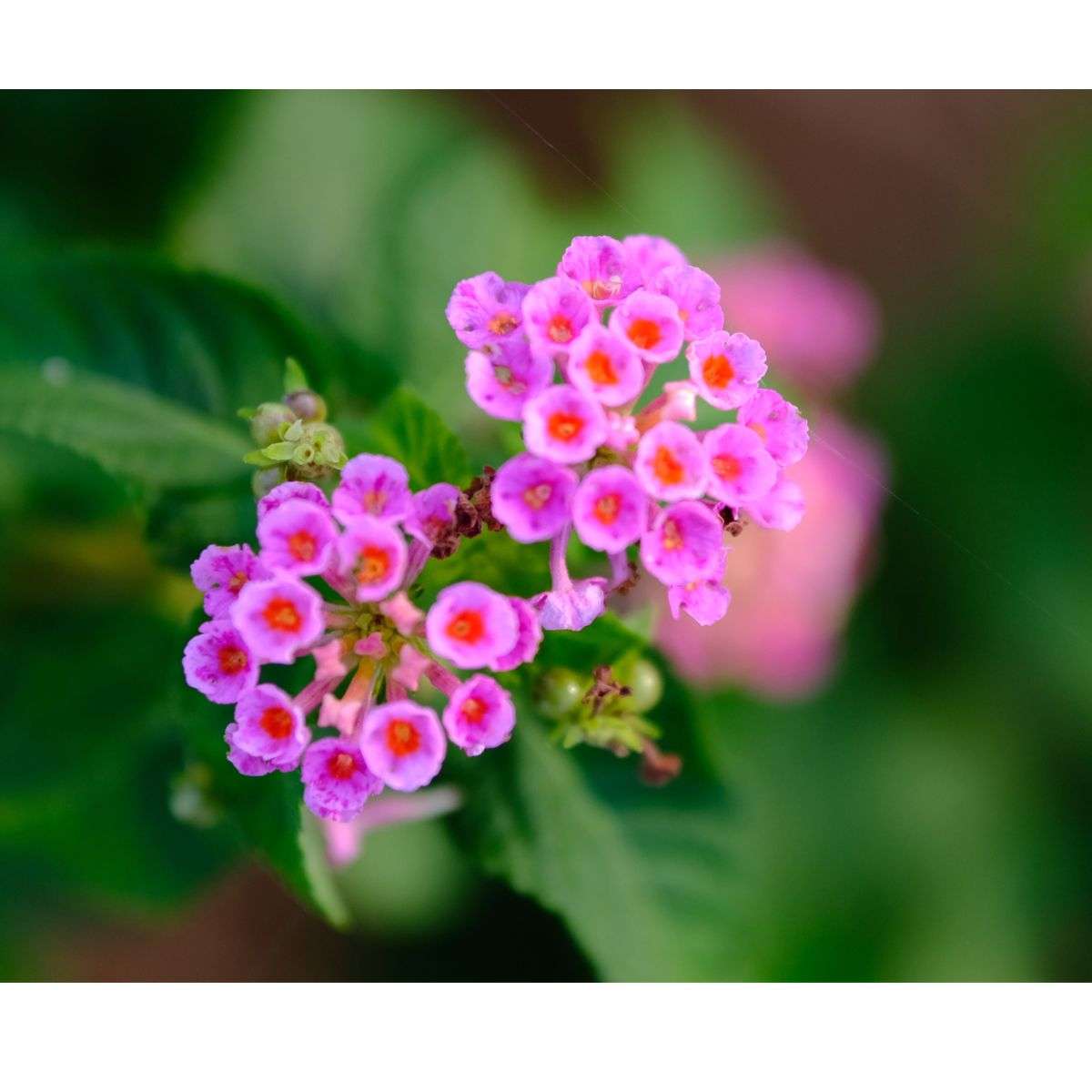
A To Z Guide how i Grow Lantana from Seed
I suggested lantana.
Not the nursery transplants — too expensive at that scale. Seeds. We sourced open-pollinated Lantana camara seed, started thousands of them in a rented greenhouse space, and transplanted five-week-old seedlings into that median in late April.
By July, the median was solid color. By August, it had become a monarch butterfly corridor — the plants loaded with flower clusters in yellow, orange, and red, with clouds of Lepidoptera working them from 7 AM until dark. By the following spring, the plants had survived a mild Tampa winter, self-seeded into every crack in the concrete curbing, and required exactly zero intervention.
That median project taught me things about lantana that no book had covered, what it endures, what it needs at the seed stage before it becomes unstoppable. And why the gap between “lantana is easy” and actually growing it successfully from seed is wider than most gardeners expect.
Fifty years of growing this plant, in six states and two countries. Here’s what I know.
Lantana camara
Lantana camara L. is a flowering shrub in the family Verbenaceae, native to the tropical Americas — primarily Mexico, Central America, and the Caribbean. It has naturalized across tropical and subtropical regions worldwide and is listed as one of the 100 worst invasive species globally by the International Union for Conservation of Nature (IUCN).
This invasive status is not a reason to avoid growing it — it’s a reason to understand it. In USDA Zones 10–12, L. camara should be grown as a sterile cultivar or managed carefully to prevent seed dispersal into natural areas. In Zones 7–9, where winter temperatures reliably check its growth, the invasive concern is significantly reduced. In Zones 5–6, where it’s grown as an annual, it poses negligible ecological risk.
The fruit of L. camara — small, fleshy drupes that turn from green to dark blue-black when ripe — is toxic to mammals (including humans and livestock) but eaten by birds, which are the primary seed dispersers in its native range. This bird-mediated dispersal ecology is directly relevant to seed collection and germination, as I’ll explain below.
Lantana montevidensis — The Trailing Species
Lantana montevidensis (Spreng.) Briq. — Weeping lantana, trailing lantana — is a separate species native to South America, primarily Uruguay and southern Brazil. It’s more cold-hardy than L. camara, surviving to Zone 8 reliably and to Zone 7 with protection. Flowers are smaller, typically purple or white, borne on trailing stems that cascade from containers and hanging baskets.
- Montevidensis is sterile in most cultivated forms — it does not set seed and poses no invasive risk. It grows from cuttings, not seed. If you’re growing from seed, you’re working with L. camara or a seed-fertile hybrid.
Named Lantana camara Seed Series Worth Knowing
- Bandana series (Ball Horticultural) — compact habit, heat-tolerant, available in single and bicolor combinations
- Lucky series (Goldsmith Seeds) — developed for seed production with improved germination consistency
- Landmark series (Syngenta Flowers) — bred for container performance, some seed-available types
- Confetti — older open-pollinated variety; comes reasonably true from seed; one of the best choices for seed starting due to more predictable germination behavior than F1 lines.
- Dallas Red — heat-tolerant, open-pollinated, named selection; reliable from seed in Southern climates
For seed starting, open-pollinated varieties like Confetti and Dallas Red are more predictable than F1 hybrid series because their seeds haven’t been through the genetic disruption that makes hybrid seed germination erratic.
The Germination
A study published in Scientia Horticulturae (Volume 83, Issues 3–4, 2000) — “Effects of seed pretreatment on germination of Lantana camara L.” by researchers at the University of Queensland, Australia — tested multiple pre-germination treatments and documented:
- Untreated seeds: 20–35% germination over 28–42 days — slow, erratic, commercially inadequate
- Seeds with fruit pulp chemically removed: 55–68% germination
- Seeds mechanically scarified + warm stratification at 30°C (86°F): 72–81% germination — the highest recorded
- Gibberellic acid (GA₃) treatment at 500 ppm for 24 hours: 65–72% germination with faster, more uniform emergence
The mechanism: Lantana camara seeds have a physically hard seed coat — a form of dormancy called testa dormancy or hard seed dormancy — combined with chemical inhibitors in the pericarp (fruit flesh) that suppress germination. In nature, these are removed by passage through a bird’s digestive tract. The acidic gut environment and enzymatic activity in birds such as thrushes and bulbuls both scarify the seed coat and neutralize chemical inhibitors simultaneously.
In the garden, we replicate this with scarification and hot water treatment — simulating what a bird’s gut does to lantana seeds in roughly 45 minutes.
This explains why so many gardeners report poor lantana germination: they planted seeds straight from the packet at normal temperatures without pretreatment. The seeds sat for weeks, partially inhibited by their own seed coats, and yielded frustratingly sparse results. The fix is simple once you know the biology.
Lantana Seed Collection and Sourcing
Collecting from Your Own Plants
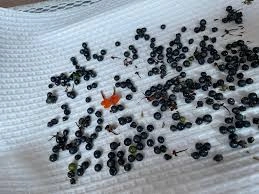
Lantana camara fruit ripens from green through dark purple-black over four to six weeks. Seeds are ready when the drupe is fully black and soft, slightly yielding when pressed between two fingers.
Wear gloves. The alkaloids in lantana fruit — primarily lantadene A and lantadene B (phytotoxic pentacyclic triterpenoids that cause photosensitization and liver damage in livestock) — are present in the ripe fruit. Skin contact is generally low risk, but handle carefully regardless.
To extract seeds: crush ripe fruits in a bowl of water, work the pulp away from the seeds, and drain through a fine mesh strainer. Rinse seeds thoroughly — residual inhibitory compounds in the pulp suppress germination if left in contact with the seed. Spread on a paper towel for 48–72 hours, then store or plant.
Fresh lantana seeds planted within a few weeks of harvest show significantly better germination rates than seeds dried and stored for months. If collecting in late summer or fall, plant immediately or refrigerate and plant in February.
Buying Commercial Seed
Look for packed-for dates — non-negotiable with lantana. Reliable sources:
- Park Seed — good stock turnover on lantana
- Stokes Seeds — reliable germination rates
- American Meadows — species-type lantana with reasonable freshness
- Jelitto Perennial Seeds — excellent species L. camara quality
Seed viability window: properly stored lantana seed (sealed container with silica gel desiccant at 38–42°F) maintains acceptable germination for two to three years. Beyond three years, germination drops sharply, and pretreatment cannot reliably rescue it.
When Lantana Seed Starts Growing
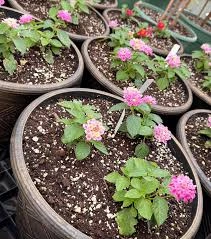
Lantana from seed requires 10 to 14 weeks from sowing to transplant-ready plant. Add pretreatment time, and the total window runs 11 to 16 weeks before transplanting.
| USDA Zone | Last Frost | Begin Pretreatment | Sow Seeds |
| Zone 5 | Mid-May | Late January | Early February |
| Zone 6 | Late April | Mid-January | Late January |
| Zone 7 | Mid-April | Early January | Mid-January |
| Zone 8 | Mid-March | Late November | Early December |
| Zone 9–10 | No frost / Jan–Feb | September–October | October |
In Zones 9–11, lantana can be direct-sown outdoors when soil temperatures reach 65°F. In cooler zones, indoor starting is necessary — lantana has zero frost tolerance, and its germination requirements make outdoor early-spring sowing unreliable.
How to Grow Geranium from Seed
How to Grow Begonia from Seed?
How to Grow Vinca Flowers from Seed
Seed Pretreatment: The Step That Doubles Germination
Based on the Queensland research and fifty years of field practice, choose one of these methods. Don’t combine them.
Method 1: Hot Water Treatment
- Boil water. Let cool 30–60 seconds — target 85–90°C (185–195°F), not a full rolling boil.
- Place seeds in a heat-resistant cup
- Pour hot water over the seeds, completely submerging them
- Soak for 24 hours as the water cools to room temperature
- Drain. Plant immediately.
Seeds that have swollen slightly after soaking are ready. Seeds that appear unchanged should get a second 24-hour soak in fresh warm water.
Method 2: Mechanical Scarification
- Line a small container with 120-grit sandpaper
- Place seeds inside and shake for 30–60 seconds — seeds abrade against the sandpaper, nicking the hard seed coat.
- Alternatively, gently rub seeds between two sheets of sandpaper
- After scarification, soak in room-temperature water for 12–24 hours
- Plant immediately
This produces the highest germination rates consistent with the Queensland study findings. Mechanical abrasion creates microscopic openings in the testa that allow water and oxygen to reach the embryo directly, rapidly breaking physical dormancy.
Method 3: Gibberellic Acid / GA₃
Gibberellic acid is a plant growth regulator that overcomes physiological dormancy by mimicking the hormonal signals that naturally trigger germination. Used commercially for difficult-to-germinate seed species.
Prepare GA₃ at a 500 ppm concentration (500mg per liter of water). Seeds soak for 24 hours, then are planted immediately without rinsing. This method produces the most uniform germination but requires accurate measurement. For most home growers, hot water or mechanical scarification delivers equivalent results with far less complexity.
How to Set Up Soil for Lantana Seeds
The Growing Medium
Lantana seed-starting mix:
- 2 parts commercial seed-starting mix
- 1 part coarse perlite
- ½ part coarse horticultural sand
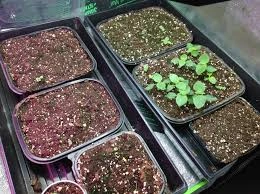
Pre-moisten in a bowl until the consistency of a firmly wrung-out sponge. Fill plug trays or small individual cells. Press the surface level.
Use only fresh, commercially packaged seed-starting mix. Wash all containers with a 10:1 water-to-bleach solution. Rinse and dry. Lantana seedlings are susceptible to Pythium aphanidermatum damping-off; sterile starting conditions are the primary prevention.
Target pH: 5.5–6.5. Most commercial seed-starting mixes fall within this range naturally.
Sowing Lantana Seeds
Depth and Darkness
Lantana seeds require darkness to germinate. The physical dormancy mechanism means seeds in their native habitat germinate beneath soil or leaf litter, not in exposed light.
Sow at ¼ inch depth (6mm) — deeper than most bedding annuals, because the hard seed coat benefits from additional moisture contact and darkness that deeper sowing provides.
Cover the tray with an opaque dome or dark cloth. Check daily. The moment seedlings emerge, remove the cover immediately and move to full light.
In plug trays: one to two seeds per cell at ¼ inch depth. Thin to one per cell after germination. In open trays: seeds ½ inch apart, ¼ inch deep, rows 1 inch apart.
What is the best temperature for Lantana seeds?
Lantana is genuinely tropical. Its seeds evolved to germinate in conditions most temperate gardeners consider warm.
Germination soil temperature target: 70–85°F (21–29°C). The Queensland study found peak germination at 30°C (86°F) when combined with scarification. At 65°F, germination is slow and erratic even with pretreatment. At 60°F, it essentially stops.
A heat mat set to 80°F is appropriate and beneficial for lantana — unlike verbena or calibrachoa, where I buffer mat temperature. Lantana genuinely wants the warmth.
After germination: Maintain seedling growing temperatures at 68–75°F (20–24°C). Below 65°F, growth slows noticeably. Below 55°F, cold damage risk begins. Lantana has zero frost tolerance — a single hard frost at 28°F (-2°C) kills even established plants in their root system’s first year.
Germination Timeline With vs. Without Pretreatment
With pretreatment (hot water or scarification) at 80°F:
- First germination: 7–14 days
- Peak flush: Days 10–21
- Stragglers: Through day 35
Without pretreatment at the same temperature:
- First germination: 14–28 days
- Peak: Days 21–42
- Stragglers: Through day 60+, with significantly fewer total seedlings
The difference is dramatic. Treated seeds produce a cohesive flush of seedlings across a two-week window. Untreated seeds dribble out one or two a week, producing plants at completely different developmental stages in the same tray — a management problem throughout the entire indoor period.
How to Grow Kalanchoe Flowers from Seeds?
How to Grow Peace Lily from Seed?
How to Grow Anthurium from Seed
How to Grow Impatiens Flowers from Seed
Watering Through Each Stage
Germination Phase
The opaque cover retains moisture. Check every two to three days by lifting one corner. Mist lightly with a fine-spray bottle if the medium surface looks pale and dry. Never saturate the covered tray — anaerobic conditions rot pretreated seeds before they can sprout, undoing the pretreatment work entirely.
After Germination — The Transition
Remove the opaque cover immediately when seedlings emerge. Move to the bright light simultaneously. Transition to airflow over five to seven days by progressively opening or removing the dome.
Switch to bottom watering. Set the tray in a shallow dish of water for 20 minutes, then drain completely. Water only when the top ¼ inch of medium is dry — typically every two to three days in most indoor environments.
Established Seedlings — Lean Toward Dry
From week five onward, allow the top inch of medium to fully dry before watering. Lantana roots develop deeper and more extensively when they search for moisture. Container nursery production of lantana uses exactly this mild dry-down cycle to produce the vigorous, drought-tolerant transplants that perform so well in tough conditions.
Overwatered lantana seedlings show yellow lower leaves, soft stems at the soil level, and a wilted appearance despite wet soil. If you see these signs: stop watering, let the medium dry to a 1-inch depth, and increase airflow immediately.
Light: Maximum from Germination Day One
Lantana is among the most light-demanding plants in the family Verbenaceae. Its natural habitat — open roadsides, coastal scrub, disturbed forest clearings across the tropics — is a high-intensity full-sun environment. Seedlings want and need maximum light from the moment they emerge from darkness.
Grow lights: Full-spectrum LED, 3–5 inches above seedling tops, running 16 hours per day. The longer photoperiod compensates for the lower intensity of indoor grow lights compared to equatorial outdoor sun. Keep the light close — seedlings that drift to 8–10 inches below the fixture begin etiolating within days.
A south-facing window in February provides inadequate intensity for compact lantana seedling growth in any temperate climate north of Zone 9. Grow lights are not optional for quality transplants.
Light-deficient lantana seedlings show pale green foliage, long internodes, and thin stems that don’t support the naturally bushy habit. These plants take months to compensate after outdoor transplanting — the early light investment pays for itself many times over.
Feeding Lantana Seedlings
Start Lean
Lantana colonizes nutrient-poor soils in its native habitat. Over-fertilizing at the seedling stage produces soft, disease-prone growth that’s poorly adapted to the tough outdoor conditions where lantana performs best.
Begin feeding when the second pair of true leaves is fully expanded.
Starting dose: balanced water-soluble fertilizer (10-10-10) at 20% of the labeled rate, applied weekly. Lower than most bedding annuals — Lantana’s fine roots at the seedling stage are sensitive to salt accumulation.
Increase to 50% at eight weeks. Full rate after transplanting.
The Critical Bloom-Phase Shift
Once lantana is in its final location and showing its first flower clusters, shift to a phosphorus-forward fertilizer (5-10-5 or 10-30-20 bloom formula). Phosphorus supports the continuous, heavy flowering that makes lantana exceptional.
- camara in lean soil with phosphorus-focused feeding produces more flowers than the same plant in nitrogen-rich soil. The counterintuitive principle — lean soil, phosphorus-forward feeding, maximum bloom — is the single most consistent performance difference between lantana that impresses and lantana that disappoints in summer gardens.
Thinning, Pinching, and Managing Seedlings
Thinning
Thin to one seedling per plug cell when the first true leaves appear. The distinctly rough-textured, aromatic lantana leaf — containing lantanene compounds that give it the characteristic scent when crushed — is clearly different from the smooth cotyledons. Snip extras with scissors at the soil level.
Early Pinching — Mandatory for Quality Transplants
When seedlings reach 4–5 inches tall with four to six pairs of true leaves, pinch the growing tip above a leaf node. Two to four lateral branches emerge within 10–14 days.
Unpinched lantana produces a single upright stem with flowers only at the tip — a thin, underwhelming plant that takes months to branch naturally. A pinched seedling arrives at the garden already branching and begins blooming from multiple points within weeks.
This is the technique I used on every one of those Tampa median seedlings in 1986. The difference in plant quality between pinched and unpinched seedlings at transplanting is visible from across the greenhouse.
Transplanting and Hardening Off
Readiness Markers
Lantana is ready to transplant when:
- Four to six pairs of true leaves are fully developed
- The plant shows active lateral branching from pinching
- Roots are visible at the plug cell drainage holes
- The plant is 4–6 inches tall with a compact, branched structure
Typically, 10–14 weeks after sowing. Transplanting earlier risks setback from inadequate root establishment.
Hardening Off Schedule
- Days 1–3: Outdoor shade only, 1–2 hours
- Days 4–6: Morning sun before 10 AM for 2–3 hours, then shade
- Days 7–9: Half-day sun including midmorning exposure
- Days 10–12: Full sun for most of the day
- Day 14+: Permanent outdoor placement
Once hardened off, lantana handles heat and sun with the resilience few bedding plants match. The hardening-off period is the bridge to that toughness.
Final Outdoor Placement
Full sun — 6 to 8 hours minimum, more is better. In part shade, lantana grows vegetatively and blooms reluctantly. Position it in the hottest, sunniest spot available, and it will outperform everything around it.
Lean, well-draining soil. A bed with excellent drainage and minimal organic matter produces better bloom than a richly amended bed. This plant was built for harsh conditions.
Spacing:
- Compact bedding types: 12–18 inches
- Spreading types: 18–24 inches
- L. camara at natural size in frost-free climates: 36–48 inches
How to Grow Portulaca from Seed
How to Grow Chrysanthemums from Seed
How to Grow Calibrachoa from Seed
How to grow Lantana in a container
Lantana in containers is one of the finest patio plants in hot climates. It handles reflected heat from concrete that kills most annuals, blooms continuously without deadheading, and tolerates the slightly irregular watering that busy households provide.
Container size: 10–12 inches minimum. Lantana roots are vigorous — undersized containers produce root restriction by midsummer and a bloom slowdown that makes gardeners think something is wrong when the actual problem is simple root crowding.
Drainage: Every container must drain freely. Lantana in standing water develops root rot silently — above-ground growth may look healthy for two to three weeks while roots die below. By the time top-growth symptoms appear, recovery is often impossible.
Terracotta dries faster than plastic and keeps the root zone in a slightly dry condition that lantana prefers.
Watering: Allow the top 1–2 inches of container medium to dry before watering. Afternoon wilt in heat above 90°F is a normal physiological response — assess soil moisture, not plant appearance. Water when the soil is dry, not when the plant looks wilted in the afternoon heat.
Lantana and Pollinators: Documented Ecological Value
A 2012 study published in Arthropod-Plant Interactions — “Visitor diversity and flower visitation rate to Lantana camara L.” — documented 72 distinct pollinator species visiting L. camara in a single study site over one growing season. Multiple genera of bees (Apis, Bombus, Xylocopa, Trigona), butterflies from at least eight families, hawk moths, and hoverfly species.
The color-change mechanism is directly relevant to pollinator ecology: newly opened Lantana camara florets are yellow, shifting to orange and then red as they age. This is a functional visual signal — yellow and orange florets contain nectar; red florets have been pollinated and nectar-depleted. Butterflies and bees preferentially visit yellow and orange florets, demonstrating that they read this color-change map accurately. The multi-colored flower clusters aren’t decorative — they’re a functional nectar-availability communication system that pollinators have been reading for millions of years.
Beyond bees and butterflies, L. camara is documented as a significant nectaring resource for migrating monarch butterflies (Danaus plexippus) in the late summer and fall migration window along the Gulf Coast flyway — precisely when the Tampa median plants were performing at their peak every August.
Common Problems and Direct Fixes
Seeds not germinating or taking too long: Pretreatment is the answer in 90% of cases. Implement hot water treatment or mechanical scarification. Verify soil temperature is at 80°F with a thermometer. Check seed age — beyond two years, pretreatment cannot reliably rescue lantana seed.
Damping-off in young seedlings: Pythium aphanidermatum — the primary pathogen. Remove affected plants immediately. Allow the medium to dry partially. Increase airflow dramatically. If it spreads through the tray, discard the medium, sanitize the container, and start again with a fresh sterile mix.
Yellow lower leaves on seedlings: Assess for two causes. Soft stems + moist soil = overwatering. Yellow tissue with green veins = iron chlorosis from pH above 6.5 — test and correct pH, apply chelated iron foliar spray.
Growing vigorously but not blooming: Too much nitrogen is the most common cause. Switch to phosphorus-forward fertilizer (5-10-5) and reduce the feeding rate 50%. If the plant is in fewer than 5 hours of direct sun, placement is the problem.
Afternoon wilting: Physiological heat wilt — normal above 90°F. If plants recover fully by evening, no action is needed. If wilt persists past sunset, water and check the root zone moisture.
Powdery mildew: Less common in lantana than in verbena or chrysanthemum. Erysiphe species in high-humidity, low-airflow conditions. Full sun placement and adequate spacing prevent most cases. Neem oil every 7–10 days at the first sign.
15 Low-Maintenance Flowers That Bloom All Year in Pots
How to Save Lantana Seed
Collect fully ripe black drupes from open-pollinated plants wearing gloves. Crush in water, strain through a fine mesh, and rinse the seeds completely clean of all pulp. Dry 48 hours on a paper towel. Plant immediately or refrigerate in a sealed container with silica gel.
Stratify saved seed for hot water treatment before planting — fresh garden-collected seed carries stronger dormancy than commercially conditioned packets. The 24-hour hot water treatment applies equally to saved seed.
Saved seed from named F1 hybrid cultivars produces variable offspring — sometimes interesting, rarely matching the parent. Open-pollinated types (Confetti, Dallas Red, species selections) come considerably truer from saved seed.