
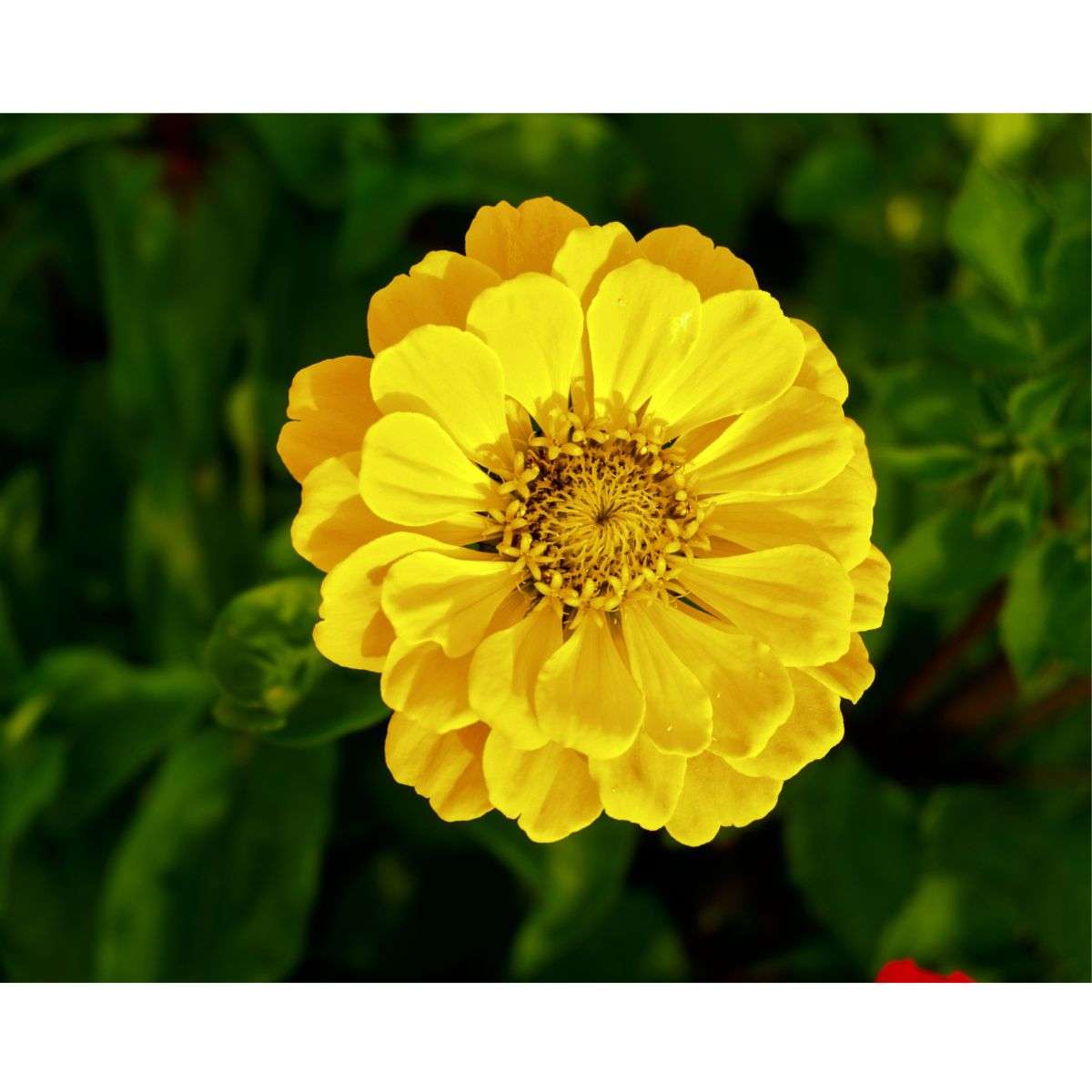
Learn how i grow Zinnia from Seed
I’ve been growing zinnias from seed every year since. In fifty years, no plant has given me more return for less investment. But “easy” is not the same as “foolproof.” There are specific things zinnia seeds need — and specific things they absolutely cannot tolerate — that most guides skim past. Get them right, and zinnia is the most rewarding seed-starting project in the warm-season garden. Get them wrong, and you’ll spend July puzzled about why your plants are small, diseased, or refusing to bloom.
The Botany
Zinnia is a genus of flowering plants in the family Asteraceae (the daisy family), tribe Heliantheae — the same tribe as sunflowers, coneflowers (Echinacea), and coreopsis. The genus contains roughly 20 species, native to the scrub and dry grassland habitats of Mexico, with secondary diversity centers in the southwestern United States and Central America.
The most cultivated species and the entities that matter for growing from seed:
Zinnia elegans — The Garden Zinnia
The primary species. Native to Mexico’s highland plateau regions. The source of virtually all large-flowered garden zinnia cultivars. Double, semi-double, and single flower forms. Blooms in every color except true blue. Heat-loving, drought-tolerant once established, and remarkably productive as a cut flower.
The botanical key to understanding Z. elegans from a seed-starting perspective: it evolved in highland Mexico at elevations of 1,500–2,500 meters, in a climate with warm days, cool nights, distinct wet and dry seasons, and intense solar radiation. This origin explains its heat preference, its sensitivity to cold soil during germination, its need for full sun, and its vulnerability to overhead moisture. Highland Mexico has bright, dry conditions, not the humid stagnant air that invites the fungal diseases that plague zinnias in hot, humid climates.
Zinnia haageana — Mexican Zinnia
Smaller than Z. elegans, with bicolor and tricolor flowers in orange, red, yellow, and mahogany combinations. More drought-tolerant than its larger relative. Less susceptible to powdery mildew — a significant practical advantage in humid climates. The species produces abundantly on compact plants and is ideal for containers, front-of-border plantings, and situations where the full three-foot height of Z. elegans is too large.
Named cultivar groups include the Persian Carpet series and the Aztec series — both open-pollinated, both excellent from seed, and both genuinely easier to grow in hot, humid climates than most Z. elegans types.
Zinnia angustifolia — Narrowleaf Zinnia
Small, star-shaped single flowers on dense, spreading plants. Extremely drought-tolerant. The species most resistant to powdery mildew and alternaria blight of the commonly grown types. Used extensively in interspecific hybridization programs, the Profusion series (a Z. elegans × Z. angustifolia cross developed by Pan American Seed) carries Z. angustifolia‘s disease resistance into a larger-flowered plant with more color range than the narrow-leaf parent.
Named Cultivar Series Worth Knowing
These entities matter for purchasing, performance comparison, and SEO entity optimization:
- Benary’s Giant series — the gold standard for large-flowered cut zinnia. Developed by Ernst Benary of Hessen, Germany. Open-pollinated. Stems reach 24–30 inches. The most widely grown zinnia series in the American cut flower industry
- Dahlia-flowered series (various breeders) — large, fully double blooms resembling dahlias. Open-pollinated
- Profusion series (Pan American Seed) — All-America Selections winner. Z. elegans × Z. angustifolia interspecific hybrid. Outstanding disease resistance
- Oklahoma series — long-stemmed, small-flowered, prolific. Developed specifically for cut flower production by specialty seed companies
- Cactus-flowered series — twisted, quilled petals with distinctive form. Open-pollinated
- Peppermint Stick — bicolor, striped petals. Open-pollinated heirloom
- Queen series — tall, sturdy, open-pollinated. Developed for professional cut flower growers
- Magellan series — compact, mounded habit for landscape and container use
- State Fair series — large-flowered, traditional garden type. Heat-tolerant, open-pollinated
The Research That Changes How You Think About Zinnia Seed Starting
A peer-reviewed study published in HortScience (Volume 44, Issue 6, 2009) — “Germination and seedling growth of Zinnia elegans at varying temperature and light conditions” by researchers at the University of Florida’s Environmental Horticulture Department — produced findings directly applicable to home seed starting:
Key findings:
- Optimum germination temperature: 24–27°C (75–80°F) soil temperature
- At 21°C (70°F), the germination rate dropped 20–30%, and the time to emergence increased by 4–6 days
- At 18°C (65°F), germination was reduced by more than 50% with highly uneven emergence
- Light conditions during germination had no significant effect — zinnia seeds germinated equally well in light or darkness, meaning covering depth (not light exclusion) is the controlling factor.
- Seedling growth rate correlated directly with temperature: plants grown at 27°C developed significantly faster through the seedling stage than those at cooler temperatures.s
The practical implication most gardeners miss: The study confirmed that soil temperature — not air temperature — is the operative variable. In a greenhouse or indoor setting, a room maintained at 72°F can have soil temperatures of 62–65°F in containers on hard surfaces. This temperature gap between ambient air and actual soil explains why zinnia seeds started in “warm” rooms still germinate slowly and unevenly without a heat mat.
The Florida research also confirmed what experienced zinnia growers have long observed: zinnias started indoors do not necessarily outperform direct-sown zinnias when both are grown in warm conditions. The researchers found that transplanted zinnia seedlings showed a two-week adjustment period after transplanting, which direct-sown seedlings did not experience, partially or entirely erasing the head start from indoor starting in climates where direct sowing is feasible.
This is the scientific basis for the widely held (but rarely explained) recommendation to direct sow zinnias rather than start them indoors — and for the specific technique adjustments needed when indoor starting is preferred.
Direct Sow vs. Indoor Starting: The Honest Assessment
This is the most consequential decision in zinnia seed starting, and most guides treat it as a minor aside. It deserves a full, honest treatment.
When Direct Sowing Wins
In Zones 6–10 with warm spring soil (above 65°F by early May), direct sowing is the superior method for Z. elegans. The reasons are anatomical and physiological:
Zinnia has a taproot-anchored root system that establishes its full depth and extent most effectively when grown undisturbed from germination to maturity. Transplanting disrupts this taproot development — even careful handling of root balls introduces stress that takes two to three weeks for the plant to overcome. In that recovery window, a direct-sown seed of the same planting date germinates, establishes an undisturbed taproot, and often catches and passes the transplant in size by week four.
Additionally, zinnia seedlings develop rapidly in warm soil. From germination to transplant-ready size takes only three to four weeks for zinnias — far shorter than the 10–12 week indoor windows needed for lantana, verbena, or calibrachoa. The head start that indoor starting provides is much smaller with zinnia than with slow-developing plants, making the transplanting disruption a higher relative cost.
The direct sowing timeline: Sow seeds when the soil temperature at a 2-inch depth reaches 65°F or above. In most of Zone 6, this is late May. In Zone 7, early to mid-May. In Zone 8–9, mid-April to May. Zinnias germinate in 4–7 days at the correct soil temperature, so “waiting for warm soil” costs very little time relative to the transplant disruption avoided.
When Indoor Starting Makes Sense
In Zones 4–5, where the frost-free growing season is genuinely short (fewer than 130 days), indoor starting gives zinnia enough of a head start to justify the transplant disruption. Start seeds indoors 3–4 weeks before the last frost — not 6–8 weeks. Starting earlier produces seedlings too large to handle transplanting well, because zinnias grow fast indoors under lights and become root-bound in small cells quickly.
For succession planting in cut flower gardens, indoor starting of the first sowing in late winter allows a continuous supply from earlier in the season than direct sowing alone would permit.
For specific named varieties with high seed cost (rare open-pollinated varieties, specialty seed company exclusives), indoor starting under controlled conditions reduces waste compared to direct sowing.
The rule: default to direct sowing in Zones 6 and warmer. Use indoor starting strategically in Zones 4–5 and for specific production purposes elsewhere.
Seed Selection: What Matters for Germination and Performance
Open-Pollinated vs. F1 Hybrid
This distinction has practical implications beyond just price.
Open-pollinated zinnia varieties — Benary’s Giant, Queen series, State Fair, Peppermint Stick, Cut and Come Again, and most heirloom types — reproduce true from seed. Collected seed from an open-pollinated zinnia produces seedlings with characteristics matching the parent. Germination rates are consistently good (75–85% for fresh, quality seed). Seed is less expensive and more widely available.
F1 hybrid zinnias — Profusion series, Magellan series, and similar commercially developed lines — were produced by crossing two parent inbred lines under controlled conditions. The resulting F1 hybrid shows hybrid vigor (faster growth, more uniform flowering, often better disease resistance) but does not reproduce true from seed. Collected seed from an F1 hybrid produces highly variable offspring. F1 hybrid seed costs more and must be repurchased each year. Germination rates are typically equivalent to or slightly better than open-pollinated types.
For home gardeners and small-scale cut flower growers: open-pollinated varieties, especially Benary’s Giant and Queen series, deliver outstanding performance with the seed-saving option. For gardeners who prioritize disease resistance in humid climates, the Profusion series F1 hybrid is genuinely worth the extra seed cost.
Seed Freshness and Viability
Zinnia seed maintains excellent viability under proper storage — one of the better-storing annual flower seeds. Fresh seed (within 12 months of harvest) shows germination rates of 75–90% under good conditions. Two-year-old properly stored seed typically shows 65–80%. Three-year-old seed, 50–70% — still usable, but requiring denser sowing to achieve target plant density.
Poorly stored zinnia seed — kept in warm, humid conditions, or in paper packets in a garden shed through summer — degrades faster. The fatty acid oxidation that destroys seed embryos accelerates dramatically above 75°F.
Storage: sealed airtight container with a silica gel desiccant packet, in the vegetable crisper at 38–42°F. Under these conditions, zinnia seed remains highly viable for three or more years.
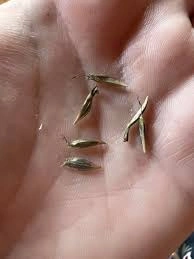
Unique seed fact most guides miss: Zinnia seeds are actually cypselae — the same achene-like fruit structure found throughout the Asteraceae family — rather than “seeds” in the strict botanical sense. Each cypsela contains a single seed enclosed within a hardened, winged pericarp. The wing shape varies by variety, with some cypselae showing distinct three-winged structures that aid wind dispersal in the native Mexican grassland habitat. This is relevant practically because the wings on the pericarp mean that zinnia “seeds” planted on their edge (as they often land naturally) germinate slightly slower than those planted flat — a minor point, but one that explains occasional uneven germination in carefully controlled sowing situations.
How to Grow Geranium from Seed
How to Grow Begonia from Seed?
How to Grow Vinca Flowers from Seed
What is the best Timing for Zinnia Seed Start
For Direct Sowing
The rule: sow when soil temperature at 2-inch depth reaches 65°F (18°C). Below this threshold, germination is slow and patchy. At 75°F, germination is fast and cohesive.
In most North American temperate climates:
- Zone 4: Early June
- Zone 5: Late May to early June
- Zone 6: Mid to late May
- Zone 7: Late April to early May
- Zone 8: Mid-April
- Zone 9–10: March to April (avoid hot-summer sowing — direct sow for spring bloom, again in late summer for fall)
A $10 soil thermometer is the most useful tool for zinnia timing. Don’t trust calendar dates — they vary by year. Trust the soil temperature.
For Succession Planting
This is the technique that turned a Kansas neighbor’s bet in 1979. A single zinnia sowing produces a three to four-week bloom window. Multiple sowings three to four weeks apart produce continuous bloom from midsummer through frost.
My succession schedule in Zone 6:
- Sowing 1: Last week of April (as soil warms to 65°F)
- Sowing 2: Third week of May
- Sowing 3: Second week of June
- Sowing 4: First week of July (latest reliable sowing for frost-free bloom through October in Zone 6)
Each successive sowing adds a new flowering cohort as the previous one reaches its peak. By late June, sowing 1 is in full bloom. By mid-July, sowing 2 begins, and sowing 1 is still producing. By August, sowing 3 opens, and the garden reaches maximum yield. In September, when gardens without succession planting are looking tired, sowing 4 is coming into full production.
This is the technique professional cut flower farmers use. It’s equally applicable to home gardens.
How to Prepare Soil for Zinnia
For Direct Sowing Outdoors
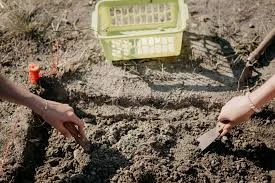
Zinnia is forgiving of soil quality once established — it tolerates poor, lean, and rocky soils in the wild. But germinating seeds and developing seedlings benefit from a prepared seedbed:
- Loosen to a 6-inch depth with a fork or tiller. Hard, compacted soil impedes the taproot development that gives mature zinnia its drought tolerance.
- pH target: 5.5–7.0. Zinnia tolerates a wide pH range. Standard garden soil within this range needs no amendment for pH.
- Drainage. Zinnia fails in waterlogged conditions. If the soil in your intended planting area holds standing water after rain, either amend with coarse grit and compost, build a raised bed, or choose a different location.
- Fertility. Zinnia does not need rich soil. Excessive nitrogen produces lush vegetative growth at the expense of flower production — the same counterintuitive principle I described for lantana. A moderate phosphorus content (support for root and flower development) is more valuable than high nitrogen. Work in a phosphorus-forward granular fertilizer (5-10-5 or bone meal) at planting rather than nitrogen-heavy compost.
For Indoor Seed Starting
Zinnia seed-starting mix:
- 2 parts commercial seed-starting mix
- 1 part coarse perlite
Pre-moisten before filling cells or pots. The perlite amendment prevents the compaction and waterlogging that seed-starting mix is prone to in warm, covered germination environments — and zinnia seeds in waterlogged medium rot before they can germinate, regardless of how good the temperature and light conditions are.
Use individual cells rather than open flats — specifically 2-inch or larger cells, not the 72-cell plug trays appropriate for smaller-seeded annuals. Zinnia roots develop quickly and become pot-bound in small cells within two to three weeks after germination. Larger individual cells give roots room to develop without the transplant shock that comes from a forced pricking-out of root-tangled seedlings.
How to Sow Zinnia Seeds
Depth
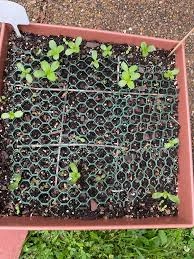
¼ inch (6mm) depth for direct sowing. ¼ to ½ inch for indoor starting.
Zinnia is one of the few bedding annuals where slightly deeper sowing improves results. The larger seed size (compared to verbena, calibrachoa, or lantana) means the seedling has more stored energy — it can push through ¼ to ½ inch of covering without exhausting its reserves. Deeper sowing maintains more consistent moisture contact around the seed and reduces the surface drying that kills germinating zinnia seeds on warm, windy days in outdoor direct sowing.
Surface sowing — seeds sitting on the soil surface with minimal cover — is the most common direct-sowing mistake with zinnias. In the field conditions of outdoor beds, surface-sown zinnia seeds desiccate between waterings at a rate that dramatically reduces germination.
Spacing
For cut flower production: Space direct-sown seeds 6 inches apart in rows 12–18 inches apart. Thin to 12 inches after germination. This spacing produces tall, single-stemmed plants with long cutting stems — the desired form for vase production.
For garden display: Space 8–12 inches apart. Closer spacing produces taller, less-branched plants with longer stems. Wider spacing produces bushier, more-branched plants with more flowers per plant but shorter stems.
For indoor plug starting: One seed per 2-inch cell. Zinnia seeds have good germination rates — sowing two per cell produces the overcrowding problem that damages roots at thinning time. One seed per cell, with confidence.
The Light Requirement During Germination
As the University of Florida research confirmed, zinnia seeds germinate equally well in light or darkness. Cover them at the correct depth, provide warmth, maintain moisture — that’s all germination requires. The clear vs. opaque dome question that matters so much for calibrachoa, verbena, and lantana is irrelevant for zinnia. Use whichever dome you have.
How to Grow Kalanchoe Flowers from Seeds?
How to Grow Peace Lily from Seed?
How to Grow Anthurium from Seed
How to Grow Impatiens Flowers from Seed
Temperature
Germination soil temperature: 75–80°F (24–27°C). This is warmer than most gardeners maintain and warmer than most indoor environments without supplemental heat.
At 65°F soil temperature, germination takes 10–14 days with noticeably uneven emergence. At 75°F, germination begins in 4–7 days with cohesive emergence. At 80°F, germination begins in 3–5 days.
For indoor starting, A heat mat set to 78°F is appropriate and produces noticeably better germination than no mat. This is unlike verbena and calibrachoa, which require cooler germination temperatures — zinnia’s tropical Mexican origin genuinely warrants the warmth.
After germination: Remove from the heat mat. Zinnia seedlings grow most compactly at 65–70°F after germination — a slight temperature drop encourages compact, sturdy growth and reduces the internode elongation (legginess) that warm growing conditions produce. This post-germination temperature management is one of the most overlooked techniques in zinnia indoor starting.
The transplant cold-sensitivity rule: Do not transplant zinnia seedlings when outdoor soil temperature is below 60°F, even if frost risk has passed. Cool soil temperature causes transplant shock in zinnia that can set plants back two to three weeks, negating the entire benefit of indoor starting.
Watering at Every Stage
Direct Sowing Outdoors
After sowing, water gently but thoroughly with a fine rose head or misting attachment — enough to settle the soil and wet it to a depth of 2 inches. Cover the seeded area with a thin layer of light mulch (straw, not wood chips — wood chips mat and impede emergence) to slow surface drying between waterings.
Keep soil consistently moist at the surface level until germination — in warm, dry conditions, this may mean watering daily. After germination and once seedlings reach 3–4 inches, begin transitioning to deeper, less frequent watering. The goal is to encourage the taproot to grow deep rather than staying in the upper inch of soil where it depends on constant surface moisture.
The mature zinnia watering principle: Established plants (8+ weeks from germination) are remarkably drought-tolerant. I’ve seen Kansas zinnia survive two weeks without rain in August and come back blooming when water was restored. But the path to that drought tolerance runs through the seedling stage, where consistent moisture is required.
Indoor Starting
After sowing in pre-moistened medium with a dome over the tray, check every two to three days. Mist lightly if the medium surface appears dry. The dome maintains most moisture — over-checking and over-watering at this stage is more damaging than under-watering.
After germination and dome removal: bottom water only. Set the tray in a shallow dish of water for 20 minutes, then drain completely. Zinnia seedlings are susceptible to damping-off — Pythium species specifically — and bottom watering eliminates the stem-level moisture that is the primary infection point. Water when the top ½ inch of medium is dry.
The zinnia-specific damping-off warning: Among common bedding annuals, zinnia is one of the most susceptible to Pythium and Phytophthora damping-off. The warm, moist, enclosed conditions required for germination are the same conditions in which these pathogens thrive. The combination of:
- Warm temperature (75–80°F for germination)
- High moisture (required for seed hydration)
- Poor airflow (dome-covered tray)
creates a high-risk environment. Transition to airflow immediately upon seedling emergence. Never leave the dome fully sealed once seedlings appear.
Light for Indoor-Started Seedlings
Zinnia seedlings want full-sun intensity from day one above ground. Full-spectrum LED grow lights, 4–6 inches above seedling tops, running 14–16 hours per day, produce the compact, well-structured seedlings that transplant successfully.
Insufficient light produces the characteristic leggy zinnia seedling — tall, thin-stemmed, with widely spaced leaves — that collapses at transplanting or performs poorly in its first weeks in the garden. Leggy zinnia seedlings are the single most common indoor-starting complaint, and they’re almost always caused by insufficient light intensity rather than any more complex problem.
The unique zinnia leggy-seedling fix: Unlike verbena (where burying the stretched stem at transplanting can help), zinnia does not root readily from buried stem sections. Leggy zinnia seedlings cannot be rescued by deep planting. The fix must come before the legginess develops — by placing grow lights close enough, running them long enough, and (as described above) dropping the temperature slightly after germination to slow internode elongation.
How to Feed Zinnia From Seed Through Bloom
The Lean-Start, Phosphorus-Forward Approach
Zinnia is a moderate feeder — more than lantana, less than heavy-feeding annuals like calibrachoa in containers.
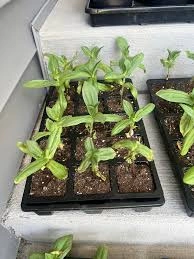
Seedling phase (weeks 1–4 after germination): No feeding. Fresh seed-starting mix provides adequate nutrition for the first three to four weeks.
Active growth phase (weeks 4–8): Balanced water-soluble fertilizer (10-10-10 or 20-20-20) at 50% of the labeled rate, every two weeks. This provides consistent nutrition without the nitrogen overload that pushes vegetative growth at the expense of flowers.
Pre-bloom and bloom phase: Shift to phosphorus-forward fertilizer (5-10-5 or 5-20-5 bloom formula). Phosphorus supports root development and the metabolic processes of flower production. Zinnias fed with high-nitrogen fertilizer through the bloom phase produce large, lush plants with moderate bloom. The same plants fed phosphorus-forward produce comparable plant size with dramatically more and larger flowers.
For direct-sown outdoor zinnias: Incorporate a slow-release granular fertilizer (10-10-10 or 5-10-5) into the top 3 inches of soil at bed preparation. This provides steady nutrition through the first six weeks. Supplement with liquid bloom fertilizer every three to four weeks once flowering begins.
For cut flower production: More frequent feeding — every 10–14 days with liquid fertilizer — supports the continuous heavy flowering that cut harvest demands. Each cutting removes nutrients along with the stem. Regular feeding replaces what’s removed.
Transplanting Indoor-Started Seedlings
Readiness Markers
Zinnia seedlings are ready to transplant when they show:
- Three to four pairs of true leaves (the rough-textured, slightly hairy zinnia leaves that are clearly different from the smooth oval cotyledons)
- A root ball that coheres when removed from its cell — roots have colonized the medium
- A compact, sturdy stem that doesn’t lean or sway without support
- Active new leaf growth at the growing tip
This typically occurs 3–4 weeks after germination for zinnia — far sooner than slow-growing annuals like verbena or calibrachoa. This short indoor window is one reason zinnia doesn’t benefit from early indoor starting: seedlings reach transplant size quickly and become root-bound in small cells if held indoors too long.
The Root Handling Warning
Zinnia’s taproot-anchored system means root disturbance at transplanting causes greater setback than in fibrous-rooted annuals. Handle root balls with extreme care:
- Moisten the medium before removal
- Squeeze the flexible cell sides gently to loosen
- Support the root ball from below — never pull the stem
- Move directly to the planting hole without sitting on any surface
- Set at the same depth, it was growing indoors — do not bury deeper
After transplanting, water thoroughly and provide shade for 48–72 hours in hot, sunny weather. Newly transplanted zinnia under full afternoon sun without a transition time shows immediate wilting that delays establishment.
Hardening Off
Even a brief hardening-off period makes a visible difference in transplant success:
- Days 1–3: Outdoors in full shade, 2 hours, then back inside
- Days 4–6: Morning sun for 2–3 hours
- Days 7–10: Full outdoor sun for progressively longer periods
- Day 10+: Permanent outdoor placement
Zinnias harden off faster than most annuals — their thick, hairy leaf surfaces and tropical constitution adapt to sun exposure quickly. Ten days is adequate; fourteen is comfortable.
Growing Zinnia for Cut Flowers
The Cut-and-Come-Again Principle
Zinnia elegans evolved to produce more flowers when existing flowers are removed — a survival strategy that mimics grazing pressure. Cutting stems with sharp scissors or snips doesn’t just harvest flowers; it actively stimulates the plant to produce more lateral branches and more blooms.
Cutting technique for maximum stem production:
Cut stems with a sharp, clean blade — not pinching or tearing, which crushes vascular tissue and creates disease entry points. Cut to a lateral branch junction, not randomly along the stem. Each cut stem should be at least 12 inches long for cutting garden use.
A plant that is never cut produces flowers that set seed, signals “reproductive success complete” to the plant, and reduces subsequent flower production. A plant that is cut every 4–5 days continues allocating resources to flower production rather than seed development. This is why regular cutting actually extends bloom duration and increases total yield — exactly what I observed in that Kansas garden in 1979.
The “Pencil Test” for Cut Zinnia
Professional cut flower growers use a simple readiness test for zinnia harvest timing: hold the stem just below the flower head and shake gently. If the stem is firm and the flower head doesn’t wobble, the stem is mature enough to hold water after cutting. If the head wobbles on a soft stem, cut it, and it will wilt within 24 hours.
This test — specific to zinnia in the cut flower industry — prevents the most common cut-zinnia disappointment: harvesting too early from stems that aren’t vascular-mature enough to hydrate properly in a vase.
Vase Life and Conditioning
Cut zinnia vase life runs 5–10 days, depending on variety, cutting timing, and conditioning. To maximize it:
- Cut in the early morning when stems are most hydrated
- Cut at an angle with a clean blade
- Place immediately into warm water (100°F) — warm water moves up stems faster than cold water.
- Remove all leaves below the water line (submerged leaves decay and foul the water)
- Allow to condition in water in a cool, dark location for 4–6 hours before arranging.
Adding floral preservative (commercial cut flower food) to the vase water extends life by 2–3 days for most zinnia varieties.
How to Grow Portulaca from Seed
How to Grow Chrysanthemums from Seed
How to Grow Calibrachoa from Seed
Managing Disease
Zinnia’s greatest vulnerability is fungal disease. Understanding the specific pathogens — not just “fungal problems” — allows targeted prevention.
Erysiphe cichoracearum — Powdery Mildew
The most common zinnia disease. White, powdery fungal growth on leaf surfaces, beginning on older leaves and spreading upward and outward. Thrives in conditions of moderate temperatures (65–80°F), high humidity, and poor airflow. Unlike many fungal diseases, powdery mildew doesn’t require wet leaves to spread — it’s carried by air currents and establishes on dry leaf surfaces.
Prevention:
- Full sun placement — powdery mildew is dramatically more prevalent in partially shaded positions
- Adequate spacing — 10–12 inches minimum, more in humid climates
- Water at the soil level, never overhead
- Choose mildew-resistant varieties: Profusion series, Z. haageana types, and Z. angustifolia derivatives show significantly better mildew resistance than most Z. elegans cultivars.
Management: Once present, powdery mildew doesn’t clear. Remove affected leaves, improve airflow, apply potassium bicarbonate spray (a contact fungicide effective against powdery mildew that does not harm beneficial insects) or sulphur-based spray at the first sign. Neem oil every 7–10 days as a preventive measure in high-risk periods.
Alternaria zinniae — Alternaria Blight
The second major zinnia pathogen. Brown, circular lesions with purple-red margins on leaves and stems. In severe infections, brown lesions develop on flower petals, and stems die back. Spreads through water splash and overhead irrigation — rain and overhead watering carry spores from infected soil and lower leaves to the whole plant.
Overhead watering is the primary driver of Alternaria zinniae epidemics in garden zinnia. Soaker hoses or drip irrigation at the soil level, combined with water application in the morning so any splash dries quickly, dramatically reduces disease incidence.
The most effective cultural control: space plants adequately, water at the base, and harvest or remove affected leaves immediately. Copper-based fungicide sprays provide modest protection when applied before infection is established — not curative, preventive.
Botrytis cinerea — Gray Mold
Less common than the two above but present in cool, wet conditions. Grayish fuzzy growth on spent flower heads, stems, and damaged tissue. Primarily an issue in cool, humid climates or at the end of the season when nights cool and morning moisture persists.
Prevention: Promptly remove spent flowers (which are the primary entry point), avoid overhead watering, and maintain airflow.
15 Low-Maintenance Flowers That Bloom All Year in Pots
How to Pinch Zinnia flower
This is the most undertaught technique in zinnia culture, and one that distinguishes experienced zinnia growers from beginners.
Pinching at the Seedling Stage
When zinnia seedlings (indoors or outdoors) reach 4–6 inches tall with three to four pairs of true leaves, pinch the growing tip just above a leaf node — the same technique described for calibrachoa and verbena, applied to zinnia.
The response: the plant produces two to four lateral branches from the nodes below the cut within 7–10 days. Each lateral branch will flower and can itself be pinched for additional branching.
Unpinched zinnia: one to three main stems, fewer but earlier blooms, finishes production earlier.
Pinched zinnia: four to eight main stems at minimum, slightly delayed first bloom by 7–10 days, then dramatically higher total flower count through the season.
For cut flower production, pinching is standard practice. Most specialty cut flower farms pinch every zinnia seedling once. The 7–10 day delay in first bloom is traded for a much larger total yield over the season.
For garden display, pinching is optional — unpinched plants bloom sooner, which some gardeners prefer. But the bushy, full plants that pinching produces are often more attractive in the landscape than the straggly, open habit of unpinched zinnias.
The Ongoing Deadheading Practice
Beyond the initial seedling pinch, regular cutting or deadheading maintains productivity:
- Remove spent flowers before seed set begins — this prevents the plant from shifting energy allocation to seed development
- Cut to a lateral junction, not blindly along the stem
- If stems become short and congested, cut the whole plant back by one-third in midsummer — plants recover within two weeks and produce a full second flush.
How to Growng Zinnia in Containers
Zinnia in containers is underutilized. Most gardeners plant them in beds. But with the right variety selection and container technique, zinnia makes a spectacular patio plant.
Variety Selection for Containers
- Magellan series — compact, mounded, 14–18 inches. Ideal for 10–12 inch containers
- Profusion series — spreading habit, 12–18 inches. Excellent for large containers and window boxes
- Z. haageana types — compact, bushy, extremely heat-tolerant. Outstanding container performance
- Thumbelina series — 6–8 inch miniature plants for small containers
Tall Z. elegans varieties (Benary’s Giant, State Fair) are not ideal container plants — they need the root depth of in-ground planting to perform at their potential.
Container Requirements
- Minimum 110-inch diameter for a single plant. Larger is better — zinnia roots are vigorous and benefit from unrestricted expansion.
- Drainage holes — every container. Zinnia roots are highly susceptible to anaerobic, waterlogged conditions.
- Full sun positioning — 6 hours minimum, 8+ for peak performance. The same full-sun requirement that governs in-ground planting applies to containers with equal force.
Container zinnia needs more frequent watering than in-ground plants (containers dry faster) and more frequent feeding (nutrients leach with each watering). Check container moisture daily in summer heat. Feed every 10–14 days with a liquid bloom fertilizer through the growing season.
3 thoughts on “How to Grow Zinnia from Seed”